
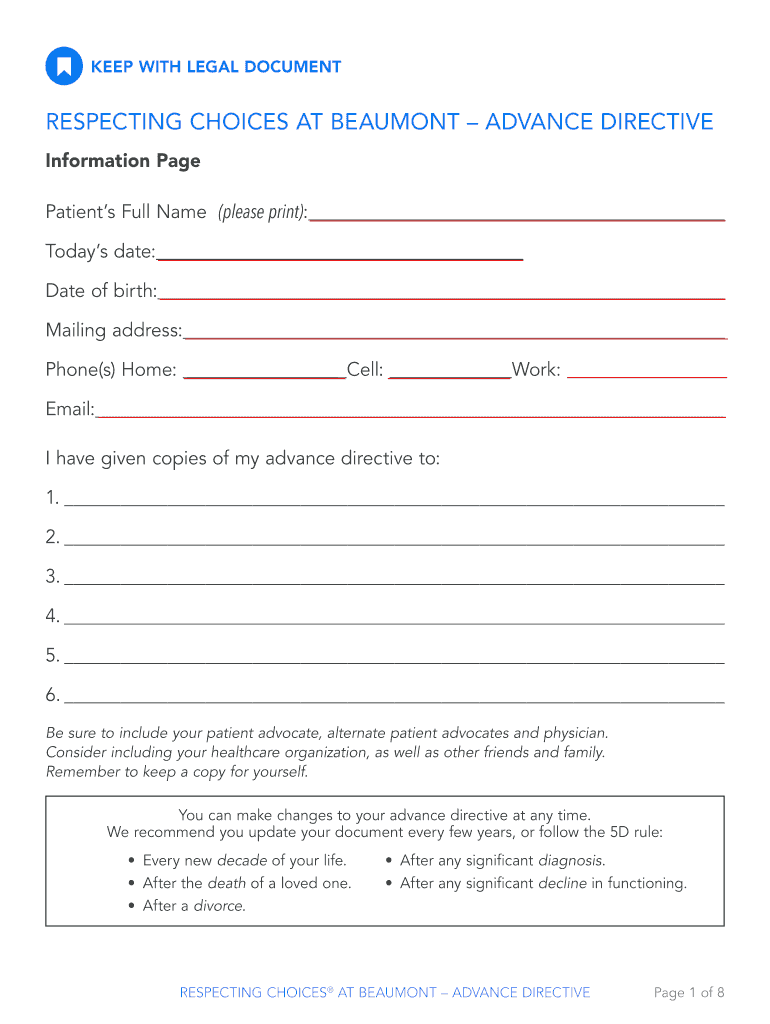







Understanding Advance Care Planning (ACP) Facilitator TrainingHonoring
Advance Care Planning (ACP) Facilitator TrainingHonoring is a specialized program designed to equip professionals with the necessary skills and knowledge to guide individuals and families through the advance care planning process effectively. This training focuses on helping individuals articulate and document their healthcare preferences in case they become unable to communicate them in the future.
Key Elements of ACP Facilitator TrainingHonoring
The training includes several core components essential for facilitating advance care planning:
- Communication Skills: Trainees learn how to engage in effective, compassionate dialogues about sensitive healthcare decisions.
- Legal Frameworks: Understanding state-specific and federal laws regarding advance directives.
- Documentation: Guidance on ensuring all health care preferences are accurately documented in legally recognized formats.
Steps to Complete the ACP Facilitator TrainingHonoring
- Enroll in the Program: Interested individuals must apply to enroll in a certified ACP Facilitator TrainingHonoring program.
- Complete Required Modules: The training consists of various modules covering topics such as ethics, patient rights, and effective communication strategies.
- Participate in Practical Sessions: Engage in role-play and interactive discussions to practice real-world scenarios.
- Certification: After successful completion of the training, participants receive a certification acknowledging their competency in facilitating advance care planning.
How to Use the Advance Care Planning (ACP) Facilitator TrainingHonoring
Once trained, facilitators can apply their skills in various settings:
- Healthcare Institutions: Collaborate with medical teams to support patients in making informed health care decisions.
- Community Workshops: Conduct sessions to educate the public about the importance of advance care planning.
- Private Consultations: Offer one-on-one guidance to individuals wishing to document their healthcare preferences.
Eligibility Criteria for ACP Facilitator TrainingHonoring
Individuals typically eligible for this training include:
- Healthcare Professionals: Nurses, social workers, and doctors often seek this training to enhance their practice.
- Legal Advisors: Attorneys specializing in healthcare law can benefit from understanding the nuances of advance care planning.
- Community Leaders: Those who frequently engage with elderly populations or diverse communities may find this training particularly beneficial.

Important Terms Related to Advance Care Planning
Several key terms are important to understand in the context of advance care planning:
- Advance Directive: A legal document outlining a person's healthcare preferences.
- Health Care Proxy: An individual appointed to make healthcare decisions on behalf of someone who is unable to do so.
- Living Will: A document specifying what actions should be taken for health if a person becomes incapacitated.
Legal Use of the Advance Care Planning (ACP) Facilitator TrainingHonoring
The training enables facilitators to guide the public in creating advance directives within legal frameworks:
- State Compliance: Ensures all advance care documents adhere to state-specific regulations.
- Documentation Process: Provides a thorough understanding of how to execute and store advance directives properly, ensuring accessibility when needed.
- Updates and Revisions: Facilitators guide updates to documents to reflect changing healthcare wishes or legal conditions.
State-Specific Rules for Advance Care Planning
Advance care planning regulations can vary by state:
- Documentation Requirements: Some states require notarization, while others may require witness signatures.
- Health Proxy Rules: Regulations about who can act as a health proxy may differ; facilitators must guide clients accordingly.
- Access to Records: Legal stipulations about who can access advance care documentation can vary, impacting how records are maintained.
Examples of Using the ACP Facilitator TrainingHonoring
- Case Study One: A facilitator assists an elderly couple in outlining their end-of-life care preferences, ensuring both have clear, legally documented advance directives.
- Case Study Two: A social worker uses training to organize community sessions, educating residents about the importance of establishing healthcare proxies.
- Case Study Three: An attorney incorporates ACP facilitator skills into their practice to offer holistic legal counsel regarding health care decisions.
Digital vs. Paper Version of Advance Directives
Both paper and digital formats have their own set of advantages:
- Digital Advantages: Easier to update and share; accessible from anywhere with internet access.
- Paper Advantages: Provides a tangible copy that some clients prefer; easy to present in emergency situations.
- Facilitator's Role: Guide clients in choosing the format that best suits their lifestyle and needs, ensuring both are legally sound.




