




01. Edit your form online
Type text, add images, blackout confidential details, add comments, highlights and more.

Type text, add images, blackout confidential details, add comments, highlights and more.

Draw your signature, type it, upload its image, or use your mobile device as a signature pad.

Send it via email, link, or fax. You can also download it, export it or print it out.
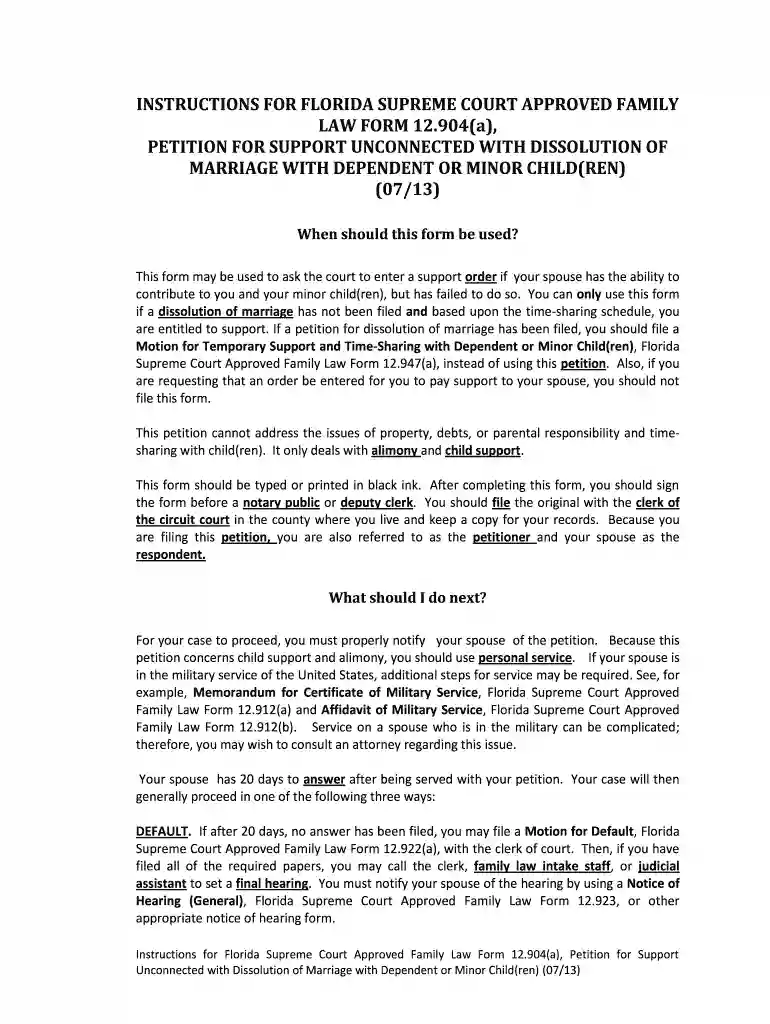
The "petition support 2013 form" typically refers to a legal document used to request alimony and child support in instances where no divorce proceedings are involved. This form is essential for individuals in the United States who seek financial support from a spouse without pursuing a full dissolution of marriage. It helps clarify and enforce legal obligations, offering a structured avenue for establishing financial support for dependent or minor children and spousal support.
To effectively utilize the "petition support 2013 form," follow a series of specific steps that align with legal standards in your state. Begin by gathering all necessary documentation, including financial statements and previous agreements, if any, to support your petition. This preparation is crucial for ensuring accurate and complete filings.
Acquiring the "petition support 2013 form" can typically be done through various channels, depending on state rules and personal preference.
This form serves a distinct legal purpose and must be utilized appropriately to ensure compliance with relevant laws and regulations.
While the general usage of the form is similar across the United States, specific state rules may impose variations in its application.
This form is primarily used by individuals in specific familial or financial circumstances.


Understanding specific terminology is crucial when dealing with legal documents such as this form.
Consideration must be given to the format in which the "petition support 2013 form" is completed, depending on accessibility and convenience.
Timely filing of the form is critical for ensuring legal action proceeds without delay.
We've got more versions of the petition support 2013 form form. Select the right petition support 2013 form version from the list and start editing it straight away!
At DocHub, your data security is our priority. We follow HIPAA, SOC2, GDPR, and other standards, so you can work on your documents with confidence.
You should use Form I-918, Petition for U Nonimmigrant Status, to request temporary immigration benefits if you are a victim of certain qualifying criminal
Sep 4, 2025 Form I-864, Affidavit of Support under Section 213A of the INA, is a contract an individual signs agreeing to use their financial resources to support the
Apr 24, 2013 TITLE IHAZARDOUS SUBSTANCES RELEASES, LIABILITY,. COMPENSATION. Sec. 101. Definitions. Sec. 102. Reportable quantities and additional


