



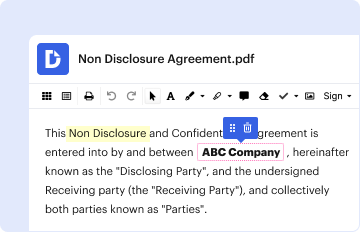
01. Edit your form online
Type text, add images, blackout confidential details, add comments, highlights and more.

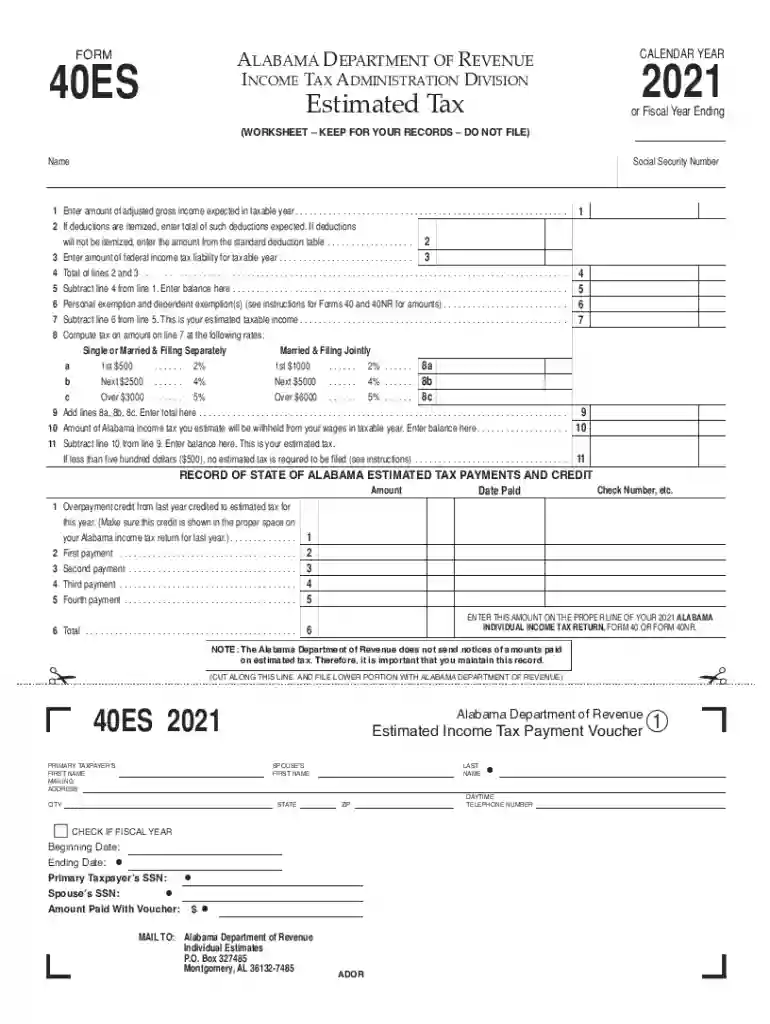
Type text, add images, blackout confidential details, add comments, highlights and more.
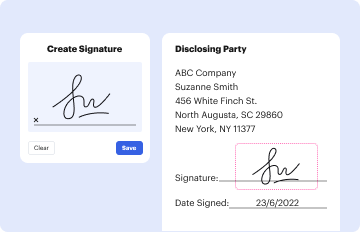
Draw your signature, type it, upload its image, or use your mobile device as a signature pad.

Send it via email, link, or fax. You can also download it, export it or print it out.
The Alabama Tax Forms and Instructions for 2020, commonly known as Form 40, is a crucial document for residents and certain nonresidents of Alabama who need to report their income tax for the year 2020. This form helps taxpayers calculate their tax liabilities accurately by capturing all necessary income sources, deductions, credits, and other pertinent financial data. Understanding its purpose is essential not only for compliance but also to optimize potential tax savings.
There are multiple ways to access the 2020 Alabama Form 40. You can download it directly from the Alabama Department of Revenue's official website, ensuring you have the most up-to-date version. Alternatively, local libraries or government offices often provide physical copies of tax forms. Online tax preparation software may also include the form, streamlining the process for electronic submissions.
Form 40 is primarily used by individuals who are residents of Alabama, as they are obligated to report their entire income from all sources. Nonresidents who earned income in Alabama may also need to file this form if substantial income was acquired within the state. Additionally, part-year residents and those with complex income streams often resort to Form 40.


Alabama has unique tax regulations that affect how the Form 40 is completed. For instance, the state allows for certain deductions not recognized by federal forms, such as the deduction for contributions to Alabama's CollegeCounts 529 Fund. Understanding these state-specific rules is critical to ensure compliance and maximize tax benefits.
For the Alabama Form 40 for 2020, the filing deadline aligns with the federal tax deadline, typically April 15 of the following year. However, if this date falls on a weekend or holiday, it shifts to the next business day. Extensions might be available upon request, but any taxes owed must be paid by the original deadline to avoid penalties.
Failure to file Form 40 or pay the owed taxes by the specified deadline can result in penalties and interest charges. These may increase over time, significantly affecting your financial situation. Ensuring timely filing and payment is essential to avoid these outcomes.
Consider a self-employed individual who relocated to Alabama mid-2020. They would use Form 40 to report all income, including that earned prior to moving. By carefully following the form’s instructions, they can determine their tax liability based on both federal and Alabama state laws, taking advantage of any applicable deductions or credits.
We've got more versions of the Alabama Tax Forms and Instructions for 2020 (Form 40) form. Select the right Alabama Tax Forms and Instructions for 2020 (Form 40) version from the list and start editing it straight away!
| Versions | Form popularity | Fillable & printable |
|---|---|---|
| 2024 | 4.3 Satisfied (28 Votes) | |
| 2023 | 4.5 Satisfied (48 Votes) | |
| 2022 | 4.8 Satisfied (123 Votes) | |
| 2021 | 4.3 Satisfied (35 Votes) | |
| 2020 | 4 Satisfied (46 Votes) | |
| 2019 | 4.3 Satisfied (53 Votes) | |
| 2018 | 4.3 Satisfied (32 Votes) | |
| 2015 | 4.4 Satisfied (64 Votes) | |
| 2014 | 4.2 Satisfied (58 Votes) | |
| 2013 | 4 Satisfied (50 Votes) | |
| 2012 | 4.4 Satisfied (45 Votes) | |
| 2011 | 4.9 Satisfied (32 Votes) | |
| 2009 | 4.6 Satisfied (34 Votes) | |
| 2008 | 4 Satisfied (55 Votes) | |
| 2007 | 3.6 Satisfied (35 Votes) |
At DocHub, your data security is our priority. We follow HIPAA, SOC2, GDPR, and other standards, so you can work on your documents with confidence.
Visit the Alabama Department of Revenue website to view Individual Income Tax Forms and instructions. If you have previously filed an Alabama tax returnRead more
Dec 30, 2021 Income tax expense. $. 57. (0.1)% $. 3,386. 12.3 % $. 8,862. 28.8 %. Our effective income tax rates for fiscal 2020, fiscal 2019 and fiscal 2018Read more
Alabama Individual Income Tax Return Form 40 (PRINT ONLY). Download Form Forms Income Tax . Alabama Individual Income Tax Return Form 40 (PRINT ONLY).Read more


