
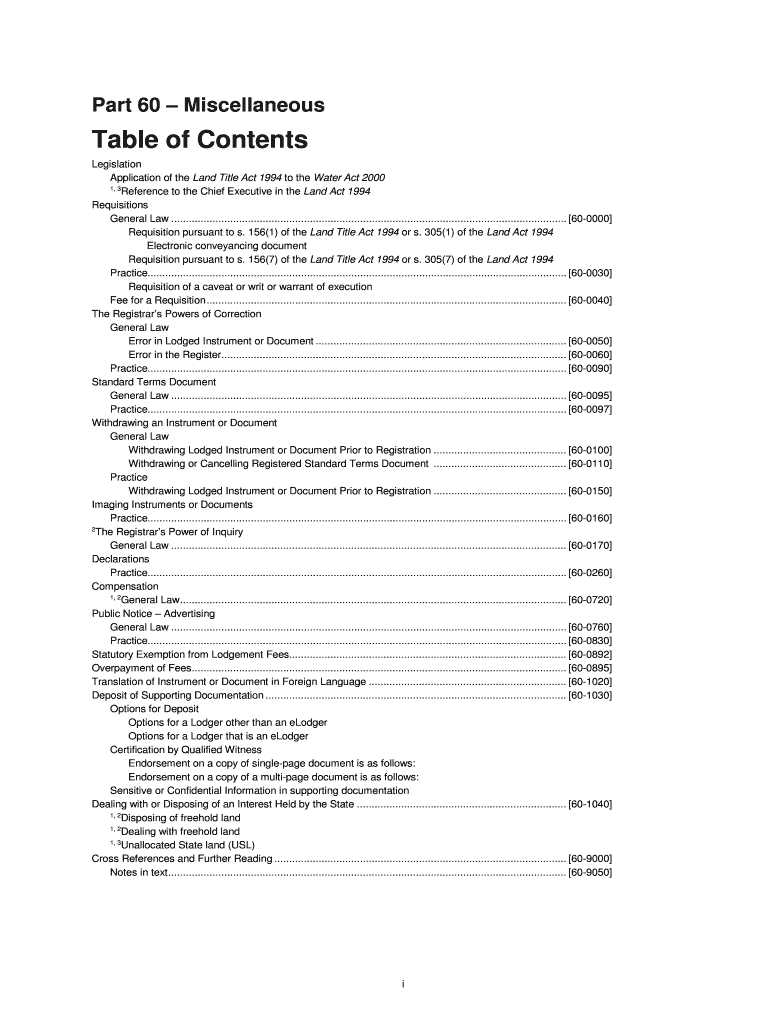







Definition and Meaning of the Application of the Land Title Act 1994 to the Water Act 2000
The "Application of the Land Title Act 1994 to the Water Act 2000" refers to the legal crossover between land title processes and water management laws in Queensland, Australia. It specifically outlines how elements of land title registration and management, governed by the Land Title Act 1994, are applied to water allocations under the Water Act 2000. This application ensures that water entitlements are documented similarly to land properties, providing clarity and legal security to holders of water rights.
Steps to Complete the Application of the Land Title Act 1994 to the Water Act 2000
-
Understand the Requirements: Familiarize yourself with the purpose of combining land title and water allocation aspects. This involves knowing the sections of the Acts that pertain to your specific case.
-
Gather Required Documents: This includes ownership documents, current water allocation statements, and any existing land title records. Ensure all records are up-to-date.
-
Complete the Form: Fill out the application form accurately, which may involve detailing personal, property, and water allocation information.
-
Submit Application: Applications can usually be submitted online, by mail, or in-person at designated offices, depending on jurisdictional provisions.
-
Await Confirmation: After submission, wait for confirmation and processing from the Registrar's office, which may require further information or clarification.
Key Elements of the Application of the Land Title Act 1994 to the Water Act 2000
-
Registration of Water Allocations: Similar to land titles, water allocations require formal registration, identifying the holder's rights and obligations.
-
Integration with Land Titles: Ensures water rights are linked with land titles for cohesive management and clarity in ownership.
-
Public Notifications: Involves processes for public notices about changes or updates within registries that affect water allocations, conforming to transparency standards.
-
Requisitions and Corrections: Details procedures for addressing errors or omissions in registrations linked to water allocations – akin to land title processes.
Legal Use of the Application of the Land Title Act 1994 to the Water Act 2000
The legal use of this application ensures compliance with state-specific land and water management laws. It serves as a procedural guide for individuals, companies, and legal entities handling water allocations connected to land parcels. By adhering to this process, users can safeguard their access to water resources and protect related land values, significantly impacting agricultural, industrial, and residential usage.
State-Specific Rules for the Application of the Land Title Act 1994 to the Water Act 2000
-
Queensland Focus: The application is specific to Queensland, yet serves as a model for similar interactions between land title and water acts in other Australian states.
-
Compliance with Local Registries: Requires alignment with local registrars' procedures, ensuring adherence to regional guidelines for water resource management.
-
Fee Exemptions and Penalties: Addresses specific scenarios where fees may be waived or penalties applied, based on regulatory compliance or breaches.
Important Terms Related to the Application of the Land Title Act 1994 to the Water Act 2000
-
Water Allocation: The right to use a specified volume of water, as registered under the Water Act 2000.
-
Registrar: The official responsible for the oversight and maintenance of land title and water allocation records.
-
Requisition: A formal demand for correction or additional information during the application process, either due to discrepancies or documentation needs.
Who Typically Uses the Application of the Land Title Act 1994 to the Water Act 2000
Common users include landowners, agricultural businesses, legal representatives managing land and water rights, and governmental agencies overseeing natural resources. It is particularly relevant for those involved in sectors heavily reliant on consistent water access, like agriculture and manufacturing.


Examples of Using the Application of the Land Title Act 1994 to the Water Act 2000
-
Agricultural Ventures: Farms seeking to ensure that their water rights are legally recognized when expanding or modifying their land use.
-
Property Developers: Businesses needing to align water use with new property developments, ensuring compliance with environmental sustainability goals.
-
Industrial Operations: Factories requiring specific water allocations registered similarly to land titles for operational continuity and to meet regulatory standards.




