






Definition & Purpose of the Nonprofit Application - AmTrust
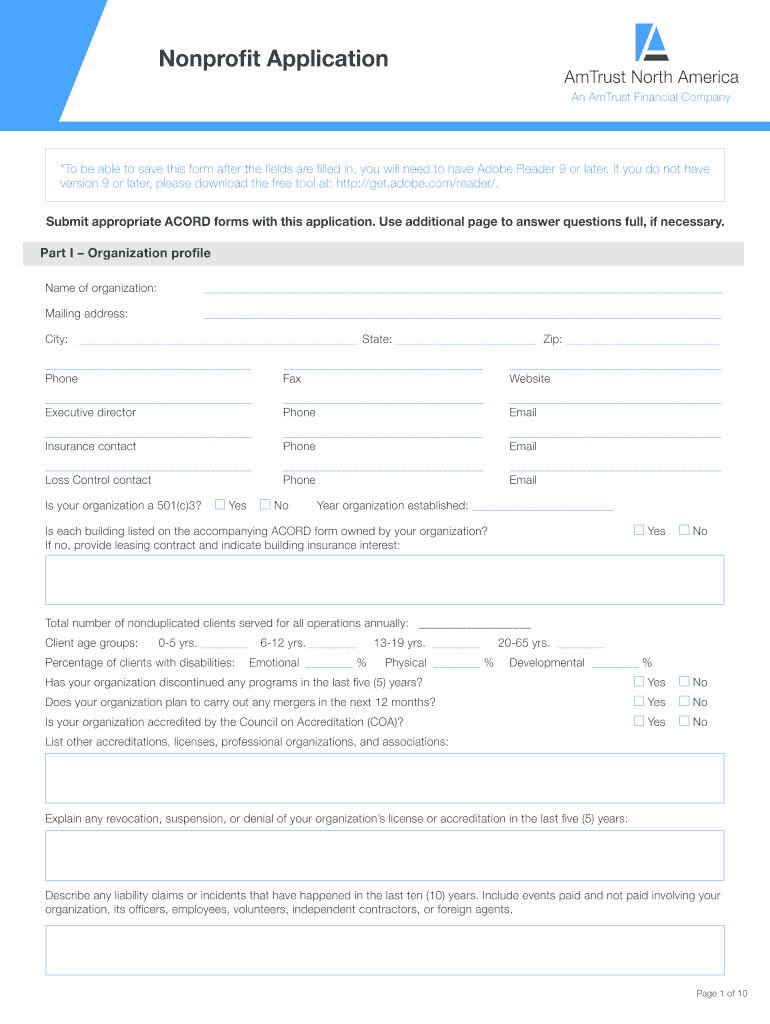
The Nonprofit Application - AmTrust is a specialized document aimed at organizations seeking insurance coverage. It involves collecting detailed information about an organization’s profile, its staff, liability coverage requirements, and safety protocols. This application serves as a formal request for evaluating an organization's eligibility for insurance coverage, providing critical insights into operational aspects that may affect coverage terms and conditions.
The form includes sections that require significant detail, such as client demographics, insurance history, and compliance with regulatory standards, ensuring a comprehensive overview of the organization's risk profile. By completing this application, nonprofits aim to secure insurance that protects against potential liabilities and supports operational sustainability.
Steps to Complete the Nonprofit Application - AmTrust
-
Organizational Profile: Begin by filling out the organization's basic information, such as its name, address, and a brief description of its core activities and mission statement. This section provides an overview that helps assessors understand the organization’s operations and mission.
-
Staff Details: Include all relevant information about the number of employees, their roles, and any relevant qualifications. Highlight specific qualifications or certifications related to risk management and safety if applicable.
-
Liability Coverage Needs: Clearly define desired coverage scopes and limits. Include specific activities or events that require coverage, such as large-scale fundraisers, community events, or any other public engagement effort.
-
Safety Protocols: Describe any implemented organizational policies and procedures designed to mitigate risks, such as emergency preparedness plans or staff safety trainings. Provide evidence of regular reviews and updates to these protocols.
-
Insurance History: Detail the organization’s insurance history, including any previous claims, incidents, or changes in coverage. This information is vital for underwriters to assess historical risk levels and forecast future needs.
Key Elements of the Nonprofit Application - AmTrust
-
Client Demographics: This section requires detailed information on the demographics of those served by the nonprofit, including total number of beneficiaries, age ranges, and specific needs or characteristics.
-
Compliance: Disclose any compliance measures in place to adhere to local, state, and federal laws. This can include adherence to health and safety standards, non-discrimination policies, and financial transparency practices.
-
Employee Screening Process: Outline the processes used for vetting and hiring staff, including background checks, qualification verifications, and ongoing monitoring to ensure all personnel meet organizational standards.
-
Supporting Documents: Provide additional documentation such as financial statements, proof of regulatory compliance, or strategic plans. These documents support the application and help underwriters understand the organization's financial health and strategic direction.
Important Terms Related to Nonprofit Application - AmTrust
-
Underwriting: The process through which insurers assess the risk and exposures of potential clients to determine coverage terms and premiums.
-
Risk Profile: A comprehensive analysis that considers various risk aspects of an organization, used for insurance evaluation.
-
Regulatory Compliance: Adherence to laws, regulations, guidelines, and specifications relevant to an organization's operations.
-
Liability Coverage: Insurance that provides protection against claims resulting from injuries and damage to people or property.
Legal Use of the Nonprofit Application - AmTrust
The form must be used in accordance with legal standards, ensuring all provided information is accurate and truthful. This minimizes risks of insurance fraud and establishes a clear basis for claims processing. Organizations can face penalties for falsifying information or failing to adhere to reporting standards.
Understanding the legal implications of terms included in the insurance agreement is crucial. Nonprofit organizations must ensure that they have thoroughly read all parts of the form to comprehend their responsibilities and obligations under the insurance contract.
Required Documents for the Nonprofit Application - AmTrust
In addition to the completed application form, an organization typically needs to submit:
-
Financial Statements: Recent and historical financial data, including income statements and balance sheets.
-
Proof of Compliance: Relevant certificates or documentation showing adherence to regulatory requirements.
-
Operational Continuity Plans: Documents detailing emergency response strategies or succession planning.
These documents substantiate claims made within the application and provide clarity to assessors about the organization's current situation and future safety plans.
Application Process & Approval Time for Nonprofit Application - AmTrust
The application process for the Nonprofit Application - AmTrust extends beyond simple form completion. Following submission, the application goes through an underwriting process where insurance experts evaluate the provided information to determine the potential risk and appropriate coverage.
Approval times can vary depending on the complexity of the organization’s operations and the comprehensiveness of the submitted documentation. Generally, the process may take several weeks, with periods extended if there are requests for additional information or clarifications.
Why Use the Nonprofit Application - AmTrust
Utilizing the Nonprofit Application - AmTrust is imperative to secure insurance coverage that addresses specific organizational needs. This form tailors coverage to align with individual nonprofit activities, ensuring organizations are protected from liabilities that could otherwise threaten their operations. It enables access to robust insurance plans that are negotiated based on precise organizational characteristics and historical risk data.