




01. Edit your form online
Type text, add images, blackout confidential details, add comments, highlights and more.

Type text, add images, blackout confidential details, add comments, highlights and more.

Draw your signature, type it, upload its image, or use your mobile device as a signature pad.

Send it via email, link, or fax. You can also download it, export it or print it out.
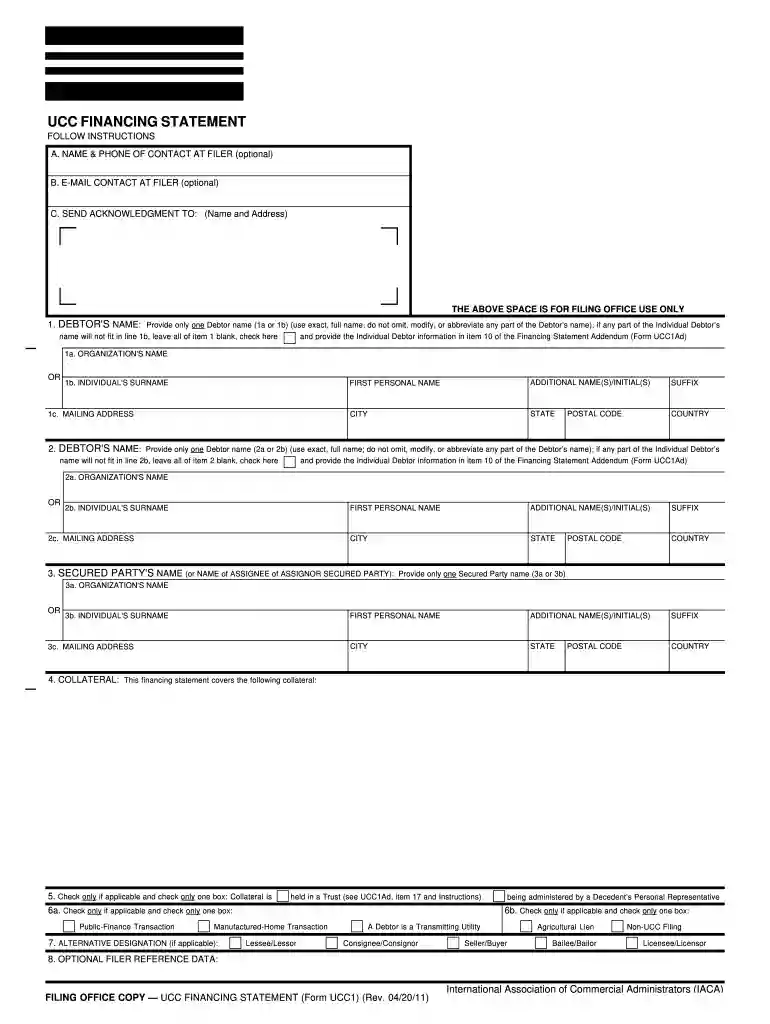
A UCC1 Financing Statement, often referred to simply as Form UCC1, is a standardized legal form used primarily in the United States to secure an interest in personal property used as collateral for a loan. This form is integral in documenting the relationship between a debtor, who owes money, and a secured party, who lends money and requires collateral. The UCC1 Form provides a public notice that a lender has an interest in the borrower’s property, ensuring the creditor's interest is protected if the debtor defaults on the loan.
To get a UCC1 Form, you can visit the Secretary of State's website in the relevant state, as this is where these forms are typically filed. Some states may provide downloadable PDFs of the form, while others might require the form to be filled out online. To access the correct form, users will need to specify the state and potentially register for an account if it's an online service.
Debtor Information: Accurately fill in the debtor's full legal name and address. Using the precise name as it appears on legal documents reduces the risk of your filing being rejected.
Secured Party Information: Provide the secured party’s details, similar to the debtor’s, ensuring all information is current and correctly spelled.
Collateral Description: Clearly describe the collateral being offered. The description should be detailed enough to identify the collateral but concise enough to fit within the provided space.
Using the UCC1 Form correctly is vital to ensuring that the security interest is enforceable. It is primarily used in transactions involving movable property rather than real estate. The form serves as the initial step in securing a creditor’s right to take possession of the property if the debtor defaults. Before filing, review local laws, as compliance with state-specific regulations is crucial for the form's validity.
Each state may have unique regulations regarding filing fees, processing times, and specific form requirements. For instance, some states might require additional forms or have different processing fees. Knowing the specific requirements for the state in which you are filing the UCC1 is essential for a successful filing process. Always consult the state’s guidelines or legal counsel for precise instructions.
The UCC1 Form is essential for securing a creditor’s interest in a borrower’s personal property. It provides:
Digital submissions are often more efficient, ensuring swift updating and lower potential for human error. However, understanding state-specific procedures remains critical regardless of submission method.
We've got more versions of the how to ucc1 2011 form form. Select the right how to ucc1 2011 form version from the list and start editing it straight away!
At DocHub, your data security is our priority. We follow HIPAA, SOC2, GDPR, and other standards, so you can work on your documents with confidence.
All UCC1 forms and each UCC2 form that proposes a change in the course description or credit hours must include this checklist in addition to a complete.Read more
UCC Financing Statement (Form UCC1) Notification from creditor to debtor of interest in personal property of debtor. Download UCC Financing Statement


