Certificate of occupancy phoenix 2026

Get Form
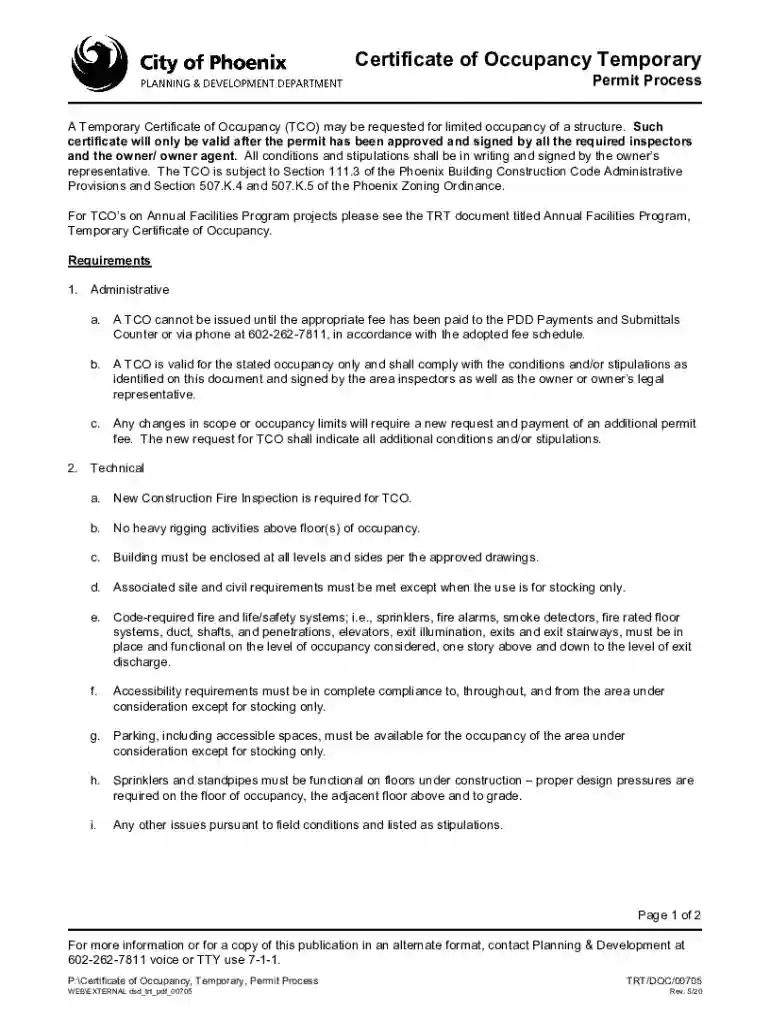
city of phoenix certificate of occupancy Preview on Page 1

Here's how it works

01. Edit your city of phoenix certificate of occupancy online
Type text, add images, blackout confidential details, add comments, highlights and more.

02. Sign it in a few clicks
Draw your signature, type it, upload its image, or use your mobile device as a signature pad.

03. Share your form with others
Send it via email, link, or fax. You can also download it, export it or print it out.

Definition & Meaning

A certificate of occupancy in Phoenix is a legal document issued by local government authorities confirming that a building complies with all building codes and regulations. It certifies that the property is suitable for habitation or use. This document is essential for property owners and tenants, verifying that the structure is safe and adheres to all necessary municipal zoning laws. The certificate ensures that the building has passed final inspections and is ready for occupancy, providing peace of mind for real estate transactions, lease agreements, or property management operations.

Purpose and Importance

  • Legal Validation: Ensures compliance with local building codes.
  • Safety Confirmation: Confirms that a structure is safe for use.
  • Zoning Compliance: Aligns with local zoning laws.
  • Transaction Requirement: Often required for property sales or leases.

How to Obtain the Certificate of Occupancy in Phoenix

Obtaining a certificate of occupancy in Phoenix involves several critical steps that verify a property's compliance with municipal standards. The process typically begins with scheduling inspections conducted by local building officials. These inspections cover various aspects of the building, including electrical, plumbing, and structural integrity. Once the inspections are completed and all deficiencies are addressed, the certificate can be issued.

Step-by-Step Process

  1. Application Submission: Start by submitting an application to the city's planning and development department.
  2. Schedule Inspections: Arrange necessary inspections with local authorities.
  3. Address Deficiencies: Correct any issues identified during inspections.
  4. Final Review: Conduct a final review and approval by the building department.
  5. Issuance: Receive the certificate once all conditions are met.

Requirements

  • Completed application forms.
  • Payment of applicable fees.
  • Scheduled building inspections.
  • Compliance with all local codes and ordinances.

Important Terms Related to Certificate of Occupancy Phoenix

Understanding the language used in the context of obtaining a certificate of occupancy is crucial for navigating the process effectively. Key terms associated with this document include occupancy classification, zoning laws, building codes, and inspection reports.

Glossary of Essential Terms

  • Occupancy Classification: The categorization of a building based on its intended use.
  • Zoning Laws: Regulations governing land use and building requirements in specific areas.
  • Building Codes: Standards developed to ensure safety, health, and general welfare in building construction.
  • Inspection Report: An official document detailing the findings of building inspections.

Steps to Complete the Certificate of Occupancy Phoenix

Completing the process for a certificate of occupancy in Phoenix involves following a structured approach to ensure compliance and timely approval. This sequence of actions ensures that necessary guidelines are adhered to and that the property is legally authorized for occupancy.

Detailed Steps

  1. Consultation with Architects/Builders: Engage professionals to ensure your building plans comply with local codes.
  2. Preparation of Documentation: Gather blueprints, permits, and other essential documentation.
  3. Application and Scheduling: Submit an official request and schedule necessary inspections.
  4. Follow-Up on Inspections: Work with inspectors to address any issues found.
  5. Final Approval and Issuance: Secure final clearance and obtain the certificate.

Who Typically Uses the Certificate of Occupancy Phoenix

The certificate of occupancy is utilized by a variety of stakeholders within the real estate and construction industries, as well as by property owners. Stakeholders often include real estate developers, construction companies, property owners, and potential buyers or tenants.


decoration image ratings of Dochub

Primary Users

  • Real Estate Developers: For marketing and sales of new properties.
  • Construction Companies: To verify project completion.
  • Property Owners: For compliance and leasing purposes.
  • Prospective Buyers and Tenants: To ensure property safety and regulatory compliance.

Key Elements of the Certificate of Occupancy Phoenix

The certificate of occupancy contains several critical elements that encompass the essential information verifying building compliance. These elements ensure clarity and transparency regarding a building's readiness for occupancy.

Core Components

  • Property Description: Location and physical characteristics.
  • Owner Information: Details of the property owner or responsible party.
  • Occupancy Classification: Defines how the building may be used.
  • Code Compliance Confirmation: Assurance that all building codes are met.
  • Inspection Dates: Timeline of when inspections occurred.

Legal Use of the Certificate of Occupancy Phoenix

The certificate serves several legal purposes, primarily ensuring compliance with municipal regulations and building codes. It ensures that all necessary protocols are followed before a building is deemed habitable, safeguarding both property owners and future occupants.

Legal Implications

  • Verification for Transactions: Required for closing property transactions.
  • Lease Agreements: Provides a legal framework for leasing property.
  • Compliance Assurance: Ensures continued adherence to zoning laws and building codes.
  • Legal Repercussions: Penalties or legal action for occupying structures without this certification.

State-Specific Rules for the Certificate of Occupancy Phoenix

In Phoenix, specific state and local regulations govern the issuance and maintenance of a certificate of occupancy. Understanding these rules is crucial for ensuring compliance and avoiding potential legal issues or delays in property occupancy.

Arizona-Specific Regulations

  • Zoning Compliance: Strict adherence to local zoning regulations.
  • Inspection Mandates: Required inspections from city-appointed officials.
  • Fee Structures: Exact fees associated with obtaining the certificate.
  • Code Modifications: Updates to building codes can impact requirements.

These blocks provide an extensive guide on the certificate of occupancy process in Phoenix, supporting property owners, developers, and tenants in understanding and complying with legal and safety standards.

See more certificate of occupancy phoenix versions

We've got more versions of the certificate of occupancy phoenix form. Select the right certificate of occupancy phoenix version from the list and start editing it straight away!
Versions Form popularity Fillable & printable
2020 4.8 Satisfied (110 Votes)
2013 4.1 Satisfied (35 Votes)
be ready to get more

Complete this form in 5 minutes or less

Get form

Got questions?

We have answers to the most popular questions from our customers. If you can't find an answer to your question, please contact us.
Contact us
Whoever applies for the certificate must be present for all required property inspections. Once an inspection has been completed, youll receive a report that outlines the details of your property and whether you pass. If so, you can claim your certificate and are free to sell the property.
Submit Application: Complete the Certificate of Occupancy application through the Phoenix Planning and Development Department. Provide Documentation: Submit construction plans, permits, zoning verification, and other required documents. Pay Fees: Application fees vary based on the building size and type.
A structure must be compliant with the Maricopa County Zoning Ordinance, applicable building codes and all regulations before an approved building permit will be issued. All required inspections must be obtained before the structure receives a final inspection and/or a certificate of occupancy.
A CofO is required for the following projects: New commercial and residential structures. Tenant improvement of a newly occupied space. Tenant improvement or remodel that involves a change in the occupancy type.
Contact Local Building Department: The first step is to get in touch with your local building department or municipal office. They are the authority responsible for issuing Certificates of Occupancy. You can search online for the official website or contact information of your local building department.

Security and compliance

At DocHub, your data security is our priority. We follow HIPAA, SOC2, GDPR, and other standards, so you can work on your documents with confidence.

Learn more
ccpa2
pci-dss
gdpr-compliance
hipaa
soc-compliance

People also ask

Or sue, or break the lease. So the above all generally still applies to CA. And in California, it is illegal to rent a unit without a certificate of occupancy. A certificate of occupancy is a document that confirms that a building complies with all state and local building codes and is safe to live in.

Related links