
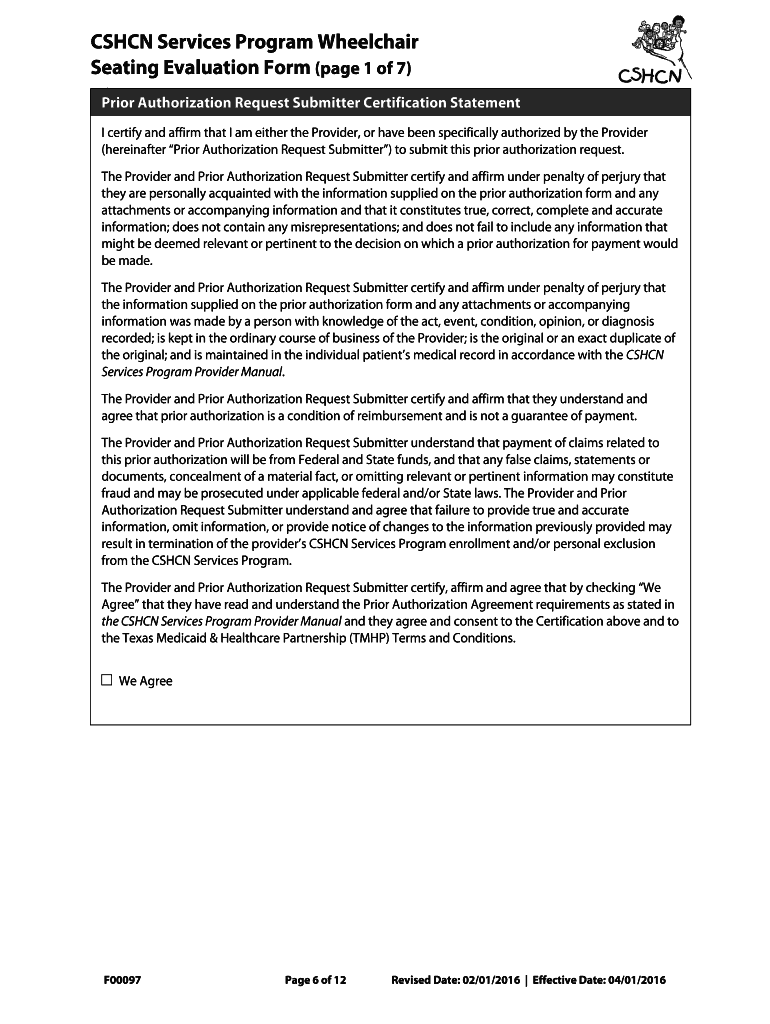







Overview of the Wheelchair Seating Evaluation Form
The Wheelchair Seating Evaluation Form is a critical document used in the assessment and authorization of wheelchair services and modifications. This form plays a pivotal role in ensuring that individuals who require wheelchairs receive the appropriate equipment tailored to their unique needs. It collects essential information that medical professionals and funding bodies require to make informed decisions regarding the provision of wheelchair services.
Purpose and Significance of the Wheelchair Seating Evaluation Form
Understanding the purpose of this form is vital for users. It serves several key functions:
- Prior Authorization: This form is often required by insurers to determine eligibility for funding wheelchair equipment and modifications. Without it, there may be delays or denial of necessary services.
- Comprehensive Assessment: The form guides evaluators in collecting detailed information about the client's needs, including mobility restrictions, postural considerations, and environmental factors.
- Standardization: Using a uniform evaluation form ensures that all relevant aspects of an individual’s needs are methodically assessed, facilitating a consistent approach across different healthcare providers.
Completing the Wheelchair Seating Evaluation Form
Filling out the Wheelchair Seating Evaluation Form involves several key steps to ensure thorough and accurate submissions.
- Client Information: Gather complete client details, including name, contact information, date of birth, and insurance information.
- Neurological Factors: Assess neurological conditions, if applicable, as they can impact seating needs.
- Postural Control Assessment: Include detailed observations regarding the individual’s postural control and any special seating requirements.
- Functional Assessment: Evaluate the client's functional abilities, taking note of challenges faced in daily activities.
- Environmental Assessment: Document the client's living environment to understand any accessibility challenges that might influence seating choice.
- Equipment Specifications: List the requested wheelchair modifications and any specific equipment required that correlates with the assessments provided.
By following these steps, users can ensure that the submitted form contains comprehensive and relevant information that will facilitate quicker and more effective decision-making.
Instructions for Submitting the Wheelchair Seating Evaluation Form
Once the Wheelchair Seating Evaluation Form is completed, it must be submitted correctly to avoid delays in processing:
- Submission Methods: The form can often be submitted online, via mail, or in person, depending on the requirements of the funding agency or medical facility. Be sure to check specific guidelines for your state or organization.
- Documentation Requirements: Ensure that any supporting documents, such as medical records or assessments, are attached to corroborate the information submitted on the form.
- Follow-up: After submission, it is advisable to follow up with the organization to confirm receipt and inquire about the status of the authorization process.
Key Elements of the Wheelchair Seating Evaluation Form
Understanding the elements that constitute the Wheelchair Seating Evaluation Form enhances the user’s ability to complete it effectively. Key components include:
- Medical History: A section for detailing any relevant medical conditions that might influence seating needs.
- Assessment Results: Areas specifically designated for documenting neurological, postural, and functional assessments.
- Client Needs and Goals: A space to articulate the user's personal goals concerning mobility and independence.
- Signatures: Required areas for signatures from both the client (or guardian) and the healthcare professional completing the evaluation.
Each of these elements is vital for creating a robust, informative submission that accurately reflects the client's needs.
Who Uses the Wheelchair Seating Evaluation Form?
The Wheelchair Seating Evaluation Form is utilized by a variety of stakeholders involved in the care and provision of mobility aids, including:
- Medical Professionals: Physicians, occupational therapists, and physical therapists who evaluate the client’s condition and need for adaptive equipment.
- Insurance Providers: Organizations that review the form to determine eligibility for coverage of wheelchair services and modifications.
- Suppliers of Mobility Equipment: Companies that provide wheelchairs and other assistive devices use the results from this form to tailor their products to the user’s needs.
- Clients and Caregivers: The individuals requiring wheelchairs and their families are directly involved in providing necessary information for the evaluation.
By recognizing the diverse user base, one can appreciate the form's importance in the broader context of healthcare and assistive technology.
Examples in Context
Consider the following scenarios to illustrate the application of the Wheelchair Seating Evaluation Form:
-
Case Study 1: A 65-year-old female patient with multiple sclerosis requires a specific type of wheelchair that supports her postural control challenges. Her physical therapist completes the Wheelchair Seating Evaluation Form, highlighting her detailed medical history, her functional limitations, and the type of equipment required. The thoroughness of the form leads to swift approval from her insurance provider.
-
Case Study 2: An eight-year-old boy with cerebral palsy needs a customized wheelchair for school. His occupational therapist fills out the form, detailing not only his medical condition but also environmental assessments of his classroom and home. By clearly outlining the need for specialized seating to accommodate growth and postural support, the case is submitted for prior authorization, leading to timely provision of equipment that best supports his abilities.
By including specific examples, users can better understand how to leverage the Wheelchair Seating Evaluation Form to effectively meet the needs of clients in real-world scenarios.




