
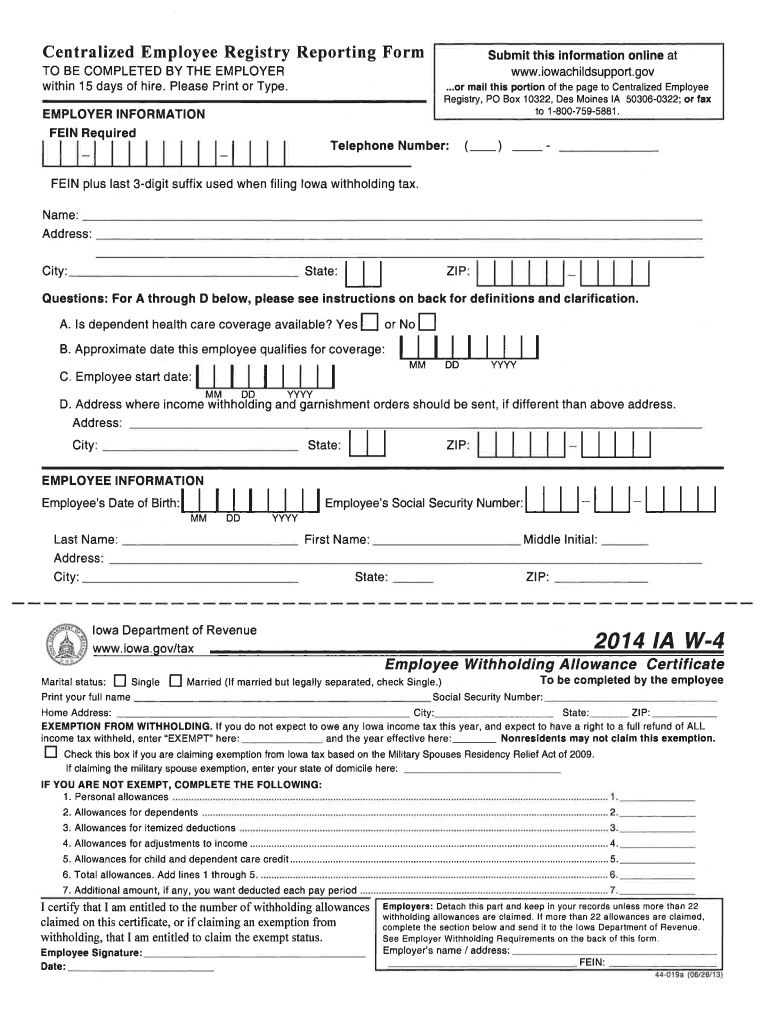







Definition and Purpose of Federal and State Form W-4 Compliance
The Federal and State Form W-4, in the context of compliance, serves as a crucial document used by employees to dictate the amount of federal and state income tax withheld from their paychecks. This form is fundamentally important for ensuring that the correct amount of tax is collected and aligns with the employee's financial obligations and circumstances. By completing this form accurately, individuals can avoid underpayment penalties and ensure compliance with IRS regulations. The form is used across various employment scenarios and can significantly impact annual tax refunds or liabilities.
How to Use the Federal and State Form W-4
Using Form W-4 requires careful consideration of one's financial situation, including sources of income, dependents, and available tax credits. Employees must evaluate their anticipated annual income and family status to determine appropriate withholding levels. The form includes worksheets to assist in calculating the correct amount of allowances. It's essential to review and update the form whenever significant life events occur, such as marriage, childbirth, or a change in employment status, to maintain compliance and avoid discrepancies in tax withholding.
Steps to Complete the Form
-
Personal Information:
- Enter name, address, Social Security Number, and filing status.
-
Multiple Jobs or Spouse Works:
- Follow instructions if you have multiple jobs or your spouse works.
-
Claim Dependents:
- Calculate credits for dependents under age 17 and other dependents.
-
Other Adjustments:
- Make alterations for other income, additional withholding, or deductions.
-
Sign and Date the Form:
- Ensure validity by signing the form before submission.
Legal Use of the Federal and State Form W-4
The legal framework surrounding Form W-4 compliance mandates that employers withhold the correct federal and state income taxes based on the information provided by the employee. Misrepresentation or failure to update relevant details can lead to legal implications, including fines and audits by the IRS. Employers are legally obligated to honor the most recent W-4 form submitted by the employee, ensuring it is processed accurately and timely.
Key Elements of the Form W-4
- Filing Status: Determines withholding rate; options include Single, Married Filing Jointly, or Head of Household.
- Allowances: Guide withholding amount; correlates with dependents and deductions.
- Additional Withholding: Allows employees to request extra withholding to cover anticipated tax liabilities.
- Deductions and Adjustments Worksheet: Helps compute adjustments for itemized deductions and extra household incomes.
Penalties for Non-Compliance
Failure to comply with W-4 form instructions can result in financial penalties. Employees who do not provide accurate information might face IRS scrutiny, which could lead to additional taxes owed plus penalties and interest. Employers must also ensure proper adherence to regulations as improper processing can invite audits and fines.
IRS Guidelines and State-Specific Rules
The IRS provides detailed guidelines to assist both employees and employers in completing and processing Form W-4. These guidelines emphasize the importance of accuracy and up-to-dateness in the information provided. Additionally, state-specific rules and adjustments may apply, necessitating employees to complete a separate state W-4 form or equivalent.
State-by-State Differences
- California: Requires additional state-specific form due to distinct tax code.
- New York: Offers more precise adjustment instructions for state withholdings.
Examples of Using the Form in Various Scenarios
- Self-Employed Individuals: Use the form to adjust for complex income streams and potential deductions.
- Retirees: Modify withholding after significant life changes like retirement or new investments.
- Students: Ensure minimal withholding for part-time work where annual earnings are below the taxable threshold.
Conclusion
Adherence to Federal and State Form W-4 compliance is essential for both employees and employers to ensure accurate tax withholding and avoid potential penalties. Understanding the form’s components, following IRS and state-specific guidelines, and responding to life changes timely can aid in maintaining compliance and optimizing financial outcomes.




