







Definition and Meaning
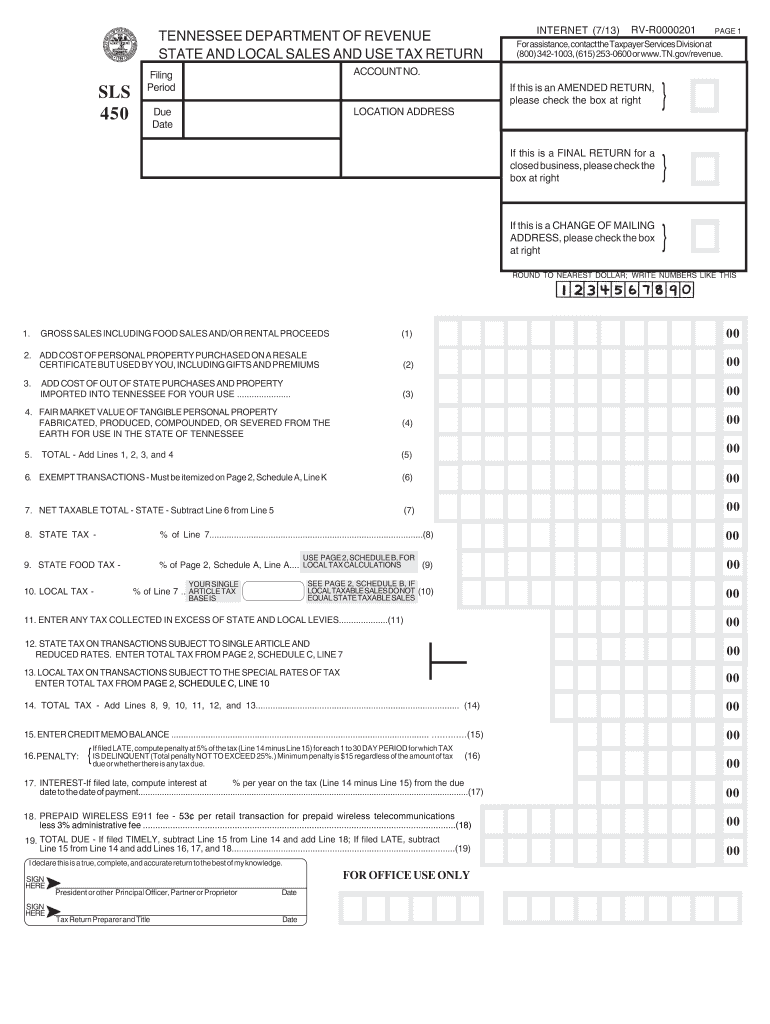
The "blank sales tax form Tennessee 2014" refers to the official document required for businesses operating in Tennessee to report their sales and use taxes for the year 2014. This form was mandated by the Tennessee Department of Revenue, and its primary function was to document gross sales, taxable transactions, and applicable exemptions. By filling out this form, businesses could accurately calculate their state and local tax obligations.
Purpose of the Form
- Tax Reporting: It helped ensure accurate tax calculations by requiring details on taxable and non-taxable sales.
- Compliance: Mandatory for businesses to comply with Tennessee tax laws.
- Record Keeping: Provided a structured method for documenting sales activities and tax liabilities.
Examples of Use
- A retail store in Nashville using the form to report its annual sales.
- An online business filing for its taxable sales made to Tennessee residents.
How to Use the Blank Sales Tax Form Tennessee 2014
To effectively use the blank sales tax form Tennessee 2014, businesses needed to follow a series of instructions carefully outlined in the form. The form required accurate data entry for several categories, ensuring compliance with tax regulations.
Step-by-Step Process
-
Enter Business Information:
- Business name, address, and contact details.
- Federal and state taxpayer identification numbers.
-
Report Gross Sales:
- Provide total sales figures for the reporting period.
-
Detail Taxable Transactions:
- Subtract exempt sales to determine taxable sales.
-
Calculate Tax:
- Use the form to calculate state and local tax due.
-
Submit Form:
- Include any required payments and submit by the due date.
Tips for Accurate Completion
- Review past records to ensure the accuracy of reported sales figures.
- Consult with an accountant if uncertain about any form sections.
Steps to Complete the Blank Sales Tax Form Tennessee 2014
Completing the blank sales tax form requires attention to detail. The following steps offer guidance to ensure accuracy and compliance.
Detailed Steps
-
Gather Essential Documents:
- Previous year tax returns for reference.
- Current sales records and exemption certificates.
-
Fill Out Gross Sales Section:
- Input total sales collected during the specified period without deductions.
-
Include Exempt Sales:
- Identify and record exempt transactions to reflect accurately on taxable sales.
-
Tax Calculations:
- Apply current tax rates for state and regional taxes.
-
Final Review and Adjustments:
- Ensure all calculations are correct.
- Verify contact information and financial figures.
-
Submit Completed Form:
- Attach all supportive documents and payment receipts if applicable.
Key Elements of the Blank Sales Tax Form Tennessee 2014
The form is structured with several key elements ensuring a comprehensive outcome in sales tax reporting.
Major Sections
- Business Information: Identifying details about the business.
- Sales Figures: Breakdown of total and taxable sales.
- Exemptions: Documentation of non-taxable sales categories.
- Final Calculations: State and local tax amounts to be paid.
Important Details
- Use of precise tax rates for state and local jurisdictions.
- Proper documentation and verification of exempt sales.
Why You Should Use the Blank Sales Tax Form Tennessee 2014
This form was integral for businesses operating in Tennessee, mainly due to legal obligations and financial accuracy.
Benefits to Businesses
- Regulatory Compliance: Aligns with state tax legislation.
- Financial Accuracy: Ensures correct tax liabilities are declared.
- Audit Trail: Provides clear documentation for potential audits.
Risk of Non-compliance
- Financial penalties and interest for incorrect or untimely submissions.
- Legal complications arising from inaccurately reported sales data.
Important Terms Related to the Blank Sales Tax Form Tennessee 2014
Understanding specific terms associated with the form is crucial for proper completion and compliance.
Key Definitions
- Gross Sales: Total sales before deductions for exemptions.
- Taxable Sales: Total sales after subtracting exemptions.
- Tax Exemptions: Legally non-taxable sales, such as those to wholesalers or government entities.
Examples
- A nonprofit organization might list its exempt sale activities separately from taxable ones to recalculate final liabilities accurately.
Filing Deadlines and Important Dates
Comprehension of the filing timeline for the blank sales tax form Tennessee 2014 was essential for proper adherence to tax obligations.
Required Deadlines
- Annual Filings: Typically due by the 20th of each month following the end of the reporting period.
- Amended Returns: Specific deadlines for corrections or adjustments to prior submissions.
Extension Options
- Availability of filing extensions under special circumstances, such as natural disasters, may provide additional time for businesses.
Legal Use of the Blank Sales Tax Form Tennessee 2014
The form was legally pivotal for businesses to communicate their tax information to the Tennessee Department of Revenue correctly.
Compliance Requirements
- Adhering strictly to all instructions laid out by the Tennessee Revenue Department.
- Proper utilization of the form to mitigate legal risks associated with incorrect filing.
Legal Consequences
- Penalties for inaccuracies or omitted information, potentially leading to audits or further investigations by state authorities.
Who Typically Uses the Blank Sales Tax Form Tennessee 2014
The form targeted a specific segment of businesses within Tennessee, primarily focusing on entities involved in sales and services.


Typical Users
- Retail Businesses: Required for those selling goods directly to consumers.
- Service Providers: Businesses providing taxable services.
- Online Retailers: Those with nexus or significant business presence in Tennessee.
Business Entity Variations
- Differences in form application based on business type, such as LLC, corporations, or sole proprietorships.
By understanding these aspects, businesses ensured their sales tax responsibilities were met responsibly and complied with Tennessee tax laws.


