




01. Edit your form online
Type text, add images, blackout confidential details, add comments, highlights and more.

Type text, add images, blackout confidential details, add comments, highlights and more.

Draw your signature, type it, upload its image, or use your mobile device as a signature pad.

Send it via email, link, or fax. You can also download it, export it or print it out.
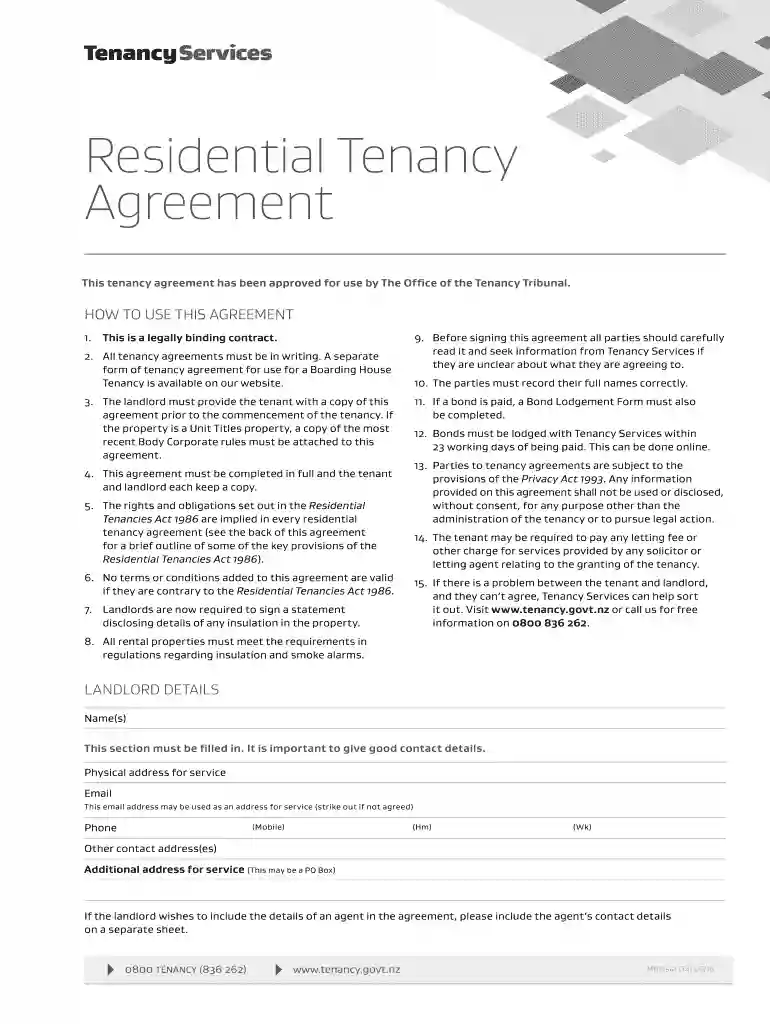
The Residential Tenancy Agreement is a legally binding document that outlines the terms and conditions of a rental arrangement between landlords and tenants. This agreement specifies the rights and obligations of both parties, ensuring clear communication and understanding of the rental terms. It's an essential tool in managing residential leases, promoting transparency and reducing potential conflicts. The inclusion of specific clauses related to rent, security deposits, and maintenance responsibilities makes it a comprehensive guide for tenant-landlord relationships.
A Residential Tenancy Agreement includes several critical elements:
These elements work collectively to form a solid framework for residential leasing and ensure all parties understand their commitments.
Completing the Residential Tenancy Agreement requires careful attention to each section:
A completed and signed agreement provides legal standing and clarity for all involved parties.
Understanding the terminology in a Residential Tenancy Agreement is crucial:
Familiarity with these terms can help prevent misunderstandings and facilitate smoother lease management.
The Residential Tenancy Agreement serves as a legal contract compliant with local housing laws and regulations. In the United States, the agreement must adhere to federal and state-specific tenant rights statutes, ensuring that both landlords and tenants act within the law. The agreement is enforceable in court if disputes arise, making it a vital component of property leasing.
Lease agreements can vary significantly based on state regulations. Many states have specific rules regarding:
It's important to customize the agreement to comply with the respective state legislation, ensuring full legal protection for both parties.
The choice between digital and paper versions of the Residential Tenancy Agreement can impact management processes. Digital agreements, like those offered in PDF format on platforms such as DocHub, provide easier access, enhanced security through encryption, and more convenient sharing and storage. Conversely, paper versions offer a tangible record but may require additional steps for editing and distribution.
This agreement is typically used by:
Understanding who uses these agreements helps shape the expectations and compliance measures necessary for effective tenancy management.


We've got more versions of the Residential tenancy agreement For tenants and landlords PDF 1 2 MB form. Select the right Residential tenancy agreement For tenants and landlords PDF 1 2 MB version from the list and start editing it straight away!
At DocHub, your data security is our priority. We follow HIPAA, SOC2, GDPR, and other standards, so you can work on your documents with confidence.
California Tenants A Guide to Residential Tenants and Landlords Rights and. Responsibilities was written initially by the Department of Consumer AffairsRead more
May 22, 2026 Real estate and construction ➜ Definition meaning ✔️ Standards implementation ✔️ Drivers barriers ✔️ Read article.


