




01. Edit your form online
Type text, add images, blackout confidential details, add comments, highlights and more.

Type text, add images, blackout confidential details, add comments, highlights and more.

Draw your signature, type it, upload its image, or use your mobile device as a signature pad.

Send it via email, link, or fax. You can also download it, export it or print it out.
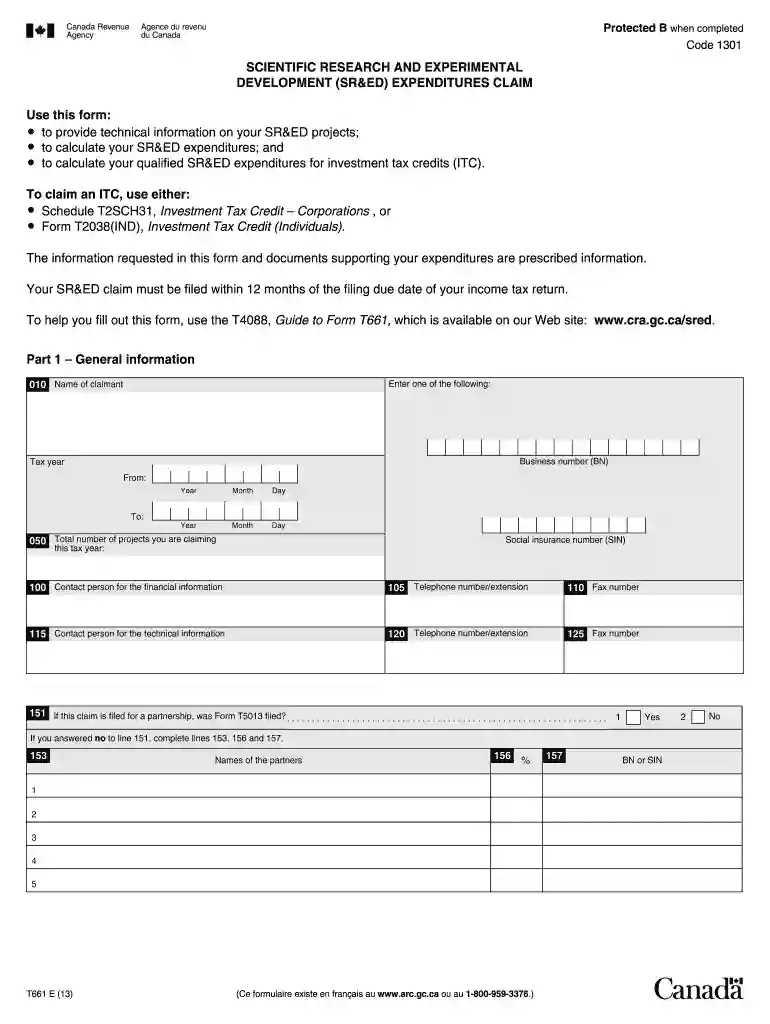
The T66113 fillable form is an essential document used for claiming Scientific Research and Experimental Development (SR&ED) expenditures in Canada. It is designed to streamline the submission of technical information related to SR&ED projects, helping businesses and individuals accurately calculate eligible expenditures and claim investment tax credits (ITC). Key sections include general information, project details, expenditure calculations, and required certifications. It is vital for applicants to file within 12 months of the income tax return due date and keep all supporting documents for future reference.
Filling out the T66113 fillable form involves several detailed steps:
Gather Required Information: Before starting, collect all relevant data about the SR&ED projects conducted, including project descriptions and financial records.
Section A - General Information: Complete with basic details about the taxpayer, including the business name, contact details, and tax identification number.
Project Details: Describe the SR&ED projects, covering the technological advancements or scientific uncertainties addressed.
Expenditure Calculations: List all eligible expenditures related to SR&ED activities, ensuring accuracy and adherence to current tax rules.
Certifications: Sign and certify that all information provided is accurate.
Real-world scenario: A software development company working on an innovative software solution should include descriptions of the technology risks and uncertainties faced, and expenditures related to the development process.
The T66113 fillable form is primarily used by corporations, partnerships, and individual entrepreneurs engaged in scientific or technological research and development within Canada. Businesses in various industries, such as manufacturing, technology, and pharmaceutical sectors, regularly leverage this form to claim tax incentives for their R&D projects. It is essential for any entity aiming to reduce their tax liability while financing innovative projects.


The T66113 form includes several critical elements necessary for an SR&ED claim:
These elements ensure that applicants provide comprehensive documentation for their claims, contributing to a thorough evaluation by tax authorities.
To qualify for using the T66113 fillable form, businesses must engage in eligible SR&ED activities. This includes:
Eligibility depends on the project's ability to meet specific criteria, showing a clear advancement in scientific knowledge or technology.

Adhering to filing deadlines is crucial for SR&ED claims. The T66113 fillable form must be submitted within twelve months of the income tax return's due date. Missing these timelines may result in the rejection of claims or loss of potential tax credits. Businesses should mark their calendars and set internal deadlines well ahead of the official deadlines to ensure timely submissions.
Applicants can submit the T66113 fillable form through various methods:
Choosing the right submission method depends on the business's operational preferences and infrastructure.
Failure to accurately complete the T66113 fillable form or missing the submission deadline can lead to various penalties, including:
Understanding these potential consequences can motivate businesses to ensure accuracy and timeliness in their filings. These guidelines serve to help claimants successfully navigate the process while securing their entitled benefits efficiently and correctly.
We've got more versions of the T66113 fillable form form. Select the right T66113 fillable form version from the list and start editing it straight away!
At DocHub, your data security is our priority. We follow HIPAA, SOC2, GDPR, and other standards, so you can work on your documents with confidence.


