



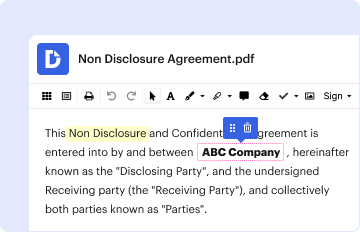
01. Edit your form online
Type text, add images, blackout confidential details, add comments, highlights and more.

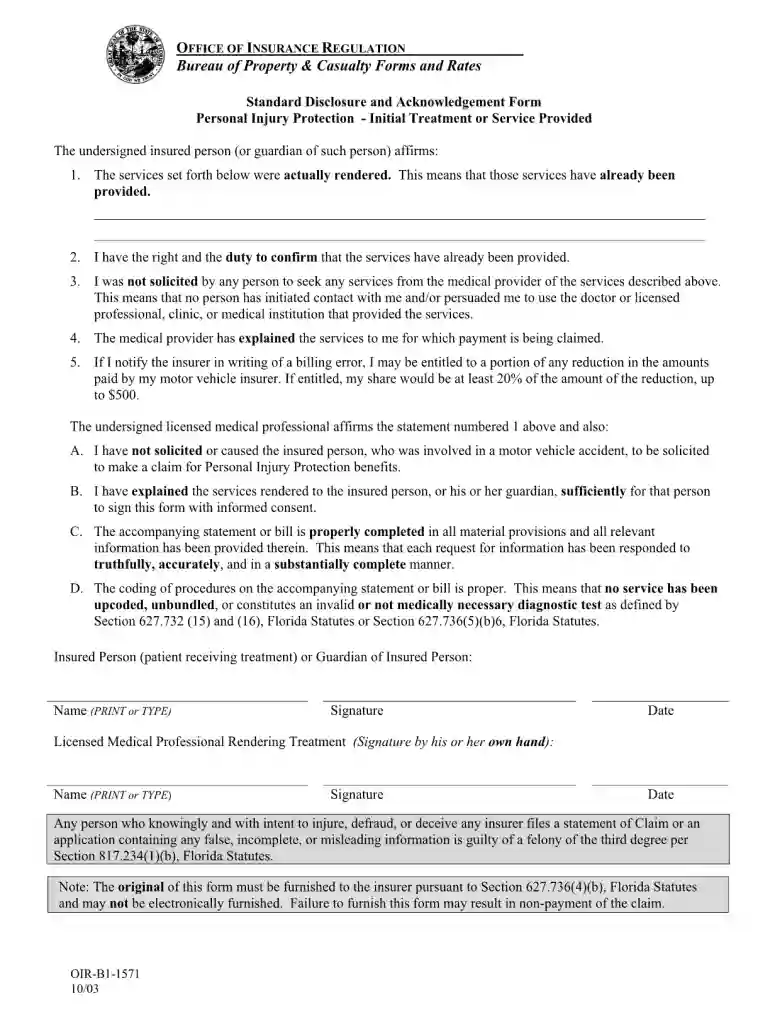
Type text, add images, blackout confidential details, add comments, highlights and more.
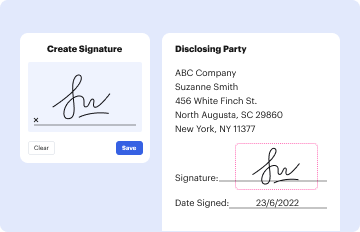
Draw your signature, type it, upload its image, or use your mobile device as a signature pad.

Send it via email, link, or fax. You can also download it, export it or print it out.
The Standard Disclosure Form 2003 is a structured document used primarily in the insurance domain, particularly within the realm of personal injury protection. This form is utilized to standardize the process of disclosing initial treatments or services provided under specific insurance policies. Its primary purpose is to ensure that all necessary information regarding the treatment or service is clearly communicated and acknowledged by the involved parties. By using this form, insurers and healthcare providers can facilitate transparent communication and maintain accurate records. The form serves as an essential tool for both compliance and documentation purposes, particularly in states that mandate specific disclosure requirements.
Utilizing the Standard Disclosure Form 2003 involves several clear steps to ensure accuracy and compliance. First, the form must be filled out with precise details about the initial treatment or service provided under a personal injury protection policy. This includes the date of service, a description of the treatment, and the identity of the provider. Healthcare professionals completing this form must ensure all sections are accurately filled to reflect the service rendered. Once completed, the form should be shared with the relevant insurance company for acknowledgment and further processing. It is critical to verify that the form meets all state-specific guidelines to avoid potential issues during the claims process.
Filling out the Standard Disclosure Form 2003 requires attention to detail and a thorough understanding of its specific sections. Follow these steps for optimal accuracy:
Each of these steps must be executed with precision to ensure the validity and acceptance of the form. Any errors or omissions may lead to delays in processing or potential disputes.
The Standard Disclosure Form 2003 comprises several critical elements essential for its purpose. These include:
Each element plays a crucial role in ensuring that the form meets legal requirements and serves its intended purpose of transparent and precise disclosure.
Various states within the United States may impose specific rules regarding the use of the Standard Disclosure Form 2003. These rules often relate to:
Understanding these regulations is essential for compliance. Healthcare providers and insurers must stay updated on any changes in state legislation impacting the use of this form.
The Standard Disclosure Form 2003 is legally significant because it helps ensure compliance with federal and state regulations regarding insurance and healthcare disclosures. This form:
Failure to use this form appropriately may lead to legal complications or denial of claims, making its proper use critical in healthcare and insurance environments.
Several practical use cases illustrate the utility of the Standard Disclosure Form 2003:
These examples demonstrate the form’s versatility and critical role in varied insurance contexts.
Both digital and paper versions of the Standard Disclosure Form 2003 present unique advantages, yet they share a common purpose.
Digital Version:
Paper Version:
Organizations often choose the version that best fits their operational needs, taking into account factors such as technological infrastructure and user preference.
We've got more versions of the standard disclosure form 2003 form. Select the right standard disclosure form 2003 version from the list and start editing it straight away!
At DocHub, your data security is our priority. We follow HIPAA, SOC2, GDPR, and other standards, so you can work on your documents with confidence.
Original Rule entitled Delivery of Standard Disclosure Brochure adopted. F. Jan. 15, 2003 ; eff. Feb. 4, 2003 .Read more
Needs and Uses: The SF-LLL is the standard disclosure form for Lobbying paid for with non-Federal funds, as required by the Byrd Amendment, as amended by


