




01. Edit your form online
Type text, add images, blackout confidential details, add comments, highlights and more.

Type text, add images, blackout confidential details, add comments, highlights and more.

Draw your signature, type it, upload its image, or use your mobile device as a signature pad.

Send it via email, link, or fax. You can also download it, export it or print it out.
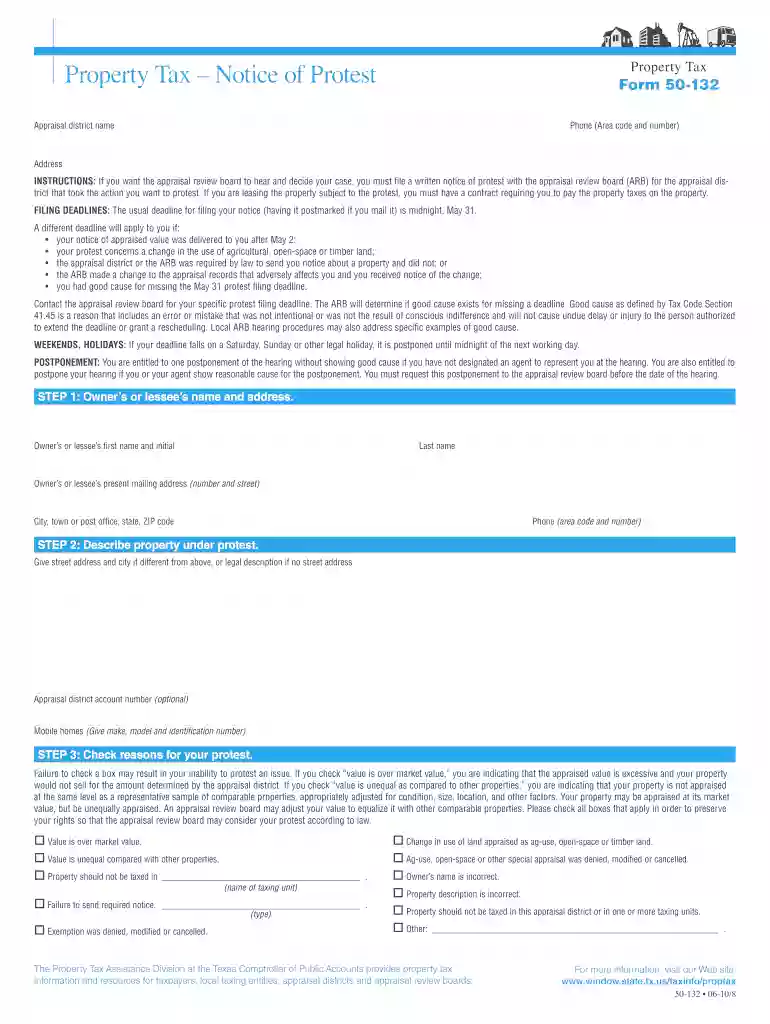
Form 50-132, a Property Tax Notice of Protest, allows property owners or lessees in Texas to formally dispute their property tax assessments. This form is integral to the appeal process with the Appraisal Review Board (ARB). It is generally used to contest issues like excessive property valuation, inequitable assessments compared to similar properties, or errors in property characteristics. Understanding the purpose of Form 50-132 is crucial for property owners to manage their tax liabilities effectively.
Understanding each element ensures accurate and timely filing of the protest.
Obtaining Form 50-132: This form is available for download from the official website of the Texas Comptroller of Public Accounts. Alternatively, property owners can request it directly from their local county appraisal district office.
By knowing where and how to obtain this form, property owners ensure they start the protest process as early as possible.
Following these steps ensures a complete and acceptable submission to the ARB.
Protests must generally be filed by May 15th or 30 days after the appraisal notice is mailed, whichever is later. Keeping track of these crucial dates avoids automatic denial of the protest due to late filing. Property owners must document all correspondence related to these dates to ensure compliance.
This form serves as a formal legal protest document in the Texas property tax dispute process. Compliance with the rules governing its submission and use is critical. Property owners should be aware that filing an illegitimate protest can lead to penalties or dismissal.
Choosing the appropriate submission method can depend on personal preference or logistic convenience.
This form is generally used by property owners or lessees in Texas who have concerns with how their property tax assessments were calculated. Legal representatives, on behalf of the property owners, may also use it. Understanding the user base helps tailor strategies and communication protocols for effective utilization.


An owner might use the form if their property's appraised value significantly exceeds market trends. By documenting comparable properties with lower appraisals, the property owner stands a better chance of achieving a reassessment.
If key property details such as size or type are misrepresented in the appraisal report, this form can serve to correct those errors, providing an accurate basis for property value determination.
While Form 50-132 is specific to Texas, various counties may have additional guidelines or procedural rules regarding property tax protests. Property owners must review county-specific instructions or consult local legal professionals to ensure compliance across jurisdictions.
These varied aspects of the 2008 TX Comptroller 50-132 form require a thorough understanding of state and local processes to navigate effectively and achieve desired outcomes in property tax disputes.
We've got more versions of the 2008 TX Comptroller 50-132 form. Select the right 2008 TX Comptroller 50-132 version from the list and start editing it straight away!
| Versions | Form popularity | Fillable & printable |
|---|---|---|
| 2025 | 4.2 Satisfied (23 Votes) | |
| 2024 | 4.8 Satisfied (22 Votes) | |
| 2023 | 4.5 Satisfied (36 Votes) | |
| 2022 | 4.8 Satisfied (169 Votes) | |
| 2020 | 4.3 Satisfied (66 Votes) | |
| 2020 | 4.4 Satisfied (264 Votes) | |
| 2019 | 4.3 Satisfied (126 Votes) | |
| 2017 | 4.4 Satisfied (113 Votes) | |
| 2012 | 4.3 Satisfied (179 Votes) | |
| 2008 | 4 Satisfied (37 Votes) |
At DocHub, your data security is our priority. We follow HIPAA, SOC2, GDPR, and other standards, so you can work on your documents with confidence.
Jan 1, 2026 Tax Code Section 5.041(f) states: The comptroller may not advise a property owner, a property owners agent, or the chief.Read more
To file a protest, a property owner should submit a letter (or Property Tax Form 50-132, Notice of Protest) to the appraisal district. The letter should


