




01. Edit your form online
Type text, add images, blackout confidential details, add comments, highlights and more.

Type text, add images, blackout confidential details, add comments, highlights and more.

Draw your signature, type it, upload its image, or use your mobile device as a signature pad.

Send it via email, link, or fax. You can also download it, export it or print it out.
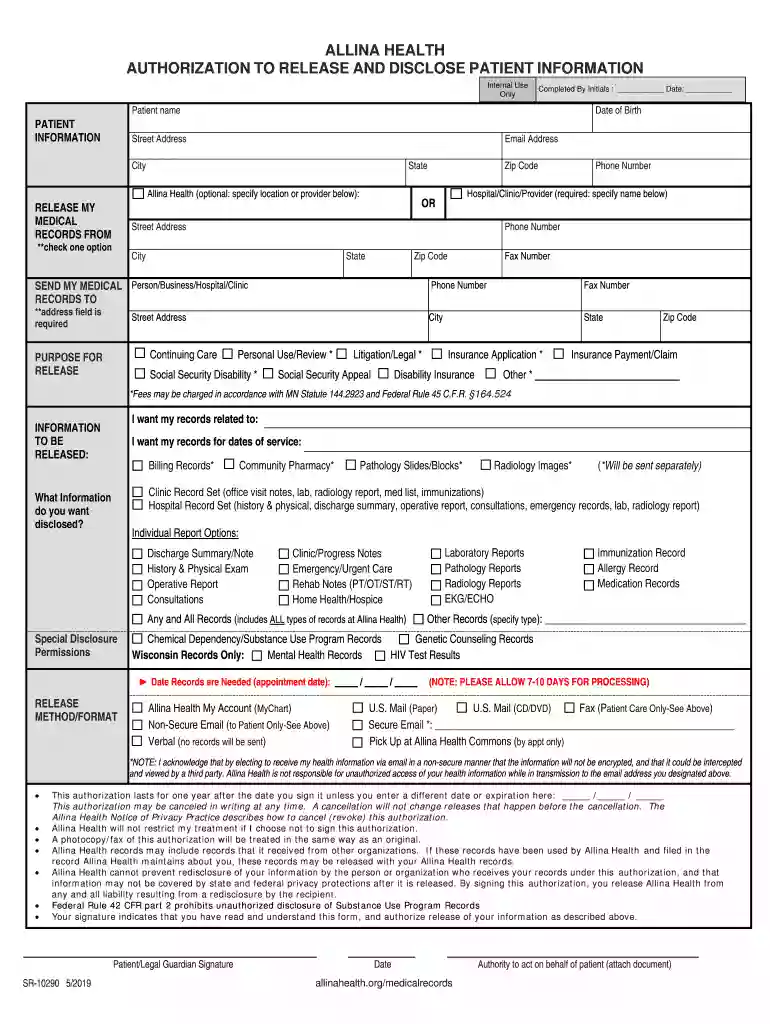
The "Patient Access Request for Health" form from Allina Health is a crucial document that allows patients to request the release and disclosure of their medical records. It serves several functions, primarily ensuring that patients or authorized representatives can obtain their health information under specific conditions. This form facilitates the transparency of medical data between healthcare providers and patients, empowering individuals to manage their health record details effectively. Additionally, this document is integral for legal compliance with health information privacy laws, such as HIPAA, by providing a structured way through which access to sensitive health data is controlled and recorded.
Utilizing the "Patient Access Request for Health" form involves several steps and understanding the pivotal sections of the document. This form typically begins with a section for inserting the patient’s personal information, such as name, address, and date of birth. It is crucial to fill out this section accurately to ensure the request pertains to the correct individual's medical records.
Securing a copy of this form is straightforward and can be accomplished through various channels. Patients can visit the Allina Health website where the form is typically available for download. Alternatively, they can request it directly from their healthcare provider's office in person or by contacting the medical records department via phone or email. It's important to verify the identity of the requester, which is generally done by providing some form of identification.
Utilizing this form ensures that patients have controlled access to their personal health information, which is a fundamental right under U.S. health care laws. This availability is crucial for maintaining an accurate understanding of one’s health history, facilitating informed medical decisions, and ensuring continuity of care when seeing new healthcare providers. It’s also significant for legal purposes and insurance claims, as having documented evidence of health status or treatment history may be necessary.
Primarily, this form is used by patients of Allina Health seeking access to their medical records. In addition, authorized patient representatives, such as family members, legal guardians, or attorneys, may use the form to request records on behalf of the patient. Healthcare professionals and entities involved in the direct care coordination or legal processes may also require access under certain conditions.


In compliance with HIPAA and other privacy regulations, this form ensures lawful access to medical records. It recaps the patient’s rights to access personal medical data and stipulates the terms under which the information can be released. Legal safeguards are set in place within the form to ensure that the data is accessed and shared in a secure and confidential manner, protecting patient privacy and maintaining the integrity of medical information exchange.
This form is structured to include several essential elements:
While the general process for releasing medical records is consistent, some state-specific regulations may impact the procedure. For example, state laws may dictate variations in the fees that can be charged for copying and sending records or additional identification requirements. Patients should verify any unique state requirements with Allina Health or consult state health regulations to ensure compliance.
Patients have multiple options for submitting their form, enhancing flexibility and accessibility:
These methods cater to differing levels of access to technology and personal preference, ensuring that the process remains accessible to all patients.
We've got more versions of the PATIENT ACCESS REQUEST FOR HEALTH - Allina Health form. Select the right PATIENT ACCESS REQUEST FOR HEALTH - Allina Health version from the list and start editing it straight away!
At DocHub, your data security is our priority. We follow HIPAA, SOC2, GDPR, and other standards, so you can work on your documents with confidence.
Mar 15, 2021 Call Us: 833-606-1911. Patients can find their immunization history, family medical history, diagnoses, medication information and provider
ALSense transitions from an innovative prototype to a standard diagnostic tool accessible to all patients. access symptomatic treatments,


