







Definition and Meaning
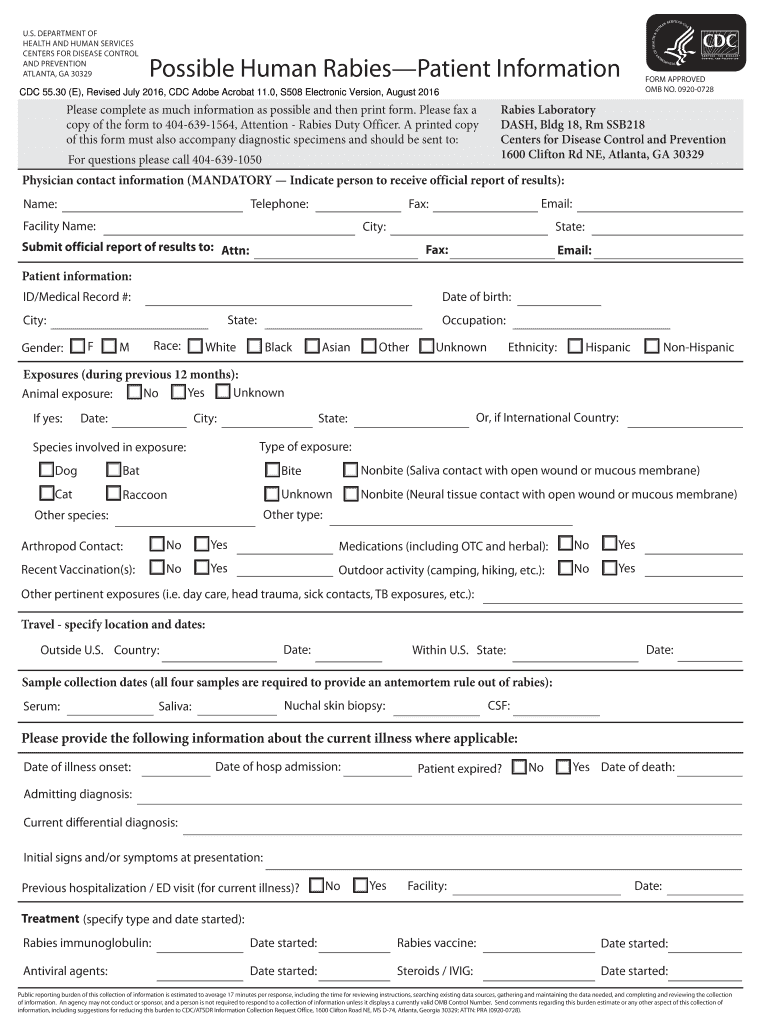
The "Possible Human RabiesPatient Information" form is an essential tool used by healthcare professionals to gather critical information regarding suspected human rabies cases. Developed by the U.S. Centers for Disease Control and Prevention (CDC), this document serves to collect detailed patient information necessary for diagnosing and managing potential rabies infections. The form includes sections for personal details, exposure history, observed symptoms, and laboratory results. Ensuring accurate completion of this form is vital for effective communication with the CDC and for the proper handling of suspected cases.
How to Use the Possible Human RabiesPatient Information
Healthcare providers play a crucial role in utilizing this form to capture all relevant data on a patient suspected of having rabies. The process involves several key steps:
- Patient Identification: Start by entering the patient's full name, date of birth, and contact information. This ensures that all subsequent information is correctly attributed to the specific case.
- Exposure History: Document any known instances of potential rabies exposure, such as animal bites or scratches. Specify the type of animal involved and the circumstances of the encounter.
- Symptom Documentation: Carefully note any symptoms exhibited by the patient that are indicative of rabies, including fever, headache, or neurological signs like confusion or paralysis.
- Laboratory Results: Include any laboratory findings that support the diagnosis of rabies, such as PCR tests or antibody titers.
Steps to Complete the Possible Human RabiesPatient Information
Completing this form requires a thorough understanding of both the patient's history and the clinical presentation of rabies. The detailed process involves:
- Reviewing Patient History: Before filling out the form, collect a comprehensive medical history to identify any other potential causes for symptoms.
- Detailed Examination: Conduct a thorough physical and neurological examination to assess the presence and severity of rabies symptoms.
- Consultation with Experts: If necessary, seek guidance from infectious disease specialists or the CDC to ensure accurate completion of clinical sections.
- Documentation: Carefully document all findings on the form, ensuring clarity and precision to facilitate effective communication with the CDC.
Key Elements of the Possible Human RabiesPatient Information
Several critical components must be accurately detailed on this form to ensure a comprehensive assessment:
- Personal Information: Essential details about the patient, such as age, gender, and medical record numbers, provide a foundation for identification and tracking.
- Exposure Details: Specific information about potential rabies exposure, including date, time, and type of animal involved, helps assess risk levels.
- Symptomatology: A list of symptoms with their onset dates aids in determining how the disease may be progressing.
- Laboratory Data: Results from diagnostic tests focused on confirming rabies infection are crucial for accurate diagnosis and subsequent steps in patient care.
Legal Use of the Possible Human RabiesPatient Information
The submission of the "Possible Human RabiesPatient Information" form to the CDC is both a medical and legal procedure. By ensuring the form is completed accurately:
- Healthcare Compliance: Adheres to public health regulations that mandate reporting communicable diseases.
- Patient Rights: Maintains patient confidentiality as required by HIPAA while fulfilling public health responsibilities.
- Legal Protection: Protects healthcare entities by documenting decisions and actions taken in response to potential rabies exposure, which can be critical in case of legal scrutiny.
Examples of Using the Possible Human RabiesPatient Information
Practical examples help illustrate the form’s application in real-world scenarios:
- Animal Control Officer Incident: After being bitten by a stray animal while performing duties, an officer undergoes assessment for potential rabies. The form captures exposure details and signs of infection.
- Travel-Related Exposure: A patient returning from a rabies-endemic area reports being scratched by local wildlife. Clinicians use the form to document exposure and subsequent testing to rule out rabies.
- Symptomatic Presentation: In a healthcare setting, a patient presents with encephalitis symptoms without a known bite history. The form aids in ruling out rabies through detailed symptom and lab data documentation.
Who Typically Uses the Possible Human RabiesPatient Information
This form is primarily utilized by:
- Healthcare Providers: Physicians and nurses in emergency departments and infectious disease units who suspect rabies exposure.
- Public Health Officials: Epidemiologists and public health practitioners tracking rabies incidence and preventing outbreaks.
- Laboratory Personnel: Involved in processing specimens and reporting findings related to suspected rabies cases.


Important Terms Related to Possible Human RabiesPatient Information
Understanding specific terminology used in the form is critical:
- Paresthesia: An abnormal sensation, often described as tingling or prickling, which may indicate the onset of rabies symptoms.
- Prodrome: The early set of symptoms before specific signs of rabies appear, such as fever or malaise.
- Negri Bodies: Inclusion bodies typical in nerve cells infected with rabies, detected during laboratory examinations.
Form Submission Methods: Online, Mail, In-Person
The CDC provides multiple submission methods to facilitate reporting:
- Online Submission: Expedites delivery and confirmation of receipt, useful in urgent cases requiring quick action.
- Mail: Traditional method allowing for the inclusion of additional documentation or physical specimens.
- In-Person: Useful when immediate laboratory analysis is necessary, often in coordination with local health departments.
State-Specific Rules for the Possible Human RabiesPatient Information
While the form originates at a federal level, variations in implementation can occur based on state regulations:
- Mandatory Reporting Timelines: Some states may have stricter deadlines for reporting suspected rabies cases to their health departments.
- Quarantine Procedures: Differing state guidelines may impact how patients or animals are managed pending rabies confirmation.
- Vaccination Protocols: Local health recommendations regarding pre-exposure and post-exposure prophylaxis can influence how the form data is interpreted and acted upon.




