Definition & Importance of the Florida Department of Agriculture and Consumer Services
The Florida Department of Agriculture and Consumer Services (FDACS) is a state agency dedicated to promoting and regulating agriculture-related industries while safeguarding consumer interests. It encompasses a range of responsibilities, such as managing natural resources, promoting economic opportunities, and ensuring food safety. This agency plays a crucial role in supporting Florida's diverse agricultural landscape, which includes citrus groves, cattle ranches, and vegetable farms, by establishing industry standards and offering support programs.
Responsibilities of FDACS
- Regulation of Agriculture: FDACS oversees the compliance of agricultural operations with state and federal standards, ensuring environmentally sustainable practices.
- Consumer Protection: The department works to prevent consumer fraud and maintain the quality of products, including household goods and travel services.
- Resource Management: It administers programs for land and water conservation, improving the sustainability of natural resources.
- Economic Development: FDACS promotes Florida's agriculture-related businesses by providing marketing resources and facilitating export opportunities.
Key Elements of the Florida Department of Agriculture and Consumer Services Forms
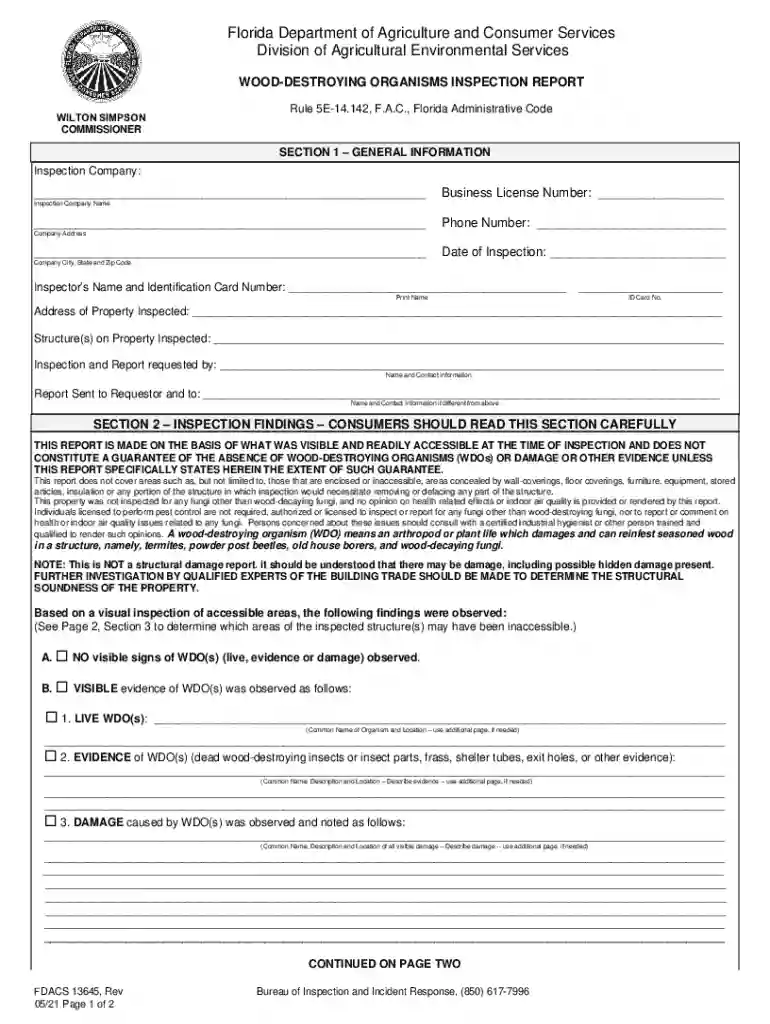
The various forms facilitated by FDACS serve purposes from securing permits to recording inspection findings. A primary example is the Wood-Destroying Organisms (WDO) Inspection Report that focuses on evaluating the presence of organisms such as termites and fungi in structures.
Critical Components of the WDO Inspection Report
- General Information: Includes property details and the specific areas subject to inspection.
- Inspection Findings: Documents visible evidence of wood-destroying organisms and conditions conducive to infestation.
- Treatment Information: Provides data on recommended pest control measures, aiding in maintaining structural integrity.
- Comments and Recommendations: Offers insights and additional remarks from inspectors to guide property owners in protecting their investments.
Steps to Complete the Florida Department of Agriculture and Consumer Services WDO Inspection Form
When filing the Wood-Destroying Organisms Inspection Report, ensure thoroughness and accuracy by following these guidelines:
- Prepare the Property: Grant inspectors access to areas crucial for comprehensive evaluation, such as the basement, attic, and crawl spaces.
- Conduct the Inspection: Engage licensed professionals who follow FDACS standards in identifying and reporting infestations.
- Document Findings: Accurately capture all observations, noting any inaccessible areas which should have been checked.
- Review Compliance: Verify that findings and recommendations align with state requirements, eliminating discrepancies.
- Submit the Form: File the completed form through approved channels, such as online submission, to expedite processing.
Who Typically Uses the Florida Department of Agriculture and Consumer Services Forms
This suite of forms is utilized by a variety of stakeholders including:

- Homeowners: Employ forms for conducting lawful inspections and ensuring pest-free environments.
- Real Estate Professionals: Use these documents to fulfill due diligence before sales or leases.
- Pest Control Operators: Required to submit these forms as part of service offerings in alignment with state regulations.
- State Inspectors: Rely on these forms for maintaining records and accountability during enforcement actions.
State-Specific Rules for the Florida Department of Agriculture and Consumer Services
Florida's distinct climate and biodiversity necessitate state-specific regulations, emphasized by the FDACS:
- Climate Considerations: Hot, humid conditions increase susceptibility to certain pests which FDACS addresses through specific guidelines.
- Pest Control Licensing: Enforces strict licensing for pest control operators, ensuring they meet the state's high standards of practice.
- Environmental Preservation: Implements strict controls to balance agricultural productivity with the preservation of the state's rich natural ecosystems.
Legal Use of the Florida Department of Agriculture and Consumer Services Documents
Proper and lawful use of FDACS documents is essential for compliance with state laws and regulations:
- Authenticity: Ensure forms are filled out by authorized professionals to maintain validity.
- Accuracy: Correct and truthful reporting on inspection findings and conditions is mandatory.
- Record Keeping: Retain completed forms for the legally recommended period, providing a paper trail for future reference or audits.
Examples of Utilizing the Florida Department of Agriculture and Consumer Services
Given Florida's extensive property market and natural conditions, the practical application of FDACS forms is evident in:
- Real Estate Transactions: Buyers demand completed WDO Inspection Reports before closing deals, avoiding potential termite-related damages.
- Property Management: Regular inspections guide necessary property maintenance and preservation efforts.
- Legal Dispute Resolution: Provides evidence during disputes related to property conditions, underpinning legal arguments with documented data.
How to Obtain Florida Department of Agriculture and Consumer Services Forms
Acquiring FDACS forms requires engaging with authorized channels to ensure compliance:
- Online Access: Visit the FDACS website for downloadable forms and instructions for electronic submission.
- Local Offices: Access physical copies by visiting regional FDACS offices, where staff can provide guidance.
- Third-Party Providers: Some licensed pest control and real estate professionals may offer assistance in obtaining and completing necessary forms.
This structured approach ensures seamless interaction with FDACS requirements, supporting lawful compliance and contribution to Florida's economic and environmental objectives.