
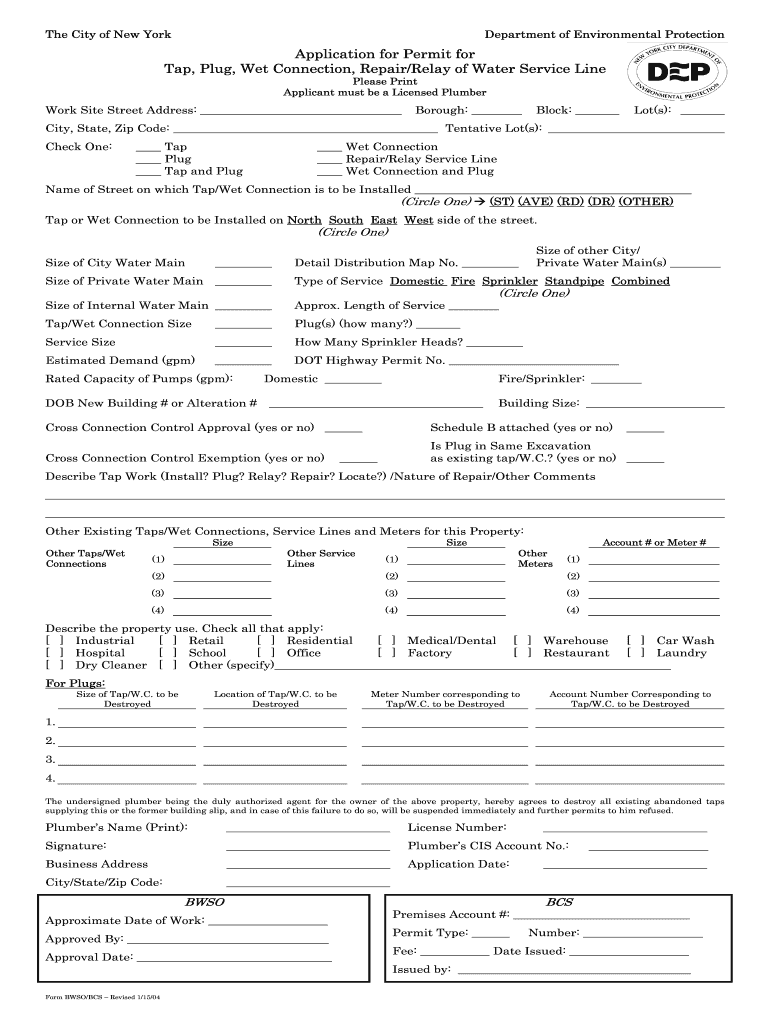







Definition and Meaning of Permit Tap Water
The term "permit tap water" refers to a regulatory process that involves obtaining permission from relevant authorities to conduct activities such as tapping, plugging, wet connections, or repairs on water service lines. This process is significant for maintaining the integrity and safety of the water supply system, ensuring that any modifications or repairs adhere to established standards and regulations. Typically, a plumber licensed by the local Department of Environmental Protection is required to carry out these activities, ensuring compliance with local building codes and water safety protocols.
How to Use the Permit Tap Water
Using the permit tap water involves several coordinated steps to ensure that any changes or repairs to a water service line are both safe and compliant with regulations. Licensed plumbers must follow specific guidelines to apply for the permit, detailing the work they plan to do. The process generally includes:
- Detailing the Work: Provide a comprehensive description of the service line activity, whether it’s a new tap, repair, or disconnect.
- Site Evaluation: Confirm that the work site meets safety and accessibility requirements.
- Compliance Check: Ensure that the proposed work adheres to local statutes and regulations.
By adhering to these steps, professionals ensure that water quality and service reliability are not compromised.
Obtaining the Permit Tap Water
Obtaining a permit tap water involves several bureaucratic steps designed to protect public health and the water infrastructure. The Department of Environmental Protection typically governs the process, and applicants must:
- Complete the Application: Fill out details about the work site, type of service, and existing water connections.
- Submit Documentation: Provide pertinent documents, such as evidence of liability insurance or credentials of the personnel involved.
- Await Approval: The regulatory body reviews the application, ensuring all information is accurate and that the proposed work complies with the relevant codes.
Steps to Complete the Permit Tap Water
Completing the permit tap water form requires careful attention to detail to ensure compliance and successful approval:
- Gather Required Information: Collect all necessary data about the site and intended work.
- Fill Out the Form: Enter details such as plumber identification, work type, and property use.
- Review Regulations: Familiarize yourself with regional water management codes.
- Submit the Form: Depending on jurisdiction, submit the form online, by mail, or in-person.
- Follow Up: Track the application's status and provide additional information if requested by the issuing authority.
Why You Should Permit Tap Water
Permitting tap water activities is essential for multiple reasons:
- Regulatory Compliance: Ensures all work meets local and state regulatory requirements, safeguarding public health and the integrity of water systems.
- Standardization: Helps maintain a consistent standard for water line installations and repairs.
- Accountability: Offers a documented record of who completed the work, which is crucial in case of any discrepancies or issues.
Who Typically Uses the Permit Tap Water Form
The permit tap water form is typically utilized by:
- Licensed Plumbers: Professionals who need to execute or oversee work on water service lines are primary users.
- Property Developers: Those involved in constructing new buildings or developing properties where new water service lines or modifications are required.
- City Planners: Municipal authorities may use the form as part of city planning initiatives to ensure that infrastructure meets required standards.


Key Elements of the Permit Tap Water Form
The permit tap water form contains several critical components:
- Plumber Identification: Information on the licensed professional conducting the work.
- Work Site Details: Details about the location of the work and its nature.
- Service Description: An outline of the specific activities like tapping or repairing the service line.
- Compliance Agreement: A section where the plumber agrees to abide by all relevant regulations and standards.
Legal Use of the Permit Tap Water
The legal use of the permit tap water involves adhering to a range of regulatory requirements. These include:
- Adhering to Building Codes: Ensuring that all modifications align with local building and safety regulations.
- Environmental Compliance: Making sure the work does not negatively impact local ecosystems or water quality.
- Documentation and Record-Keeping: Maintaining thorough records of all work completed under the permit for future reference and accountability.
By understanding the legal requirements and context, individuals and organizations can ensure that their water service line operations remain compliant and legally sound.




