




01. Edit your new jersey community affairs online
Type text, add images, blackout confidential details, add comments, highlights and more.

Type text, add images, blackout confidential details, add comments, highlights and more.

Draw your signature, type it, upload its image, or use your mobile device as a signature pad.

Send 375 mccarter highway newark nj section 8 phone number via email, link, or fax. You can also download it, export it or print it out.
New Jersey Community Affairs (NJ DCA) pertains to the state's Department of Community Affairs, a government body responsible for a wide range of community-related programs and services. This department addresses areas such as housing, local government assistance, fire safety, planning, and urban development. The primary objective is to enhance the quality of life for New Jersey residents by supporting community development initiatives, providing financial aid for local governments, and ensuring regulatory compliance. These goals underline the importance of the DCA in promoting sustainable community growth.
The NJ DCA oversees various regulations and guidelines that help maintain the structure and functionality of local governments. By facilitating community development, it aims to ensure equitable access to housing and essential services across the state. This makes NJ DCA an instrumental part of the state's governance, affecting a broad array of constituents, from local government officials to ordinary citizens.
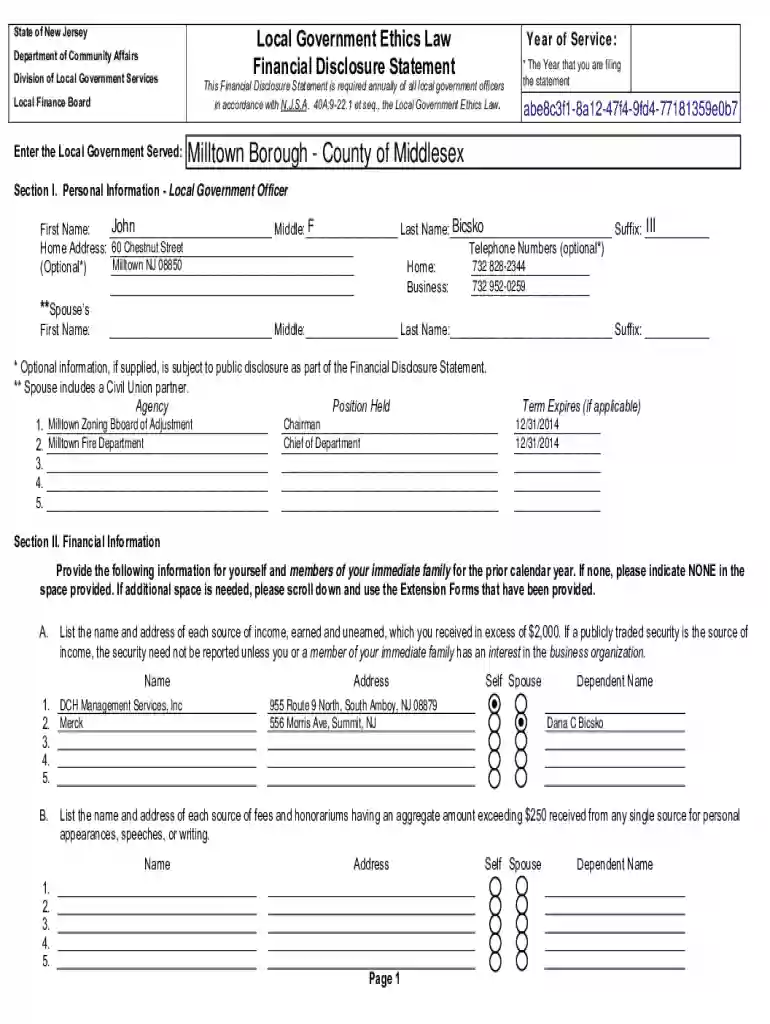
The Financial Disclosure Statement is a mandatory document for local government officers in New Jersey. This annual requirement underlines the importance of transparency and accountability in public service. Below are the key steps to correctly complete this form:
Gather Required Information: Start by collecting all necessary personal and financial information. This includes details about income sources, gifts received, business interests, and real property holdings. Ensure that the information is accurate and up-to-date.
Access the Form: You can obtain the form from the NJ DCA website or through your local government's portal. Ensure that you are using the most current version of the document to avoid processing delays.
Fill Out the Form: Carefully complete each section of the form, ensuring all required fields are accurately filled. Attention to detail is crucial, especially in sections requiring detailed financial disclosures.
Certification: Review all information entered before certifying the document. Certification involves affirming the accuracy and completeness of all disclosed information.
Submission: Submit the completed form by the specified deadline. It may be submitted online or via mail, depending on your local government's preferred method.
Completion of the Financial Disclosure Statement is critical in adhering to the Local Government Ethics Law, promoting transparency among public officials.
New Jersey Community Affairs services are broad in scope and cater to various groups within the state. These include:
Local Government Officials: They rely on DCA for guidance on regulatory compliance and to secure financial assistance for community projects.
Homeowners and Tenants: Individuals seeking affordable housing or assistance in housing-related issues often approach the DCA for support and resources.
Urban Planners and Developers: For compliance with safety and development regulations, DCA provides necessary guidelines and permits.
Non-Profit Organizations: These entities often collaborate with the DCA to implement community development initiatives and social welfare programs.
This wide array of users underscores the versatility and critical role of NJ DCA in addressing diverse community needs.
To ensure compliance with the Local Government Ethics Law, acquiring the Financial Disclosure Statement is a crucial step for New Jersey local government officers. Here’s how to obtain it:
Online Availability: The NJ DCA website provides access to the Financial Disclosure Statement. This form can be downloaded directly for convenience.
Local Government Access: Depending on your specific municipal processes, forms might also be available through local government offices or portals.
Support Resources: Guidelines and frequently asked questions are typically available alongside the form, offering clarity on any potential issues or complexities.
Acquisition of the correct form is essential to maintain compliance with regulatory standards and avoid unnecessary delays or penalties.
New Jersey does implement specific rules surrounding the Financial Disclosure Statement, ensuring local government officers adhere to transparency and ethical standards. Key points include:
Annual Requirement: Officers must file this statement annually, ensuring that their financial and personal interests remain transparent for each fiscal year.
Inclusive Disclosure: The form requires comprehensive disclosure, including sources of income, received gifts, business interests, and property holdings. Failure to provide complete information may lead to legal repercussions.
Certification of Accuracy: Certifying that the document’s contents are accurate and complete holds legal weight, carrying accountability for truthful reporting.
State-specific rules serve to reinforce the ethical frameworks within which local government officials operate, promoting public trust through accountability.
Understanding the terminology associated with the NJ DCA can aid in effectively navigating its services. Key terms include:
Local Government Assistance Programs: Financial aid initiatives aimed at assisting counties and municipalities in New Jersey.
Urban Enterprise Zones (UEZs): Designated areas where businesses are offered specific tax benefits to stimulate economic development.
Affordable Housing: Programs focused on making housing accessible at lower costs to eligible residents.
Zoning: Regulatory frameworks governing land use and urban planning, critical for maintaining organized and efficient community development.
Familiarity with these terms helps ensure a comprehensive understanding of the functions and services offered by the NJ DCA.
The Financial Disclosure Statement includes several critical sections that must be thoroughly completed. These elements can be broken down as follows:
Personal Information: Basic identification details, including name and designation, ensure proper documentation and accountability.
Income Sources: This section requires detailed information on all income sources, including salaries, investments, and other financial gains.
Business Interests: Disclosure of ownership or stakes in businesses to prevent conflicts of interest.
Property Holdings: Real estate ownerships, both personal and business-related, must be listed for transparency.
Gifts Received: Declare any valuable gifts from sources that could potentially influence decision-making in official capacities.
Each of these elements plays a vital role in safeguarding ethical standards within public governance.
Non-compliance with the requirement to submit a Financial Disclosure Statement can result in significant penalties, including:
Legal Repercussions: Failure to file or submitting inaccurate information can lead to legal action, including fines or judicial proceedings.
Loss of Public Office: In severe instances, non-compliance might result in disqualification from holding a public office position.
Public Trust Erosion: Beyond statutory penalties, neglecting transparency obligations may damage an officer’s public reputation and trustworthiness.
Understanding these penalties underscores the importance of compliance and ethical conduct in public service roles.
We've got more versions of the new jersey community affairs form. Select the right new jersey community affairs version from the list and start editing it straight away!
| Versions | Form popularity | Fillable & printable |
|---|---|---|
| 2013 | 4.8 Satisfied (55 Votes) |
At DocHub, your data security is our priority. We follow HIPAA, SOC2, GDPR, and other standards, so you can work on your documents with confidence.
COMMUNITY AFFAIRS. New Jersey Administrative Code Title 5 - COMMUNITY AFFAIRS. Chapter 1 - STANDARDS OF CONDUCT. Chapter 2 - ORGANIZATIONAL RULES. Chapter 3 -
Welcome to the home of New Jersey Division of Consumer Affairs. consumers paying for goods and services with cash.


