




01. Edit your form online
Type text, add images, blackout confidential details, add comments, highlights and more.

Type text, add images, blackout confidential details, add comments, highlights and more.

Draw your signature, type it, upload its image, or use your mobile device as a signature pad.

Send it via email, link, or fax. You can also download it, export it or print it out.
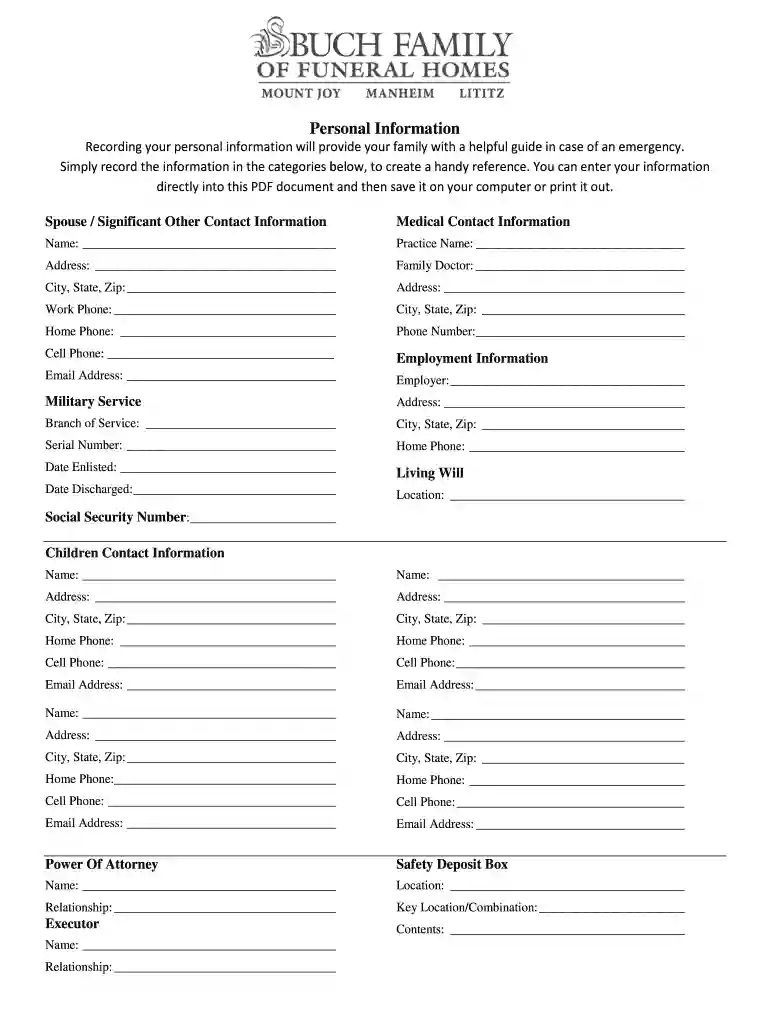
The "Personal Information Recording your personal information will" form serves as a comprehensive document to capture and manage essential personal data. This guide includes areas such as contact details, medical records, financial accounts, insurance policies, and professional advisors. The primary goal is to create a centralized source of information that can help family members, especially during emergencies, when managing an individual's affairs might be crucial.
To use this form effectively, individuals must ensure that all sections are thoroughly completed with accurate information. This involves gathering contact information for key individuals and institutions, detailing medical history and professional contacts, and clearly documenting financial account details. A well-prepared form enhances accessibility and usability, ensuring that critical information is available when needed, particularly in situations requiring quick decisions or actions.
Completing this form involves a step-by-step approach to ensure comprehensive and accurate data input. By following these steps, users can ensure that they document all relevant personal information efficiently:
A well-structured form will typically include several key elements that are vital for comprehensive personal information recording:
This form is widely used by various demographics to ensure that their personal affairs are in order. The primary users typically include:


Legally, the form aids in organizing personal data, ensuring it is accessible to authorized individuals and entities. This utility is especially significant under circumstances where:
Consider the real-world context where such a form proves essential:
Different U.S. states may have varying legal requirements and recommendations regarding personal information documentation. Here’s a brief overview:
We've got more versions of the Personal Information Recording your personal information will form. Select the right Personal Information Recording your personal information will version from the list and start editing it straight away!
| Versions | Form popularity | Fillable & printable |
|---|---|---|
| 2017 | 4.8 Satisfied (87 Votes) |
At DocHub, your data security is our priority. We follow HIPAA, SOC2, GDPR, and other standards, so you can work on your documents with confidence.
Personal information includes: Name or nickname Email address Purchase history Browsing history Location data Employment data IP address Profiles businesses
If they know who we are, and if they have enough financial incentive, they can record this information under our name.
We collect personal information that you voluntarily provide to us when you express an interest in obtaining information about us or our products and Services,Read more


