Definition and Meaning
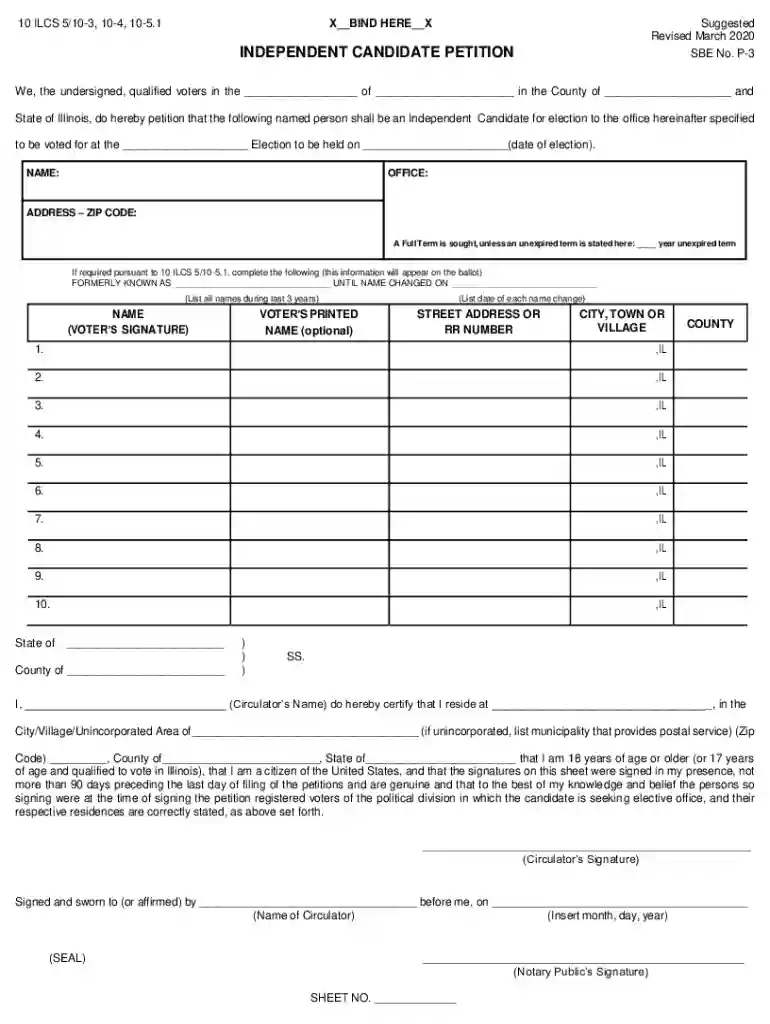
The phrase "We, the undersigned, qualified voters in the of in the County of and" indicates a petition form utilized in the context of electoral processes within the United States. This document provides a formal mechanism through which voters express their support for independent candidates vying for a position in public office. By affixing their signatures, voters affirm their eligibility and assent to the nomination process, a critical step in complying with state election laws.
Contextual Application
- The form serves as an acknowledgment of support for candidates who require a specific number of signatures to be placed on the ballot.
- Typically used in local or state election cycles, the document is essential for validating candidates who pursue independent or third-party representation.
Importance in the Electoral Process
- Collecting voter signatures guarantees that the candidate has demonstrated a viable level of public backing.
- The form acts as a transparency measure, ensuring that electoral candidates fulfill democratic protocols and serve the public's interest.
How to Use "We, the undersigned, qualified voters in the of in the County of and"
The application of this petition form entails several steps critical to its proper usage. Understanding how to employ this document effectively is essential in ensuring adherence to electoral guidelines and achieving the candidate's nomination goals.
Completing the Form
- Identify the Candidate: Begin by filling in the candidate's name, office they seek, and other pertinent details.
- Gather Signatures: Collect the requisite number of voter signatures, ensuring each signer is a registered voter in the specified county.
- Verify Information: Confirm all details are accurate, including addresses and contact information for everyone involved.
Practical Example
- Independent candidates for municipal positions, such as city council or mayor, rely on this petition to present themselves as credible contenders.
- The form is also pivotal during referenda or ballot initiatives when demonstrating public support is legally required.
Steps to Complete "We, the undersigned, qualified voters in the of in the County of and"
The process of filling out and submitting the form requires meticulous attention to detail. The following steps provide a comprehensive guide to ensure all necessary components are correctly addressed:
- Prepare the Petition: Print or obtain a physical copy of the form tailored to your state's specifications.
- Section Completion: Fill out the candidate details section with full accuracy to avoid discrepancies.
- Signature Collection: Engage with eligible voters to gather signatures, ensuring all fields, such as name, address, and date, are completed.
- Review and Validate: Scan the document for errors, such as incorrect spellings or omitted information, before submission.
- Submit as Required: Depending on state guidelines, submit the petition either online or in-person at the designated election office.
Detailed Guidance
- Checklist: Have a checklist to verify each step is completed, preventing any oversight before submission.
- Avoid Common Errors: Incomplete sections can lead to invalidation; ensure all required fields are filled meticulously.
Legal Use of the Petition
The petition is governed by specific legal guidelines that dictate its proper use and submission processes. Understanding these is crucial for candidates and supporting voters.
Legal Compliance
- Complying with state electoral regulations is mandatory; the petition must align with state-specific legal stipulations.
- Engage with legal advisors familiar with election law to ensure the petition process respects all legal frameworks.
Key Components
- Circulator Certification: Often required is a declaration from the document circulator affirming the authenticity of gathered signatures.
- Transparency: Ensuring all procedures are transparent helps maintain the integrity of the electoral process and avoids potential legal issues.
State-Specific Rules
Regulations surrounding the petition can vary significantly across different states. Familiarity with these differences is necessary for ensuring compliance.
Key Differences to Note
- Signature Thresholds: States vary in the number of signatures required for candidate nomination, influencing the scope of the petitioning effort.
- Submission Deadlines: Each state has its deadlines for submission, impacting the planning and execution of signature collection efforts.
Example of Variation
- Illinois: Candidates may need to gather a higher number of signatures in larger districts, reflecting the diversity and size of the constituency.
Examples of Using the Petition Form
Practical applications provide insight into how the petition can be effectively used in real-world scenarios.
Case Study: Local Election
- School Board: An independent candidate for a school board seat successfully gathers signatures from parents and community members to demonstrate grassroots support.
Scenario Analysis
- Municipal Referendum: A group advocating for a local tax change uses the petition to show broad community backing and secure its place on the ballot.
Required Documents
When preparing to submit the petition, several accompanying documents may be necessary, which should be prepared in advance to avoid delays.
Commonly Needed Documents
- Voter registration lists may be required to verify the eligibility of signatories.
- An affidavit confirming the authenticity of the signatures collected, signed by the petitioner or circulator.
Preparing for Submission
- Compile all necessary documentation into a single submission package.
- Maintain copies of all documents submitted to provide a record for future reference and validation efforts.