
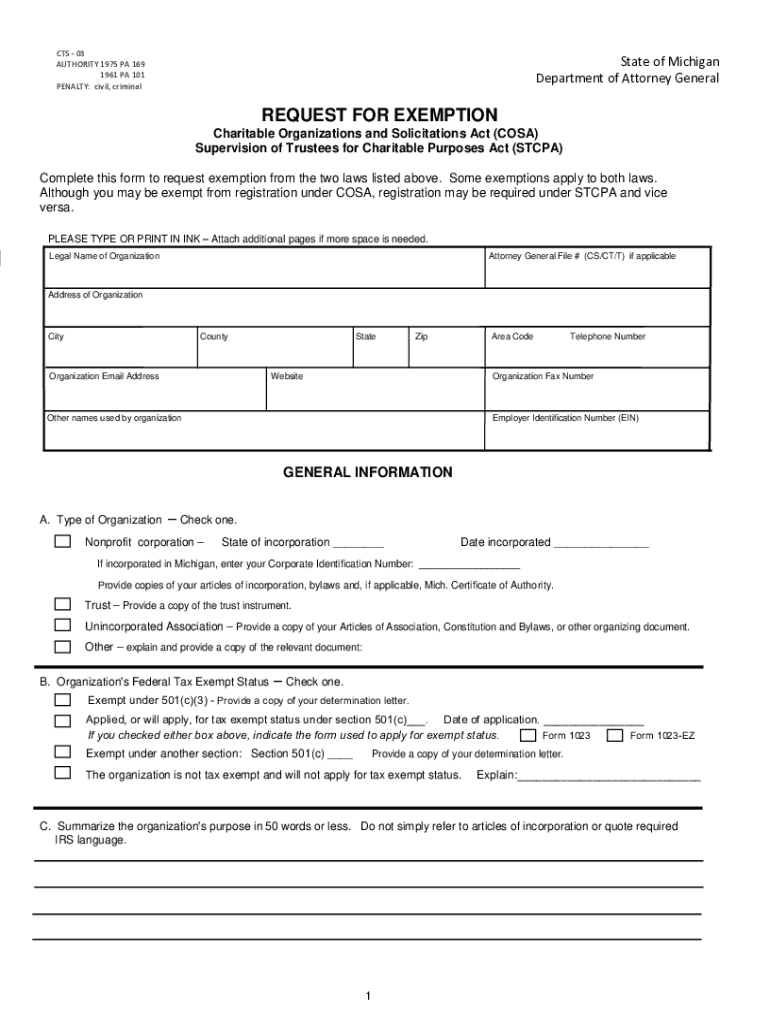







Definition and Purpose of the PENALTY: Civil, Criminal Renewal Solicitation Form
The "PENALTY: Civil, Criminal Renewal Solicitation Form" is a document used by organizations that are required to renew their registration under state solicitation laws. These laws typically mandate that charities and other organizations seeking to solicit donations renew their registration either annually or biennially. The form is crucial in ensuring that organizations remain compliant with state regulations, avoiding civil and criminal penalties.
Key Components
- Civil and Criminal Penalties: Failure to file this form in a timely manner can result in severe penalties, including fines and suspension of the right to solicit donations.
- Solicitation Renewal: This is part of maintaining legal status for organizations soliciting donations in certain states.
- Registration Requirements: Specific information must be included, such as updated financial statements and changes in organizational structure.
Who Uses the Form
The primary users of the PENALTY: Civil, Criminal Renewal Solicitation Form are charitable organizations, including nonprofits and certain social enterprises. These entities need to solicit donations legally while adhering to specific state regulations.
Typical Users
- Nonprofit Organizations: Primarily those seeking donations from the public.
- Charitable Trusts: Those registered under state laws for public charitable purposes.
Importance of Filing the Form
Filing this form is imperative for maintaining compliance with state solicitation laws. Non-compliance can lead to significant legal and financial repercussions.
Implications of Non-Compliance
- Legal Consequences: Organizations may face corporate dissolution or personal liability for directors.
- Financial Penalties: Non-filers may incur substantial fines that could impact their operating budget.
Filing Steps and Process
Completing and submitting this form involves several steps, often requiring coordination among organizational leadership, finance, and legal teams.
Step-by-Step Completion Guide
- Gather Required Documents: Financial statements, previous filings, and any amendments to incorporation.
- Complete the Form: Ensure all sections are filled out accurately including organizational changes.
- Review and Sign: Authorized representatives must sign the form.
- Submit the Form: Submission can be through mail, electronically, or in-person, depending on the state's provisions.
Required Documentation
Ensure that all relevant documents are attached to avoid processing delays.
Typical Documentation
- Financial Statements: Most recent audited or reviewed financial statements.
- Amendments: Any recent changes to the articles of incorporation or bylaws.
- Previous Filings: Last year's solicitation forms and any correspondence related to registration.
Legal Use and Considerations
The form's primary legal use is to comply with state charitable solicitation laws. Proper use ensures transparency in solicitation activities and protects public interest.
Legal Rationale
- State Compliance: Ensures adherence to state-specific regulatory frameworks.
- Public Trust: Maintains donor trust by ensuring the organization is meeting financial and transparency requirements.
Advantages of Electronic Submission
Many states offer electronic submission, which provides several benefits over traditional methods.
Benefits of Electronic Filing
- Efficiency: Reduces processing time and potential for errors.
- Verification: Immediate confirmation of submission receipt.
- Cost-Effective: Saves on postage and printing costs.
Penalties for Non-Compliance
Failure to submit the form timely can lead to civil or criminal penalties, impacting the organization's ability to operate.
Potential Penalties
- Civil Fines: Monetary fines that accumulate per day of non-compliance.
- Legal Action: Potential lawsuits or state-initiated legal proceedings.
- Reputational Damage: Loss of credibility with donors and the general public.
By understanding each of these components, organizations can ensure they remain compliant and continue their charitable activities without legal interruption.


