




01. Edit your form online
Type text, add images, blackout confidential details, add comments, highlights and more.

Type text, add images, blackout confidential details, add comments, highlights and more.

Draw your signature, type it, upload its image, or use your mobile device as a signature pad.

Send it via email, link, or fax. You can also download it, export it or print it out.
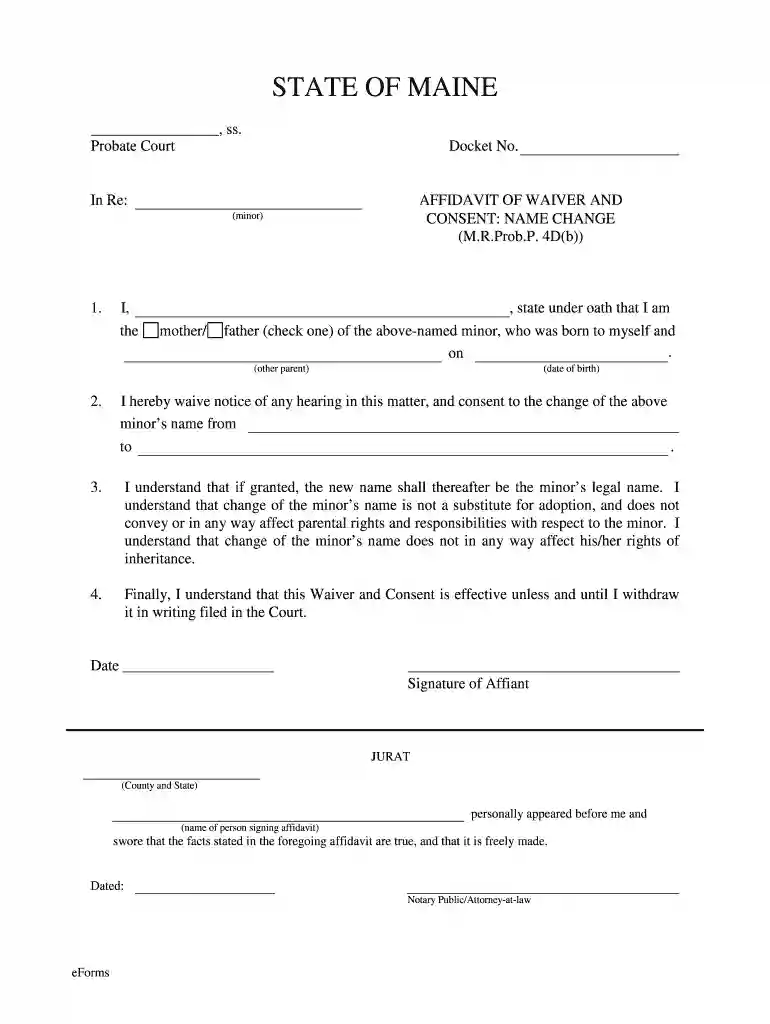
The Maine Name Change Consent Waiver is a legal affidavit used in the State of Maine when a parent or legal guardian consents to the name change of a minor child. This form allows the consenting parent to waive their right to be notified of any hearings related to the name change, indicating full agreement to the proposed change. It is a formal acknowledgment that the child's new name will become their legal name without affecting existing parental rights or inheritance matters. The waiver needs to be duly signed and notarized to be valid.
To use the Maine Name Change Consent Waiver, follow these structured steps:
Obtain the Form: You can acquire the consent waiver form from the local court handling name change petitions. Alternatively, it might be available through certain legal service providers.
Read Thoroughly: Before filling it out, ensure you understand the implications of the waiver, including the waiver of notice for hearings concerning the name change.
Complete Personal Details: Fill in all sections with accurate personal details, including the current legal name of the minor and the desired new name.
Sign and Notarize: Once completed, you must sign the document in the presence of a notary public to ensure the affidavit's validity.
Submit with Petition: Typically, this waiver is submitted along with the name change petition to the court processing the change.
You can obtain the Maine Name Change Consent Waiver by visiting your local court or their official website. Courts often provide printable forms and instructions online, ensuring applicants have ready access to necessary documents. If it is not available online, visiting the courthouse directly and requesting the form from the clerk can be another option. Make sure to check if there are any associated fees for obtaining or filing the form.
The process of completing the consent waiver involves several detailed steps:
Identify the Purpose: Clearly state the purpose of the waiver, confirming the intent to change the minor's name.
Parent/Guardian Information: Fill out details of the consenting parent or guardian, including full name, address, and contact information.
Minor's Details: Enter the full current name of the minor, along with the proposed new name.
Confirmation Statement: Include a statement affirming that the waiver does not affect parental rights.
Signature and Date: Sign and date the form once accurately filled.
Notarization: Ensure the form is notarized to validate the consent legally.
Understanding key legal terms is crucial:
Legally, the Maine Name Change Consent Waiver facilitates the streamline of the name change process. By signing, the consenting parent waives the notice requirement for any hearings, expediting legal procedures associated with the minor's name change. Legally binding once signed and notarized, it demonstrates the consenting parent's full agreement and acknowledgment of the legal implications involved.
Several elements should be included to ensure the waiver is comprehensive and legally sufficient:
In Maine, particular state rules must be followed:
Practical scenarios for utilizing the waiver include:
Primarily, parents or legal guardians of minors are the main users. In cases where a sole parent holds full custody, they might use this form with a co-parent who voluntarily waives notice. Additionally, adoptive or step-parents seeking legal name continuity for their family unit often require this documentation for judicial proceedings.


We've got more versions of the Maine Name Change Consent Waiver form. Select the right Maine Name Change Consent Waiver version from the list and start editing it straight away!
| Versions | Form popularity | Fillable & printable |
|---|---|---|
| 2015 | 4.6 Satisfied (43 Votes) |
At DocHub, your data security is our priority. We follow HIPAA, SOC2, GDPR, and other standards, so you can work on your documents with confidence.
The court shall change a minors name by agreement of all parties, which a party may indicate by signing a waiver;
University of Maine will not release student grades, schedules, or financial aid information to parents, spouses, or others, unless written permission is given
This guidance document provides an approach that is generally acceptable to DEP for determining contaminant specific clean-up goals for soil, groundwater and


