
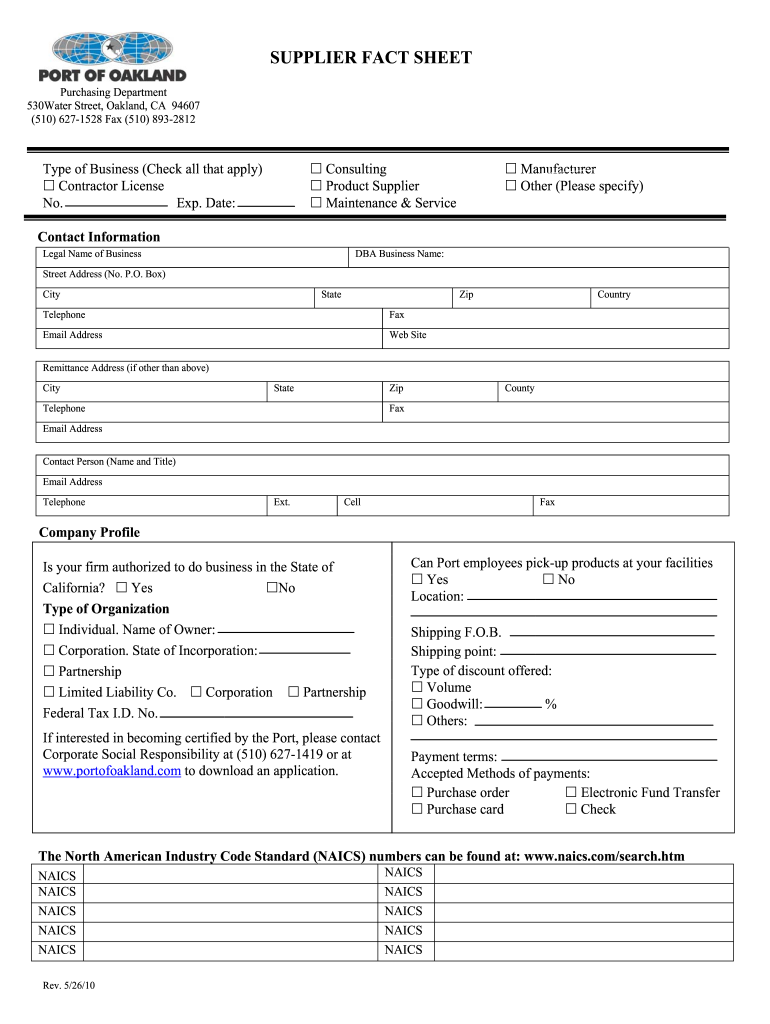







Definition and Meaning of Supplier Fact Sheet Sample
A supplier fact sheet sample is a document that consolidates essential information about a supplier for evaluation and record-keeping purposes. It typically includes details such as business type, contact information, services offered, and payment terms. This structured form is often used by organizations to streamline processes related to supplier onboarding and management. It establishes a clear understanding of the supplier's capabilities and compliance, facilitating smoother transactions and collaborations.
Key components of a supplier fact sheet include:
- Business Type: Classification of the supplier (e.g., sole proprietorship, corporation).
- Contact Information: Key contact details for coordination, including names, emails, and phone numbers.
- Company Profile: A brief overview of the supplier’s history, experience, and specialties.
- Commodities and Services Offered: A list detailing what products or services the supplier provides.
- Payment Terms: Information regarding payment methods, due dates, and any discounts available.
- Tax Identification Requirements: Information on required tax forms, such as the W-9, to verify taxpayer status.
Understanding the definition and significance of a supplier fact sheet sample is critical for businesses looking to enhance their vendor relationships and maintain organized records.
Key Elements of the Supplier Fact Sheet Sample
The supplier fact sheet sample comprises several key elements to facilitate comprehensive review and analysis. These elements ensure that a business can assess and retain critical information regarding its suppliers.
- Business Name and Legal Structure: Capturing the official business name and its legal formation helps in identifying the nature of the supplier.
- Contact Information: Complete addresses, email addresses, and phone numbers contribute to effective communication channels.
- Services Provided: Clearly listing the products or services allows businesses to match suppliers to specific needs efficiently.
- Supplier Profile Summary: A short narrative describing the supplier's background, business history, and experience in the industry offers context about their reliability and expertise.
- Payment Information: Descriptions of payment terms, such as Net 30 or discounts for early payments, help in financial planning.
These elements are crucial for organizations to manage their supply chains effectively and to ensure proper due diligence is exercised when selecting suppliers.
Steps to Complete the Supplier Fact Sheet Sample
Completing the supplier fact sheet sample involves several steps that guide users through gathering and entering necessary information. Each step aims to ensure thorough and accurate documentation.
- Gather Information: Start by collecting all relevant details about the supplier, including legal documents, contact information, and product specifications.
- Fill in Basic Details: Enter the supplier's business name and structure, contact information, and address at the top of the fact sheet.
- Detail Services Offered: Provide a list of services or products the supplier offers. This may include categories and specific items.
- Provide Business Profile: Write a concise profile summarizing the supplier’s history, experience, and unique selling propositions.
- Insert Payment Terms: Clearly outline payment expectations, including acceptable forms of payment and any applicable terms or discounts.
- Add Tax Information: Attach necessary tax forms such as W-9 for tax identification purposes, ensuring compliance.
Following these steps will yield a complete and useful supplier fact sheet sample for vendor evaluation and onboarding.
Important Terms Related to the Supplier Fact Sheet Sample
Familiarity with specific terms related to the supplier fact sheet sample enhances understanding of contractual and operational processes involved in supplier management. Here are some essential terms:
- Vendor Management: The process of overseeing and coordinating supplier relationships to optimize performance and ensure compliance.
- Due Diligence: The investigation and evaluation of a supplier’s credentials and viability before engaging in a contract.
- Compliance: Adhering to applicable laws, regulations, and standards while conducting business, particularly concerning financial transactions and tax documentation.
- Procurement: The process of sourcing and acquiring goods or services from suppliers.
- Supplier Risk Assessment: Evaluating the risks associated with engaging a given supplier, including their financial stability and reliability.
Understanding these terms can significantly impact how businesses interact with suppliers and manage their supply chains.
Examples of Using the Supplier Fact Sheet Sample
Practical applications of a supplier fact sheet sample demonstrate its versatility in various scenarios within business operations. Below are some examples:
- Onboarding Process: A company seeking to engage a new vendor may require a completed supplier fact sheet to ensure all necessary information is collected efficiently.
- Supplier Evaluation: During vendor assessments, organizations may compare multiple supplier fact sheets to determine the best fit for their needs based on services offered and terms provided.
- Contract Renewal: Before renewing a contract with an existing vendor, a business might update and review the supplier fact sheet to reflect any changes in services or terms.
- Audit Preparation: For annual audits, having detailed supplier fact sheets allows companies to quickly access required information, ensuring compliance with audit requirements.
- Budget Planning: The information on payment terms and supplier reliability can inform budgetary projections and financial planning for procurement.
These examples illustrate how the supplier fact sheet serves as a vital tool in enhancing operational efficiency and decision-making processes in businesses.
Legal Use of the Supplier Fact Sheet Sample
Understanding the legal framework surrounding the supplier fact sheet sample is essential for compliance and risk management. The factors to consider include:
- Adherence to Regulations: Organizations must comply with state and federal regulations regarding vendor disclosures and tax documentation, including the collection of relevant forms such as the W-9.
- Record Keeping: Maintaining accurate and up-to-date supplier fact sheets is crucial for legal documentation, especially in the event of audits or disputes.
- Breach of Contract: Ensuring that the supplier fact sheet is complete and accurate is critical to uphold contractual obligations and avoid potential legal challenges related to misrepresentation or non-compliance.
- Intellectual Property Considerations: Contracts and agreements associated with the supplier may involve the sharing of confidential information. Properly documented supplier fact sheets help delineate intellectual property rights and usage.
Awareness of these legal considerations underscores the importance of precise completion and maintenance of supplier fact sheets within businesses engaged in procurement practices.




