




01. Edit your m10 form nj disability pdf online
Type text, add images, blackout confidential details, add comments, highlights and more.

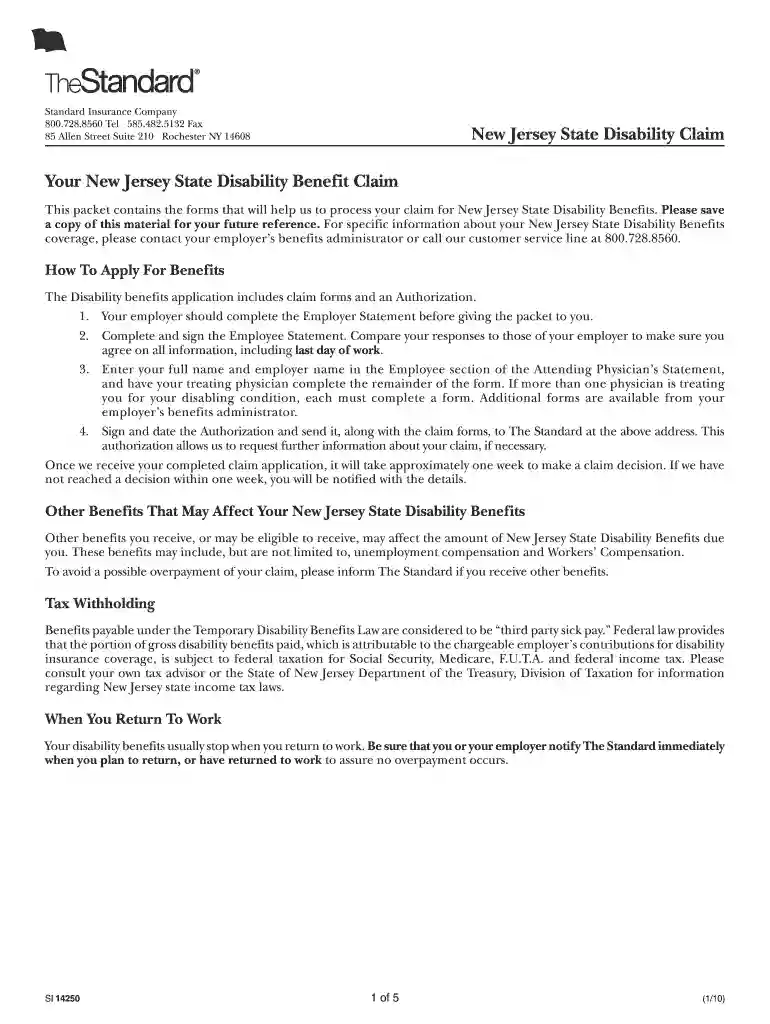
Type text, add images, blackout confidential details, add comments, highlights and more.

Draw your signature, type it, upload its image, or use your mobile device as a signature pad.

Send form m10 via email, link, or fax. You can also download it, export it or print it out.
The New Jersey Disability forms are crucial for individuals applying for disability benefits within the state. These forms ensure that applicants can provide the necessary information required for the processing of their claims. To successfully navigate this system, it is essential to understand the various forms involved, particularly the M-10 form, which is commonly used for filing disability claims.
There are several key forms used when filing for New Jersey disability. The most notable include:
Each of these forms contains specific fields that need to be accurately filled out to avoid delays in processing claims.
Filing for disability benefits in New Jersey involves a clearly defined process. Here are the key steps an applicant must follow:
Obtain the Required Forms: Access and download the M-10 form and any related documents such as the E-10 form from the New Jersey Department of Labor's official site or other resources.
Complete the M-10 Form: Fill out the M-10 form thoroughly. This form asks for:
Get Employer’s Input: Provide the E-10 form to your employer for completion. Your employer will need to verify certain information that is crucial for your claim.
Physician’s Statement: Ensure your medical provider fills out the Attending Physician Statement to document the nature of your disability clearly.
Submit the Completed Forms: Send the completed M-10 form, along with the E-10 form and the physician’s statement, to the designated address or submit it through the online portal if applicable.
Filing deadlines for disability claims in New Jersey are critical. Applicants must submit their forms within specific timeframes to ensure eligibility for benefits. Generally, the application should be filed within 30 days of the onset of the disability. Delays can lead to complications or denials of your claim.
Understanding the eligibility criteria is essential to ensure compliance and increase the chances of approval for New Jersey disability benefits.


Several common issues often arise during the application process, and knowing how to resolve them can be beneficial.
Applicants should be aware of their legal rights and obligations when filing for New Jersey disability benefits. It is essential to understand:
Navigating the New Jersey disability forms may seem daunting, but with a clear grasp of the types, procedures, and requirements, applicants can enhance their ability to successfully file claims.
We've got more versions of the m10 form nj disability pdf form. Select the right m10 form nj disability pdf version from the list and start editing it straight away!
At DocHub, your data security is our priority. We follow HIPAA, SOC2, GDPR, and other standards, so you can work on your documents with confidence.
Step 1: Create an Account Step 2: Start an Application Step 3: Print Instruction Forms Step 4: If Asked, Verify Your Identity Step 5: Await Your Decision.Read more
If you require any assistance with your claim, call: Customer Service Section (609) 292-7060. Telecommunication Device for the Deaf (TDD) (609) 292-8319. Read more
Jan 29, 2009 Providers are required to submit an Electronic/Paper Transmitter Identification Number. (ETIN) Application and a Certification StatementRead more


