




01. Edit your rabies vaccination certificate lookup online
Type text, add images, blackout confidential details, add comments, highlights and more.

Type text, add images, blackout confidential details, add comments, highlights and more.

Draw your signature, type it, upload its image, or use your mobile device as a signature pad.

Send free printable rabies certificate via email, link, or fax. You can also download it, export it or print it out.
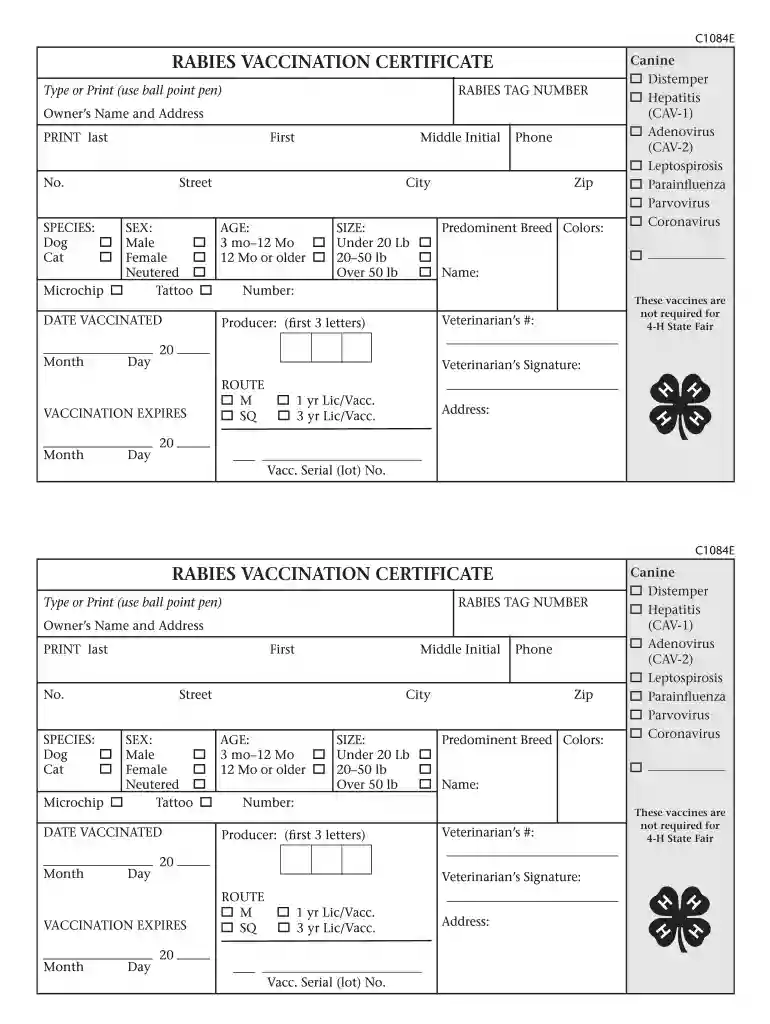
A rabies certificate is an official document that verifies that a pet, typically a dog or cat, has been vaccinated against rabies. It includes critical information such as the name of the pet, the owner's contact details, the vaccination date, the vaccine's expiration date, and the veterinarian's signature. This certificate serves as proof that the animal has received the rabies vaccine, which is essential for compliance with local regulations and public health requirements in the United States.
The rabies vaccination itself is crucial because rabies is a viral disease that can be transmitted from animals to humans, often resulting in severe health consequences or even death. The vaccine's effectiveness and the certification process are designed to mitigate the risk of rabies transmission, thus protecting public health as well as the welfare of the animals.
Obtaining a rabies certificate typically involves a straightforward process focused on ensuring that a pet receives the necessary vaccination from a licensed veterinarian. The steps for acquiring this document can differ slightly depending on local regulations, but here they are broadly applicable in many states.
Schedule a Veterinary Appointment: The first step is to take your pet to a licensed veterinarian. During this visit, the veterinarian will evaluate the pet's health to ensure it is fit for vaccination.
Vaccination: If your pet has not been vaccinated against rabies, the veterinarian will administer the rabies vaccine. It is important to inquire about the type of vaccine used and any required booster shots for future compliance.
Receive the Certificate: After administration, the veterinarian will provide a rabies certificate. This may be given immediately or sent electronically, depending on the clinic's policies.
Check for Accuracy: Review the certificate to ensure that all information is accurate. Errors in the pet's information or vaccination details might render the certificate invalid.
Keep a Copy: Store the certificate in a safe location and consider having both a printed and electronic copy available. This ensures accessibility in case you need to present it for pet travel, boarding, or compliance with local laws.
Completing a rabies certificate requires thorough documentation of the vaccination process. The following steps illustrate how to accurately complete this important document:
Gather Pet Information: Collect necessary details about the animal, including its name, species, age, size, and any distinct identifiers like microchip numbers.
Fill in Owner's Information: The owner’s name, address, phone number, and email address should be clearly stated. This information ensures easy contact for any follow-up or health-related concerns.
Document Vaccination Details: Note the date of vaccination, the type of vaccine administered, the vaccine serial number, and the veterinarian's details. Accuracy here is critical as these components are crucial for validating the vaccine's effectiveness.
Veterinarian's Authentication: Once the document is filled out, it should be signed and dated by the veterinarian who administered the vaccine. This endorsement is essential for the certificate’s credibility.
Check Compatibility with Local Requirements: Confirm that the certificate meets any state or local requirements specific to rabies certificates, ensuring all necessary information is included.
The rabies certificate serves various legal uses, primarily as compliance documentation for pet ownership and public health regulations.
Licensing: Many states and municipalities require proof of rabies vaccination for pet licensing. Presenting a current rabies certificate allows pet owners to register their animals legally.
Travel Requirements: When traveling with pets, especially across state lines, a valid rabies certificate may be necessary. Some states require this documentation at borders, and airlines typically request it for pet travel.
Public Safety Obligations: Rabies certifications may also be required in public spaces such as dog parks, pet shows, and boarding facilities, ensuring all animals are free from rabies risk.
Failure to provide a valid rabies certificate can result in:
Familiarity with key terms can help pet owners navigate the requirements associated with rabies certificates effectively:
Understanding these terms ensures pet owners remain compliant with local regulations and maintain their pets' welfare.
A rabies certificate must contain several critical elements to be considered valid and usable. Carefully ensuring that these components are present can prevent misunderstandings or complications.
Pet Identification: Specify the name, species, breed, color, sex, and microchip number if applicable.
Owner Identification: Include the pet owner's name, address, and contact information for traceability.
Vaccination Details:
Veterinarian Certification: This includes the name, address, license number, and date of signature by a licensed veterinarian, confirming that the vaccination was performed according to legal standards.
Each of these elements contributes to the rabies certificate's legitimacy, allowing it to serve its intended purpose effectively. In some cases, additional documentation may be required by specific states, especially for dogs or cats deemed high-risk.
The requirements for rabies certificates can vary significantly from state to state due to differing local laws and regulations. Understanding these differences is crucial for compliance and pet ownership.
This comprehensive exploration of the rabies certificate addresses key aspects of definition, procedures for obtaining one, and insights into legal compliance, underscoring its critical role in pet ownership and public health. By understanding these elements, pet owners can navigate the landscape of rabies vaccinations confidently.
We've got more versions of the rabies vaccination certificate lookup form. Select the right rabies vaccination certificate lookup version from the list and start editing it straight away!
At DocHub, your data security is our priority. We follow HIPAA, SOC2, GDPR, and other standards, so you can work on your documents with confidence.

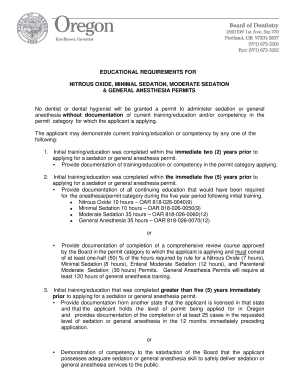


Jul 31, 2025 A U.S. Department of Agriculture-accredited veterinarian must complete the Certification of U.S.-Issued Rabies Vaccination form before a dogRead more
RABIES VACCINATION CERTIFICATE. Canine. □ Distemper. □ Hepatitis. (CAV-1). □ Adenovirus. (CAV-2). □ Leptospirosis. □ Parainfluenza. □ Parvovirus. □ Coronavirus.Read more


