
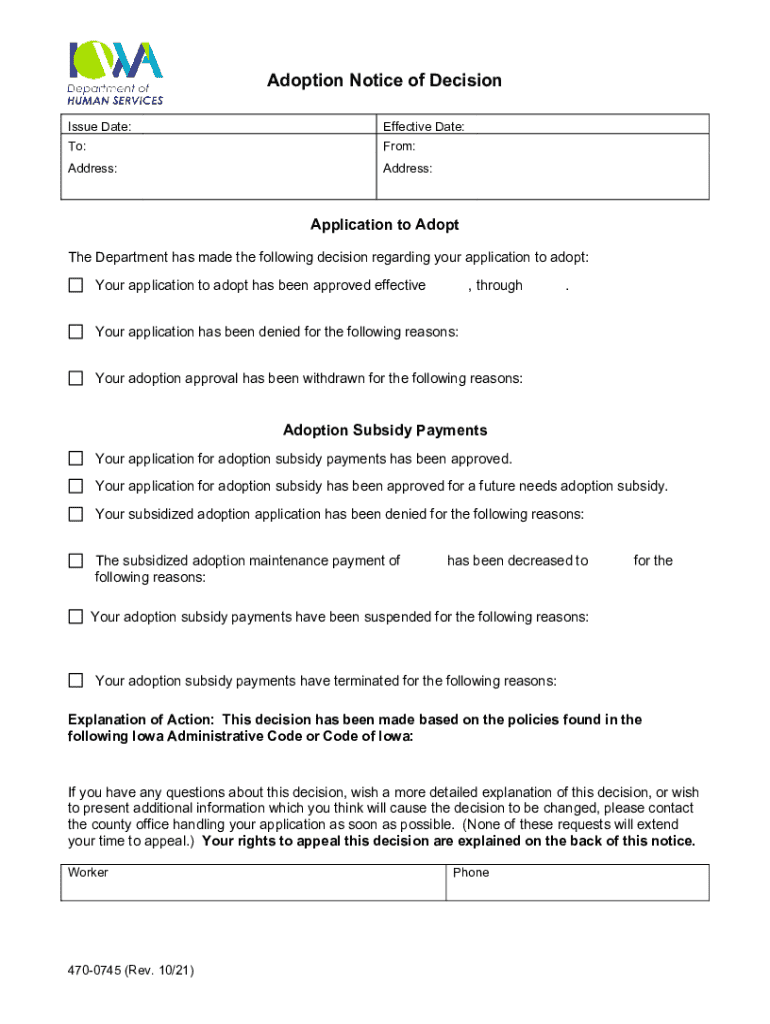







Definition and Meaning of Adoption - U.S. Embassy and Consulate in Vietnam
The "Adoption - U.S. Embassy and Consulate in Vietnam" refers to the specific procedural and legal framework guiding the adoption process for U.S. citizens seeking to adopt children from Vietnam. This process involves a series of steps that prospective adoptive parents must follow, which are regulated by both U.S. and Vietnamese authorities. The primary goal is to ensure that adoptions are conducted ethically and in compliance with both countries' laws, safeguarding the best interests of the child.
Steps to Complete the Adoption Process
-
Initial Inquiry and Application: Prospective adoptive parents begin by contacting the U.S. Embassy or Consulate in Vietnam to understand the specific requirements and processes involved. They must then submit an adoption application, which includes detailed information about the adoptive parents and their suitability.
-
Home Study: A comprehensive home study performed by a licensed agency is mandatory. This study assesses the family's readiness and ability to provide a stable and nurturing environment for the child.
-
Matching Process: Once approved, the agency in Vietnam matches the child with prospective parents based on various factors such as the child's needs and the family's capabilities.
-
Adoption Proceedings in Vietnam: Adoptive parents are required to travel to Vietnam to complete the adoption process. This includes attending court hearings and complying with Vietnamese adoption regulations.
-
U.S. Immigration Procedures: After successfully adopting, the parents must petition for the child's visa to enter the United States. This involves several steps, including filing the Form I-600, Petition to Classify Orphan as an Immediate Relative.
Eligibility Criteria
- Age Requirements: Adoptive parents must be at least 25 years old if single or both spouses need to meet this age limit if married.
- Marital Status: Both single individuals and married couples are eligible. However, Vietnam has specific preferences for adopting couples.
- Financial Stability: Demonstrating financial stability is crucial, ensuring parents can meet the needs of the adopted child without undue hardship.
- Health Evaluation: Prospective adopters need to pass a medical examination to confirm they are healthy enough to raise a child.
- Background Checks: Criminal background checks are required to ensure that there are no past offenses that would disqualify a prospective parent.


Form Submission Methods
Adoption-related forms can be submitted through different methods:
- In-Person Submissions: Certain documents may need to be handed directly to the Vietnamese authorities or the U.S. Embassy in Vietnam.
- Mail Applications: Some parts of the process, especially pertaining to citizenship applications for the adopted child, might be completed via postal services.
- Online Submissions: Although limited for adoption forms specifically, parts of the immigration process for the adopted child can be handled online, including certain forms submitted to U.S. Citizenship and Immigration Services (USCIS).
Legal Use of the Adoption Form
The form serves to facilitate legal adoptions, ensuring they are transparent and all parties rights and responsibilities are accounted for under both U.S. and Vietnamese law. It covers all necessary legal parameters, including:
- Verification of Eligibility: Confirms that prospective parents meet the legal requirements for adopting in both Vietnam and the United States.
- Documentation and Certification: Encompasses all necessary papers, like birth certificates, marriage licenses, and evidence of U.S. citizenship.
Required Documents
- Home Study Report: Provides a detailed assessment of the adoptive parents’ home life and readiness.
- Adoption Application: Initial step document that needs to be submitted to Vietnamese authorities.
- Travel Documents: Valid passports and, in some cases, specific adoption visas for the adoptive parents.
- Child’s Documents: Initiating documents that declare the child's adoptability status, including Vietnamese certification.
Important Terms and Key Elements
Words like "Hague Convention," "orphan," and "home study" hold specific legal meanings in the context of adoption procedures. Knowing these terms is critical for navigating the process efficiently.
- Hague Convention: An international treaty that aims to safeguard international adoptions.
- Orphan Definition: Legal classification for children eligible for adoption under U.S. immigration law.
- Home Study: The document that evaluates the family environment and suitability for adoption.
Who Typically Uses the Adoption Process
The most common users are U.S. citizens who wish to expand their families through international adoption. It includes those without children and families looking to provide a home for children in need from overseas. Additionally, it involves licensed adoption agencies that facilitate the process on behalf of the adoptive parents.

Application Process and Approval Time
This comprehensive process can vary in time, often taking one to two years. It depends on several factors, such as:
- Matching Duration: Time taken to match the child with the prospective parents through the Vietnamese agencies.
- Form Processing: U.S. governmental agency processing times for relevant forms like Form I-600.
Examples of Using the Adoption Process
- Real-World Scenario: John and Anne, a couple from Texas, file their application, complete a home study and travel to Vietnam to finalize the adoption process. They follow through with all steps, receiving their child's visa to bring them to the United States.
- Case Study: A single adult adopts a child after working closely with both U.S. and Vietnamese agencies, illustrating the particular logistics and requirements involved.
By comprehensively understanding and following these structured guidelines, prospective adoptive parents can navigate through the adoption process with confidence and full compliance with international and national regulations.




