Commercial Plumbing Inspection District Map - Dsps wi 2026

Get Form
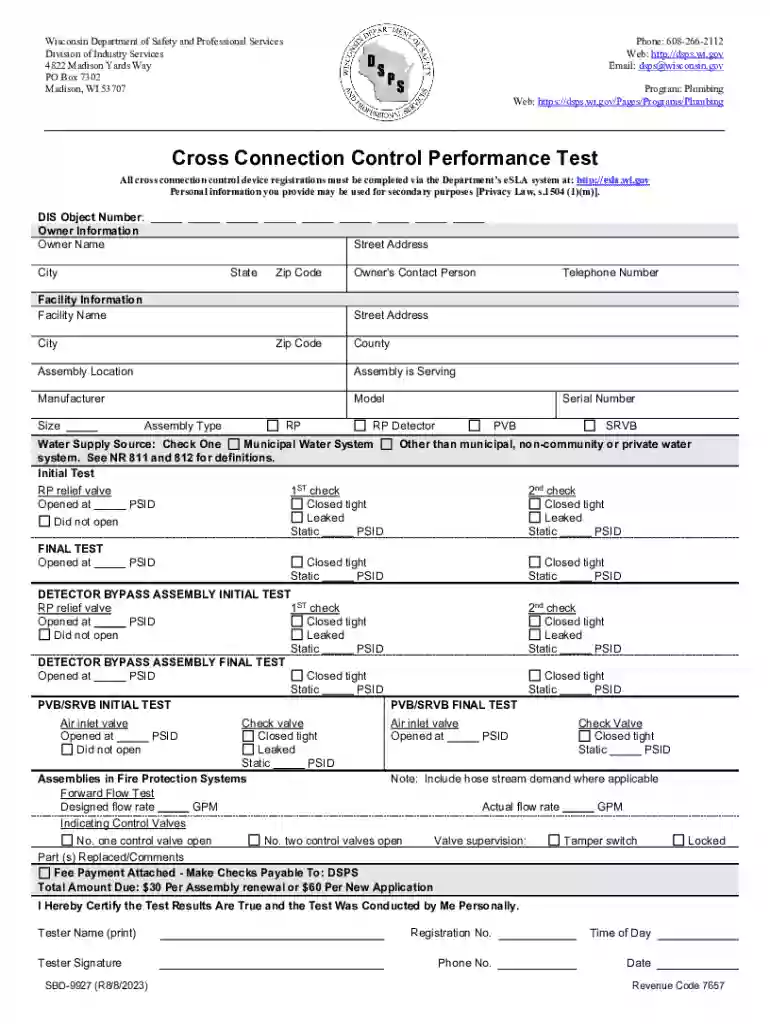
sbd 9927 Preview on Page 1

Here's how it works

01. Edit your sbd 9927 online
Type text, add images, blackout confidential details, add comments, highlights and more.

02. Sign it in a few clicks
Draw your signature, type it, upload its image, or use your mobile device as a signature pad.

03. Share your form with others
Send sbd 9927 pdf via email, link, or fax. You can also download it, export it or print it out.

Definition and Purpose of the Commercial Plumbing Inspection District Map - DSPS, Wisconsin

The Commercial Plumbing Inspection District Map for the Department of Safety and Professional Services (DSPS) in Wisconsin is a vital tool used by plumbers, contractors, and officials in the state. This map provides a clear delineation of inspection districts across Wisconsin, ensuring that plumbing work complies with state regulations. It serves as a guide for identifying which inspection district a particular plumbing project falls into, helping to streamline the process of arranging inspections, understanding regional requirements, and facilitating compliance with plumbing codes.

How to Use the Commercial Plumbing Inspection District Map

Understanding how to use the Commercial Plumbing Inspection District Map is crucial for professionals involved in plumbing projects within Wisconsin. Here are the basic steps to navigate the map:

  1. Locate the Project Area: Determine the geographical area where a plumbing project is planned.
  2. Identify the District: Use the map to find the corresponding inspection district for the project location.
  3. Contact Information: Obtain contact details for the district inspector responsible for that area.
  4. Review District Regulations: Familiarize yourself with any district-specific plumbing regulations or requirements.
  5. Schedule Inspections: Arrange for necessary inspections by contacting the designated district inspector.

The map is designed to ensure efficient coordination between contractors and inspectors, promoting adherence to local and state plumbing standards.

How to Obtain the Commercial Plumbing Inspection District Map

Accessing the Commercial Plumbing Inspection District Map is straightforward and can be done through various methods:

  • DSPS Website: The map is available for download on the official DSPS website, allowing users to view it online or print it for offline use.
  • Local Municipal Offices: Copies of the map can often be obtained from local municipal offices, particularly if they handle plumbing inspections directly.
  • Professional Associations: Plumbing associations in Wisconsin may provide access to the map as part of their resources for members.

Having the map on hand is essential for any professional working in the commercial plumbing sector in Wisconsin.

Key Elements of the Commercial Plumbing Inspection District Map

Several key elements are integral to the functionality of the Commercial Plumbing Inspection District Map:

  • District Boundaries: Clearly defined boundaries indicate where each inspection district begins and ends, providing clarity for project planning.
  • Inspector Assignments: The map includes information about which inspectors are responsible for each district, facilitating easy communication and coordination.
  • Regulatory Information: Notes on district-specific rules or variations from state plumbing codes may be included to guide compliance efforts.
  • Contact Information: Essential contact details for inspectors and district offices are part of the map, ensuring that inquiries and inspections can be efficiently arranged.

Understanding these elements helps users to effectively leverage the map for compliance and project management.

Steps to Complete Projects Using the Map

Successful completion of commercial plumbing projects using the map involves several critical steps:

  1. Project Planning: Begin by identifying the district to ensure all planning is aligned with district regulations.
  2. Submit Plans for Review: Prepare necessary documents and plans to be submitted for review according to district guidelines.
  3. Schedule Required Inspections: Use the map to contact the appropriate district inspector and schedule any required inspections.
  4. Conduct Inspections: Arrange for the onsite inspection, ensure compliance with all regional plumbing codes, and address any deficiencies identified by the inspector.
  5. Receive Approval: Once the inspection is passed, obtain any needed approval or certification from the district.

Following these steps ensures that projects not only comply with local requirements but are also executed efficiently and safely.

Who Typically Uses the Commercial Plumbing Inspection District Map

The map is a critical resource for a range of professionals involved in commercial plumbing:

  • Plumbers and Contractors: Utilize the map to ensure they adhere to district-specific codes and regulations.
  • Municipal Officials: Inspectors and government personnel use the map to oversee and approve plumbing work.
  • Architects and Engineers: Refer to the map during the design phase to account for inspection requirements and regional differences.

By using the map, these professionals can ensure regulatory compliance and successful project execution.


decoration image ratings of Dochub

State-Specific Rules for the Plumbing Inspection Map

Wisconsin has specific regulations that impact the use and application of the Commercial Plumbing Inspection District Map:

  • Inspection Requirements: Each district may have varying inspection requirements depending on local conditions and historical concerns.
  • Variation in Plumbing Codes: Some districts might have additional codes or stringent application of certain standards.
  • Seasonal Considerations: Due to Wisconsin's climate, inspection schedules may fluctuate, with specific periods recommended for certain types of work.

Understanding these state-specific rules ensures that plumbing projects are not delayed by unforeseen compliance issues.

Legal Use and Compliance

Ensuring legal compliance using the Commercial Plumbing Inspection District Map involves adhering to both state and district regulations. Here are some key considerations:

  • Code Adherence: All plumbing work must meet or exceed the local plumbing codes outlined on the map.
  • Permits and Inspections: Contractors must secure appropriate permits and arrange inspections within the prescribed timelines and processes per district regulation.
  • Documentation: Keep precise records of all communications, inspections, and approvals related to the map to avoid discrepancies.

Legal compliance is crucial for avoiding penalties and ensuring the safety and functionality of plumbing installations.

See more Commercial Plumbing Inspection District Map - Dsps wi versions

We've got more versions of the Commercial Plumbing Inspection District Map - Dsps wi form. Select the right Commercial Plumbing Inspection District Map - Dsps wi version from the list and start editing it straight away!
Versions Form popularity Fillable & printable
2023 4.3 Satisfied (30 Votes)
2019 4.8 Satisfied (83 Votes)
2019 4.3 Satisfied (153 Votes)
2017 4.2 Satisfied (33 Votes)
2011 4.4 Satisfied (155 Votes)
be ready to get more

Complete this form in 5 minutes or less

Get form

Got questions?

We have answers to the most popular questions from our customers. If you can't find an answer to your question, please contact us.
Contact us
The Wisconsin Plumbing Code (SPS 382) is essential for ensuring the safe and effective installation of plumbing systems throughout the state and incorporates both updated national standards and local regulations designed to protect public health, prevent water contamination, and improve energy efficiency.
Please contact PBS Wisconsin Audience Services at 800-422-9707 if you need further assistance.
The Department of Safety and Professional Services (DSPS) is responsible for ensuring the safe and competent practice of licensed professionals in Wisconsin. The department also administers and enforces laws to assure safe and sanitary conditions in public and private buildings.
You can also visit GetAQuestCard.org to learn more about eligibility requirements, or call the Wisconsin-based toll-free FoodShare Helpline at 1-877-366-3635.
If you require assistance with any information or services found on the Department of Safety and Professional Services website, please contact us at (608) 266-2112 or dsps@wisconsin.gov.

Security and compliance

At DocHub, your data security is our priority. We follow HIPAA, SOC2, GDPR, and other standards, so you can work on your documents with confidence.

Learn more
ccpa2
pci-dss
gdpr-compliance
hipaa
soc-compliance