
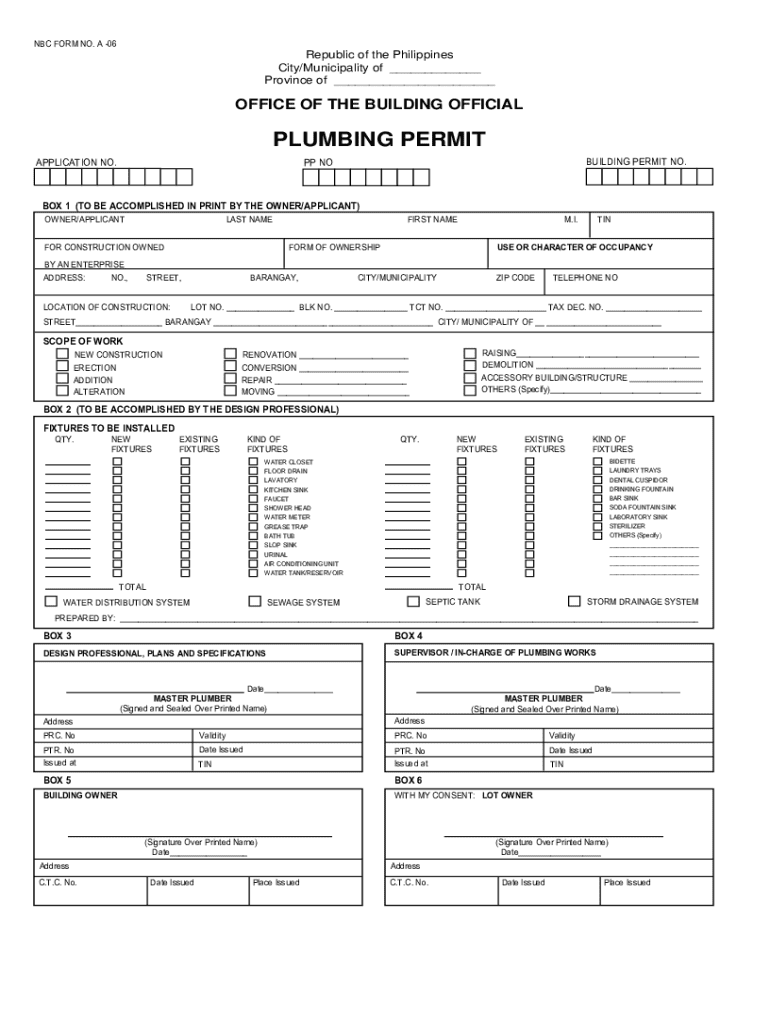







Definition and Importance of the Plumbing Permit
A plumbing permit is a critical document required for legally authorizing plumbing-related construction or modifications. This permit ensures compliance with local building codes and safety regulations, assisting in safeguarding property and public health. In the United States, it is typically issued by municipal building departments. The document specifies allowed plumbing activities, location details, and the scope of the project, ensuring that installations meet standardized safety and quality criteria.
Importance in Construction Projects
- Code Compliance: Ensures the project adheres to local building codes.
- Safety Assurance: Provides a guarantee that plumbing systems are installed safely.
- Quality Control: Maintains high-quality standards and workmanship.
How to Use the Plumbing Permit
Using a plumbing permit effectively requires understanding its various sections and the information it necessitates. Once acquired, the permit should be displayed prominently on the construction site. This serves as proof of compliance and readiness for inspections. Contractors and property owners should refer to the permit to verify the scope of work and ensure all activities align with approved plans.
Step-by-Step Usage
- Display on Site: Place the permit in a visible location.
- Review for Scope: Confirm the scope of work against actual plans.
- Follow Specific Conditions: Adhere to any special conditions or restrictions noted.
- Prepare for Inspections: Use the permit as a checklist for readiness.
How to Obtain the Plumbing Permit
Obtaining a plumbing permit involves several steps, typically starting with the submission of detailed plans to the local building authority. These plans should outline the scope, design, and materials to be used. It's critical to ensure all information is accurate and comprehensive to avoid delays in the approval process.
Application Process
- Preparation of Documents: Gather detailed project plans.
- Submission to Authorities: Submit plans to the relevant building department.
- Review and Approval: Await review; authorities may ask for modifications.
- Permit Issuance: Once approved, the permit is issued for display.
Steps to Complete the Plumbing Permit Application
Completing the plumbing permit application requires careful attention to detail. Each section must be filled accurately to ensure compliance and facilitate a smooth approval process. The application includes sections for project details, ownership information, and professional credentials of involved parties.
Detailed Steps
- Project Information: Include location, scope, and timeline.
- Ownership Details: Provide information on project ownership.
- Professional Credentials: List the professionals and their qualifications.
Why You Need a Plumbing Permit
A plumbing permit is essential not only for legal compliance but also for the protection of both property and environmental health. Undertaking plumbing work without a permit can lead to hefty fines, legal issues, and compromised safety standards.
Core Reasons
- Legal Requirement: Mandatory for most plumbing works.
- Safety and Compliance: Ensures installations are safe and code-compliant.
- Financial Protection: Avoids fines and costly code violation corrections.
Key Elements of the Plumbing Permit
Understanding the core elements of a plumbing permit helps in ensuring all required information is accounted for. This includes details about the project's scope, design professionals involved, and any specific conditions for approval.
Components
- Project Scope: Detailed description of work.
- Professional Information: Data on builders and architects.
- Regulatory Conditions: Specific guidelines and requirements.
Important Terms Related to the Plumbing Permit
Familiarity with terminology used in a plumbing permit application is crucial for accurate completion. Terms encompass technical jargon related to construction, plumbing specifics, and legal language.
Examples of Essential Terms
- Fixture Units: Measurement of water demand for various plumbing fixtures.
- Backflow Prevention: Devices required to prevent contamination.
- Trap Seals and Vents: Components ensuring functional plumbing systems.
State-Specific Rules for the Plumbing Permit
While the general process of obtaining a plumbing permit is similar across the United States, specific rules and regulations can vary by state. Understanding these variations is essential for compliance and can influence the approval timeline and requirements.
Common Variations
- Regional Codes: States may have additional code requirements.
- Inspection Variability: Frequency and thoroughness of inspections can differ.
- Fee Structures: Permit fees and calculation methods vary by jurisdiction.
Understanding these aspects ensures that contractors and property owners are well-prepared for the permit application process, installation compliance, and successful project completion. Each block above elaborates on distinct aspects of a plumbing permit, using the specific requirements and potential scenarios relevant to this document type.




