




01. Edit your form online
Type text, add images, blackout confidential details, add comments, highlights and more.

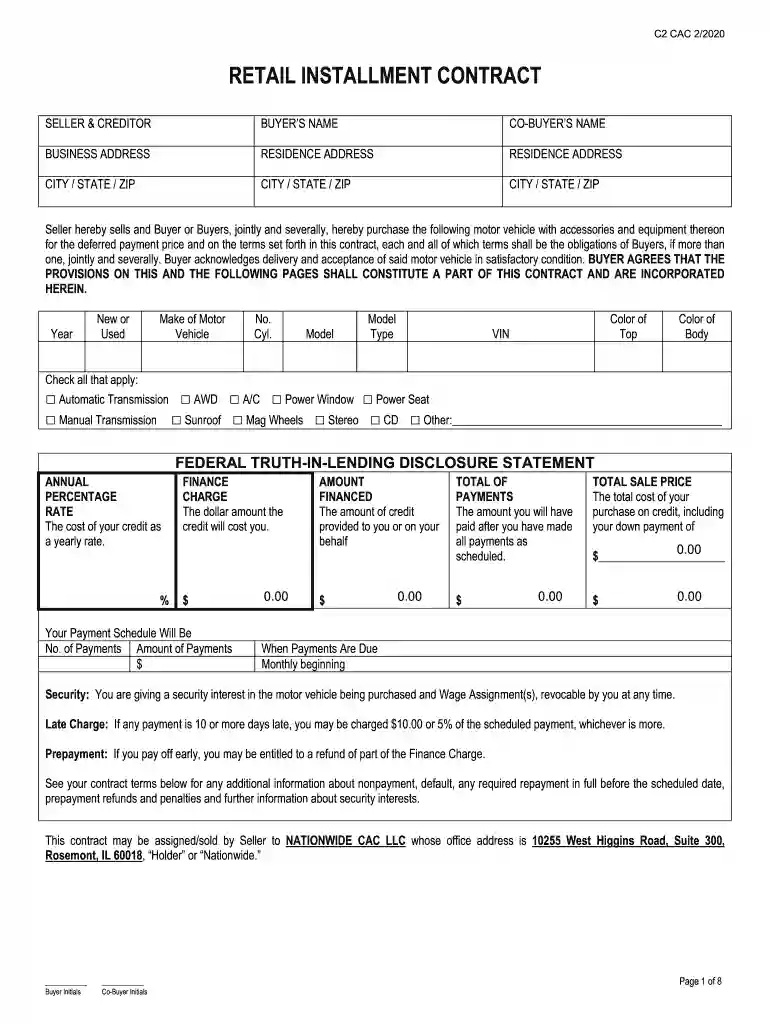
Type text, add images, blackout confidential details, add comments, highlights and more.

Draw your signature, type it, upload its image, or use your mobile device as a signature pad.

Send it via email, link, or fax. You can also download it, export it or print it out.
The "for the deferred payment price and on the terms set forth in this contract, each and all of which te" refers to a legal agreement where the price of a purchase is paid over time, according to specific conditions outlined within the contract. Such contracts are commonly used in the sale of large ticket items such as vehicles, real estate, or other significant assets, allowing buyers to spread payments over a period rather than making a single upfront payment. The contract delineates the rights and obligations of the involved parties, ensuring clarity around payment schedules, interest rates, and any additional fees. Understanding the exact nature of these terms is crucial for both buyers and sellers, as it impacts financial planning and risk management.
The key elements of a deferred payment contract are essential to grasp, as they determine the scope and execution of the agreement:
Payment Schedule: Outlines dates and amounts for installment payments, ensuring both parties are aware of when payments are due.
Interest Rates: Specifies any interest applied to the deferred payment balance, impacting the total amount paid over time.
Security Interest: Indicates if the seller retains an interest in the purchased asset until the full payment is made, serving as a protective measure.
Default Provisions: Details consequences in case of missed payments, such as penalties or repossession rights.
These components are critical to ensuring the agreement functions smoothly and both parties fulfill their obligations.
Completing a deferred payment contract involves several detailed steps:
Review the Contract Terms: Ensure understanding of the payment schedule, interest rates, and any additional costs or fees.
Signatures: Both parties must sign the contract to legally bind them to the terms.
Provide Necessary Documentation: This might include identification, proof of income, or other verification required by the seller.
Payment Method Setup: Determine how payments will be made, whether via electronic transfer, check, or another method, and ensure the arrangements are in place.
Fulfill Initial Payment Requirements: Often, an initial down payment might be required to activate the contract terms.
Taking these steps ensures that the contract is valid and that both parties are ready to adhere to agreed conditions.
The legal use of a deferred payment contract must adhere to specific regulations to be enforceable:
Compliance with State Laws: Each state may impose unique requirements or modifications to standard contract terms, affecting deadlines, interest rates, and consumer rights.
Disclosure Requirements: Full disclosure on finance charges and total payment amounts is required to meet legal guidelines and protect consumer rights.
Eligibility Criteria: Contracts must only be formed by entities legally recognized and qualified to engage in such agreements—often requiring proof of financial stability.
Compliance with these regulations ensures the contract is enforceable and reduces potential legal disputes.
This type of contract is widely used by various entities:
Auto Dealerships: Commonly used for customers purchasing vehicles on financing.
Real Estate Agents: Utilized in selling property where buyers cannot pay the full price upfront.
Business to Business Transactions: Companies may use deferred payment terms in transactions to manage cash flow effectively.
Utilizing these contracts provides flexibility in large purchases for both consumers and businesses.
These are practical applications of deferred payment contracts:
Car Purchases: A customer buys a vehicle paying part initially and the balance over monthly installments.
Home Appliance Purchase: A retail store offers a washing machine on a deferred payment basis, permitting payments over twelve months.
Equipment Leasing: A company leases machinery, with payments deferred over the year to manage operating costs better.
Real-world examples illustrate the contract's adaptability across various transactions.
Each state in the United States may have variations:
Interest Rate Caps: Some states impose maximum allowable interest rates to protect consumers.
Consumer Protection Laws: Requirements for disclosures and fair contract terms may differ, ensuring users are informed of all financial obligations.
Rescission Rights: State laws may permit consumers a rescission period to cancel the contract without penalty.
Understanding these state-specific rules is essential for ensuring compliance and protecting parties involved.
Contracts require clear and comprehensive disclosure to prevent misunderstandings:
Finance Charges: Clearly specify all costs associated with the financing option, including interest.
Total Purchase Price: List the sum of all payments, highlighting the difference from the upfront cash price.
Prepayment Options: For customers who can pay off early, terms for reducing interest are critical.
Providing these details not only complies with legal obligations but also fosters trust between buyer and seller.
Several terms are crucial for anyone engaging with a deferred payment contract:
Principal Amount: The initial amount that is agreed upon before interest and charges.
Amortization: The process of spreading the total cost over regular payments, typically involving principal and interest.
Late Payment Penalties: Charges applied to missed or delayed payments, which are critical to understand for financial planning.
Familiarity with these terms helps participants comprehend the financial implications of their agreements.
Businesses often benefiting from deferred payment contracts include:
Retail Stores: Enhancing affordability for consumers by spreading out expenses.
Construction Firms: Managing cash flow by deferring payments until project completion stages.
Tech Companies: Offering customers flexible payment options for expensive software or hardware.
These business types utilize deferred payment contracts to facilitate sales while managing financial liquidity effectively.
We've got more versions of the for the deferred payment price and on the terms set forth in this contract, each and all of which te form. Select the right for the deferred payment price and on the terms set forth in this contract, each and all of which te version from the list and start editing it straight away!
At DocHub, your data security is our priority. We follow HIPAA, SOC2, GDPR, and other standards, so you can work on your documents with confidence.
The method of payment shall be as set forth in the contract. Invoices shall be payable upon certification by authorized University personnel
The purpose of this Section is to set forth requirements for establishing repayment agreements resulting from Deferred Payment Arrangements (DPAs).Read more


