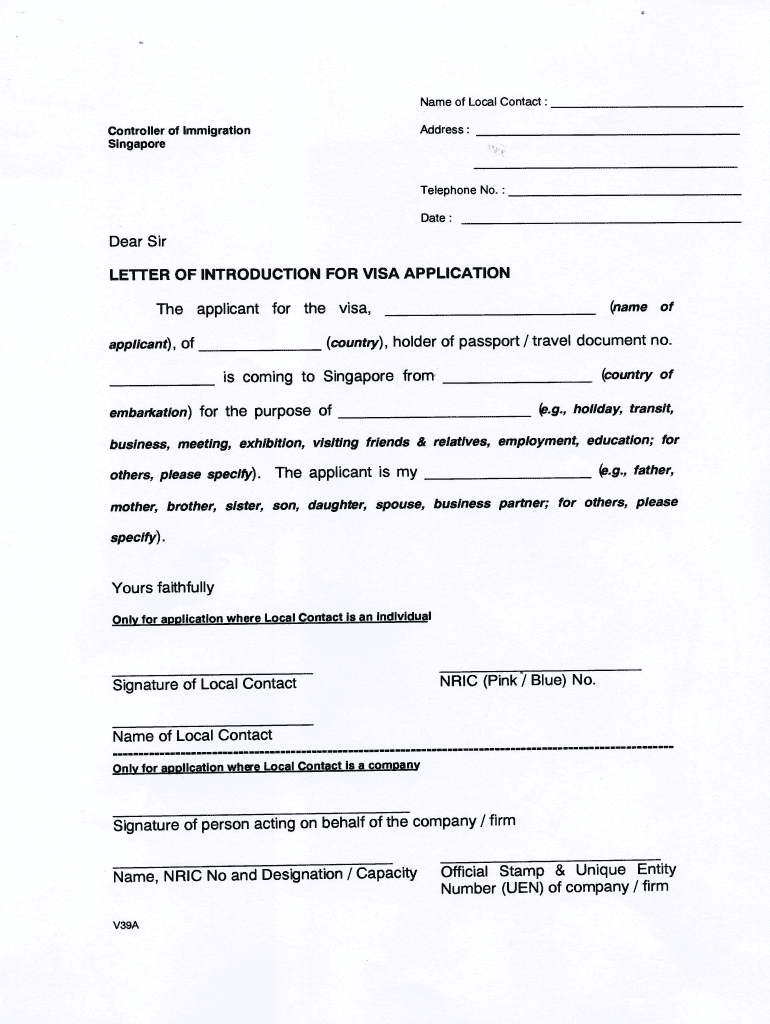







Understanding the Invitation Letter for Visa
An invitation letter for a visa serves a crucial role in the visa application process, particularly for travelers wishing to visit countries like Singapore. This document assists in verifying the purpose of travel and indicates that the visitor has a legitimate reason for their visit.
Definition and Purpose of an Invitation Letter
An invitation letter essentially confirms that a traveler is being invited by a host in the destination country. This letter serves several purposes:
- It provides evidence to visa authorities that the applicant has a contact in the host country.
- It outlines the nature of the visit, whether it be tourism, business, family gatherings, or events.
- It assures immigration officers that the traveler will not overstay their visa since they have a person who is responsible for them during their stay.
Key Components of an Invitation Letter
An effective invitation letter contains several essential elements:
- Sender's Information: Include the full name, address, phone number, and relationship to the applicant.
- Date: The date when the invitation letter is written.
- Recipient's Information: The full name, nationality, and address of the visa applicant.
- Formal Invitation Statement: A clear statement inviting the recipient to visit.
- Purpose of Visit: A detailed explanation of why the visit is taking place, covering activities planned during the stay.
- Duration of Stay: Mention the expected arrival and departure dates.
- Accommodation Details: Outline where the guest will stay, whether with the host or at another location.
- Financial Responsibility: Specify who will bear the costs associated with the visit, including accommodation and travel expenses.
- Closing Statement and Signature: A polite closing that reiterates the invitation, along with the sender's signature.
Format and Structure of an Invitation Letter
To create a well-structured invitation letter, adhere to a standard format:
- Heading: Generally includes the sender's address followed by the date.
- Subject Line: Clearly state the purpose, for example, "Invitation Letter for [Visitor's Name] for Visa Application."
- Body: Start with a formal greeting, introduce the purpose, and provide all necessary details outlined above in a logical flow.
- Conclusion: Reiterate the invitation and provide contact information for any further inquiries.
Examples of Invitation Letters
When drafting an invitation letter, refer to these scenarios:
- For a tourist visiting Singapore: "I, [Your Name], would like to warmly invite [Visitor’s Name] to visit Singapore for tourism from [Start Date] to [End Date]. We plan to visit places such as Marina Bay Sands and Sentosa Island."
- For a business visit: "As [Your Position] at [Your Company], I would like to invite [Visitor’s Name] for a series of business meetings scheduled for [dates], to discuss potential collaboration opportunities."
Common Mistakes to Avoid
When preparing an invitation letter, consider these common pitfalls:
- Incomplete Information: Ensure all required details are included to avoid delays in visa processing.
- Informal Language: Maintain a formal tone throughout the letter.
- Failure to Proofread: Typos and grammatical errors can undermine the professionalism of the letter.
Legal Considerations of Invitation Letters
It’s important to recognize the legal implications associated with an invitation letter:
- The letter must be truthful and accurately represent the intentions of the visit.
- Ensure compliance with local immigration laws; providing false information can lead to penalties for both the host and the visitor.
Final Thoughts on Crafting Invitation Letters
A well-crafted invitation letter can significantly enhance the chances of obtaining a visa. This simple, yet vital document verifies the visitor's purpose and intentions, ensuring a smoother visa application experience. By following proper formatting, including all necessary details, and avoiding common errors, hosts can present a compelling case to immigration authorities on behalf of their guests.