
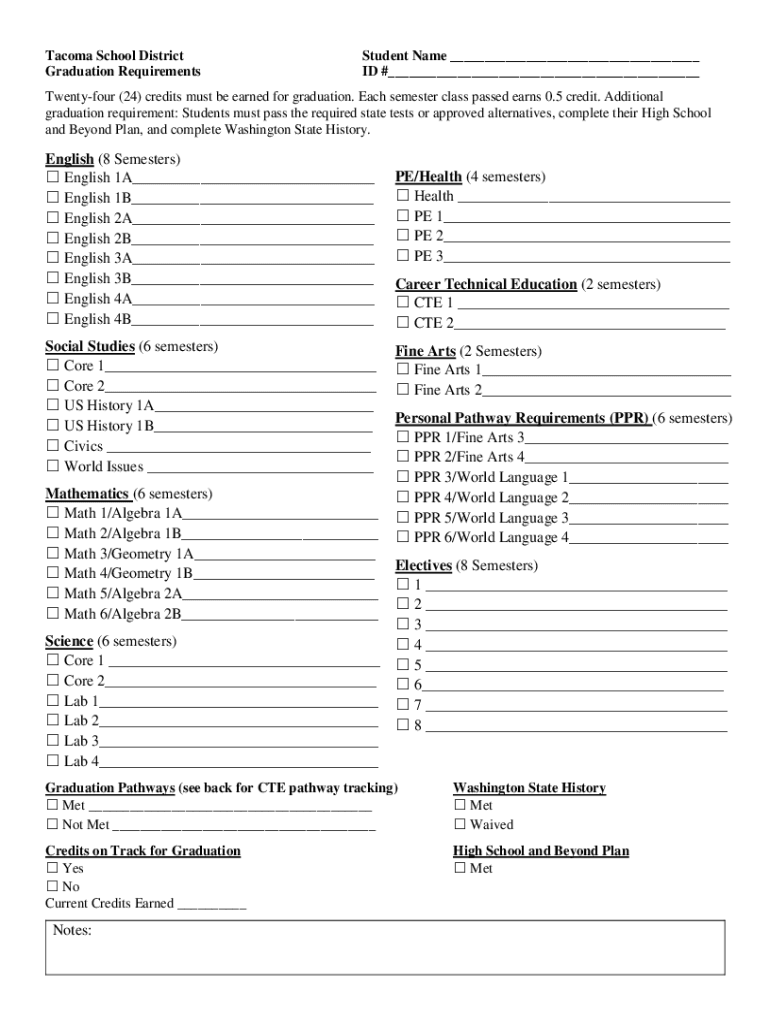







Definition and Purpose of the 2418F Form
The 2418F Form, known as the Waiver of High School Graduation Credits, is designed to help students seeking to waive specific high school graduation requirements. This waiver can be crucial for students who encounter challenges or require flexibility in meeting the traditional credit requirements of their high school. School districts, like the Tacoma School District, often have structured graduation requirements that require students to accrue a specific number of credits across various subjects. The 2418F Form serves to assist students in navigating these requirements and ensuring they can graduate on time despite unique circumstances.
Who Typically Uses the 2418F Form
This form is primarily utilized by high school students who, for various reasons, are unable to meet the standard credit requirements for graduation. These students might include those with personal challenges, health issues, or other exceptional circumstances that necessitate a modified graduation plan. Moreover, school counselors, educators, and administrative staff within the school district play vital roles in guiding students and their families through the waiver process. They assist in providing the necessary documentation and ensuring all steps in the form completion process are correctly followed.


Key Elements of the 2418F Form
The 2418F Form includes several critical components that must be completed accurately to ensure a successful waiver request. These elements typically include:
- Student Information: Personal details such as the student's name, school, and grade level.
- Reason for Waiver: The student or guardian must provide a detailed explanation of why the waiver is being requested.
- Credits Affected: A list of the specific credits or subjects for which the waiver is being requested.
- Endorsements and Signatures: Signatures from the student, parent or guardian, and school officials such as a counselor or principal.
- Supporting Documentation: Any additional documents that support the waiver request, such as medical records or letters from educational professionals.
How to Obtain the 2418F Form
Students and guardians can typically obtain the 2418F Form from their school's administrative office or district website. It's important to contact the school counseling department to ensure you receive the most current version of the form and any supplementary materials that might be needed. In some cases, forms can also be downloaded directly from the school district's official portal, providing convenience for those who wish to complete the paperwork electronically.
Steps to Complete the 2418F Form
- Obtain the Form: Secure a copy of the 2418F Form from your school's administrative office or district website.
- Fill Personal Details: Enter all required student information, ensuring accuracy in fields such as name and grade level.
- State Waiver Reasons: Clearly articulate the reasons for requesting the waiver, providing thorough explanations and context.
- Identify Credits: List the exact credits or subjects you are seeking to waive.
- Gather Endorsements: Obtain necessary signatures from parents, counselors, and school officials.
- Attach Documentation: Include any supporting documents, such as medical records or letters from educators, that justify the waiver request.
- Submit the Form: Return the completed form to the appropriate school office for processing and review.
Legal Use of the 2418F Form
The legal use of the 2418F Form involves ensuring that the waiver request aligns with both district and state education guidelines. Once approved, the form modifies the student's graduation requirements, making it imperative for it to be filled out correctly. Schools and districts are responsible for maintaining records of all waivers granted and ensuring compliance with educational regulations. Students and families should work closely with school officials to understand the legal implications and the process for waiver approval.
State-Specific Rules for the 2418F Form
While the core purpose of the 2418F Form remains similar across different states, specific rules and regulations may vary based on local education policies. For example, some states may have more stringent criteria for waivers or different documentation requirements. It's crucial for students and parents to consult with their school's guidance office to ensure compliance with state-specific guidelines, ensuring that all legal requirements are met to effectuate the waiver successfully.
Examples of Using the 2418F Form
Consider a student enrolled in the Tacoma School District who has experienced medical issues, preventing them from attending PE classes. This student could utilize the 2418F Form to request a waiver for the PE credits typically required for graduation. By providing medical records and an endorsement from a medical professional, this student demonstrates the necessity of the waiver. In another scenario, a student planning to graduate early might seek a waiver for elective credits, focusing instead on core subjects. Each situation requires careful documentation and adherence to the specific guidelines laid out by the district for the waiver to be considered valid.




