Coding audit template 2026

Get Form
medical coding audit template excel Preview on Page 1

Here's how it works

01. Edit your medical coding audit template excel online
Type text, add images, blackout confidential details, add comments, highlights and more.

02. Sign it in a few clicks
Draw your signature, type it, upload its image, or use your mobile device as a signature pad.

03. Share your form with others
Send medical coding audit template via email, link, or fax. You can also download it, export it or print it out.

Definition and Meaning of Coding Audit Template

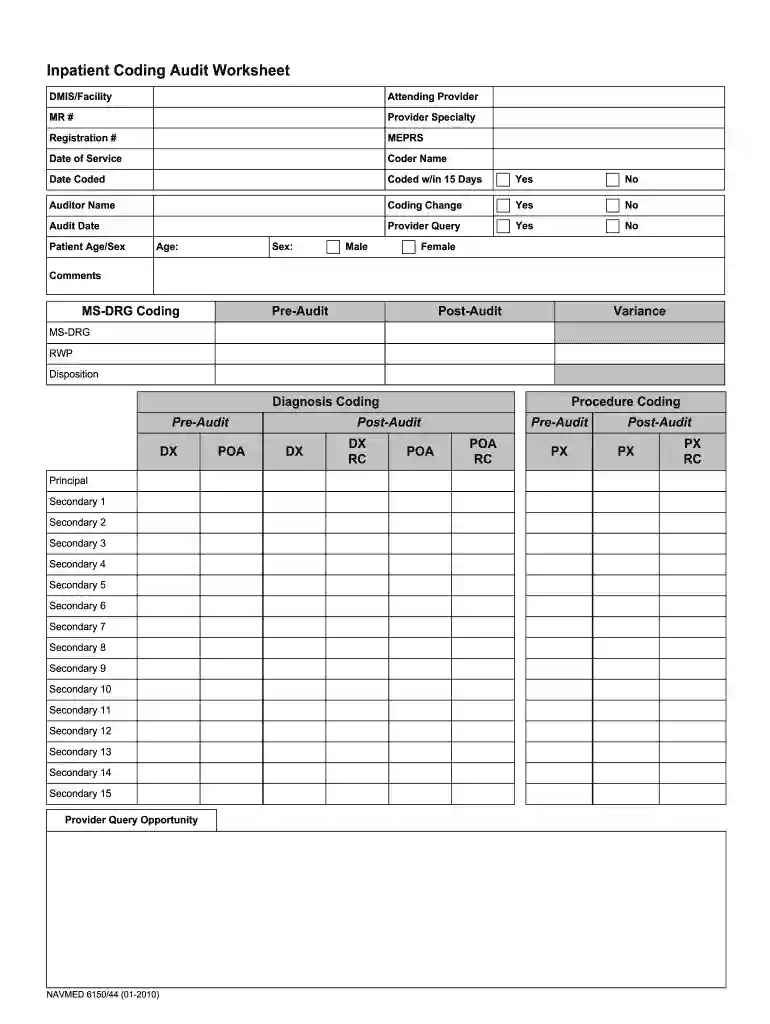
A coding audit template is a structured document designed to evaluate and ensure the accuracy of medical coding practices. It serves as a systematic guide for auditors and healthcare professionals to assess coding procedures, verify compliance with relevant standards, and identify discrepancies in medical billing. This template typically includes essential sections such as provider information, patient demographics, diagnosis codes, and results of audit inquiries.

The purpose of this template is to enhance the quality and integrity of medical coding within healthcare organizations. By utilizing a coding audit template, organizations can mitigate the risks of non-compliance and improper billing practices. This is crucial for meeting regulatory standards, ensuring accurate reimbursement, and fostering better patient care.

Key Elements of the Coding Audit Template

A comprehensive coding audit template consists of several critical components that facilitate an effective audit process:

  • Provider Information: This section collects data about the healthcare provider, including name, contact information, and credentials.
  • Patient Demographics: Recording demographic information such as age, gender, and insurance coverage helps contextualize the coding process.
  • Coding Details: This includes the coding used for diagnoses and procedures, allowing auditors to assess compliance with coding guidelines.
  • Audit Results: Documenting findings, including any discrepancies or areas requiring improvement, is crucial for action planning.
  • Opportunities for Provider Queries: This section outlines areas where further clarification or communication is required to enhance coding accuracy.

By integrating these elements, the coding audit template supports thorough documentation and effective resolution of potential coding issues.

Steps to Complete the Coding Audit Template

Completing a coding audit template involves several structured steps that ensure comprehensive analysis and documentation:

  1. Gather Necessary Documentation: Compile all relevant patient records, billing statements, and previous audit findings to inform the review process.
  2. Input Provider and Patient Information: Fill out the template with accurate details about the healthcare provider and the patient’s demographics.
  3. Review Coding Details: Assess the codes used against compliance standards to identify any discrepancies or errors. Use coding manuals and resources to confirm accuracy.
  4. Analyze Audit Results: Evaluate the findings and document any areas needing improvement. Ensure feedback is constructive to promote accurate future coding practices.
  5. Document Queries: If further clarification from the provider is necessary, outline specific questions or issues that require attention.
  6. Finalize the Audit Report: Once all sections are complete, finalize the document, ensuring accuracy and clarity in the presentation of findings.

This systematic approach facilitates a thorough review of coding practices and fosters constructive communication among healthcare providers and auditors.

Why Use a Coding Audit Template

Utilizing a coding audit template offers numerous benefits that contribute to enhanced coding practices:

  • Consistency in Audits: A standardized template ensures that all audits maintain a consistent approach, making it easier to compare results over time.
  • Improved Accuracy: Armed with a detailed structure, auditors can identify errors or discrepancies in coding, leading to more accurate billing and compliance.
  • Enhanced Communication: The template serves as a communication tool between auditors and providers, fostering discussions around coding practices and improvements.
  • Regulatory Compliance: Regular audits using a coding template help organizations comply with federal regulations, reducing the likelihood of penalties and audits from insurance payers.
  • Training and Development: The insights gained from audits can be used as a training resource for coding staff, highlighting areas for skill enhancement.

These benefits highlight the importance of incorporating a coding audit template into the coding review process.

Examples of Using the Coding Audit Template

The practical application of coding audit templates can be observed in various scenarios within healthcare settings:

  • Routine Audits: A hospital uses a coding audit template quarterly to review inpatient records, ensuring that documentation matches the coding assigned to services rendered. This routine check helps maintain high billing standards.
  • Focused Audits: An outpatient clinic conducts a targeted audit on specific services, such as physical therapy, using the template to analyze coded claims. This approach allows the clinic to identify consistent patterns in coding inaccuracies related to that service.
  • Training Sessions: Coding managers utilize the template during training sessions to educate new coders on required forms and auditing processes. By using real patient data, new coders can better understand compliance standards.

These examples demonstrate how the coding audit template facilitates diverse audit scenarios tailored to the needs of healthcare providers.

See more coding audit template versions

We've got more versions of the coding audit template form. Select the right coding audit template version from the list and start editing it straight away!
Versions Form popularity Fillable & printable
2010 4 Satisfied (20 Votes)
be ready to get more

Complete this form in 5 minutes or less

Get form

Got questions?

We have answers to the most popular questions from our customers. If you can't find an answer to your question, please contact us.
Contact us
How to conduct a code audit? Define Objectives and Scope. Clarify the purpose (e.g., security, compliance, optimization). Gather Requirements and Standards. Static Code Analysis. Dynamic Analysis. Manual Code Review. Dependency and Third-Party Checks. Document Findings and Remediation. Follow-Up and Retesting.
Medical coding audits help healthcare providers detect flaws in their coding procedures, reduce coding errors, and increase productivity. Regular coding audits help to find outdated codes, wrong modifiers, improper codes used, or even flaws in medical billing procedures.
Routine coding audits are an essential process that helps healthcare organizations ensure accurate coding and maintain regulatory compliance. These audits involve a thorough review of medical documentation, procedural-modifier-diagnostic coding accuracy to identify any errors and knowledge gaps.
Checklist: Prep for a Successful Coding Audit Determine the frequency of medical coding audits. Consider the scope. Determine the volumes for review. Choose a chart selection method. Determine if the review will be concurrent or retrospective. Decide which payors are to be included.

Security and compliance

At DocHub, your data security is our priority. We follow HIPAA, SOC2, GDPR, and other standards, so you can work on your documents with confidence.

Learn more
ccpa2
pci-dss
gdpr-compliance
hipaa
soc-compliance
be ready to get more

Complete this form in 5 minutes or less

Get form