




01. Edit your dv 730 online
Type text, add images, blackout confidential details, add comments, highlights and more.

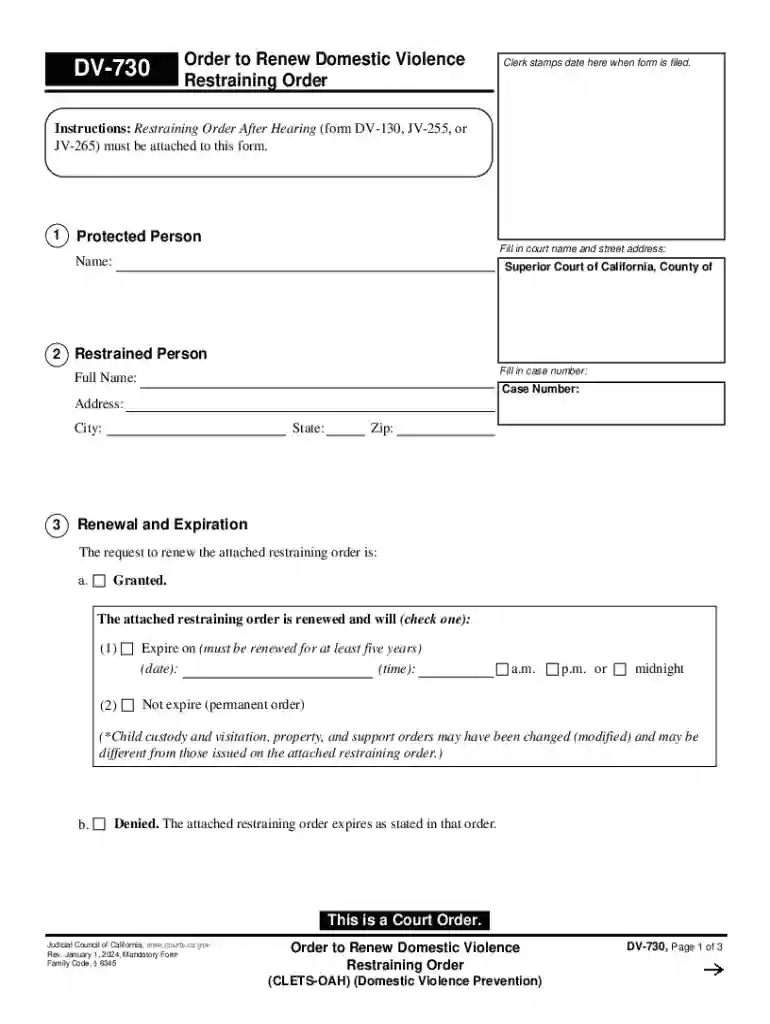
Type text, add images, blackout confidential details, add comments, highlights and more.

Draw your signature, type it, upload its image, or use your mobile device as a signature pad.

Send it via email, link, or fax. You can also download it, export it or print it out.
The DV-130 form, often referenced as a "Restraining Order After Hearing," is a legal document used in California courts. It serves as an official court order issued after a hearing, typically relating to domestic violence or threats. The restraining order specifies the conditions under which contact is restricted between parties to protect the petitioner and potentially involve terms concerning custody, property control, and contact limitations.
Using the DV-130 involves understanding its purpose and the context in which it is applied. Once the court decides in favor of the restraining order, the DV-130 document is prepared to reflect this decision. It should be filled out with accurate details concerning both the protected and restrained parties, the specifics of restrictions imposed, and any additional court-ordered requirements. This form is then reviewed by the court for confirmation before it is officially enacted.
The DV-130 form is legally binding and enforceable by law enforcement agencies once signed by a judge. It provides a legal framework that offers protection to individuals from domestic abuse or threats. Violations of the terms laid out in the form can result in legal action, including arrest or penalties for the restrained party.
In California, the rules for obtaining and enforcing a DV-130 form are governed by state law, specifically under the Domestic Violence Prevention Act. It's important to consult legal guidelines to ensure compliance with required procedures, such as personal service requirements for notifying the restrained party and stipulated hearing schedules.
To effectively complete the DV-130 form, a petitioner may need to provide supplementary documents, including:
Once completed, the DV-130 form can be submitted via several methods to ensure the legal processing of the restraining order:
The form is primarily used by individuals who are seeking legal protection from domestic violence. Typical users can include spouses, cohabitants, parents seeking protection for their children, and others experiencing threats or harassment from a close relationship.


We've got more versions of the dv 730 form. Select the right dv 730 version from the list and start editing it straight away!
At DocHub, your data security is our priority. We follow HIPAA, SOC2, GDPR, and other standards, so you can work on your documents with confidence.


