
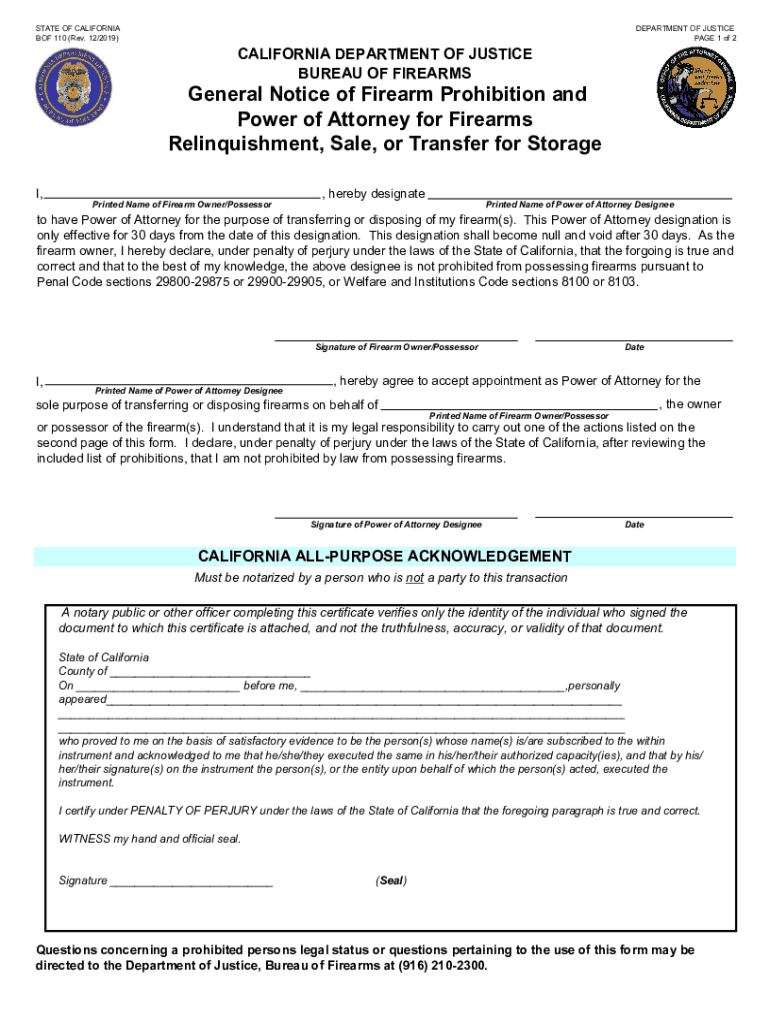







Definition and Purpose of BOF 110
The BOF 110 - General Notice of Firearm Prohibition and Power of Attorney for Firearms Relinquishment, Sale, or Transfer for Storage is a legal document issued by the California Department of Justice. It serves two primary functions: notifying individuals of a prohibition against possessing firearms and enabling them to appoint a Power of Attorney (POA) to handle the relinquishment, sale, or transfer of their firearms. This form is crucial for ensuring compliance with California's firearm laws, particularly for individuals who have lost their right to possess firearms due to legal conditions such as a restraining order, criminal conviction, or mental health ruling.
How to Use the BOF 110
When an individual is served with the BOF 110, they are required to comply with the firearm prohibition by using the form to facilitate the lawful relinquishment of firearms. Here are the steps involved:
-
Understand the Prohibition: Begin by fully reading the notice to comprehend the conditions of the firearm prohibition and the timeline for compliance.
-
Designate a POA: Use the form to appoint a responsible individual to act as your Power of Attorney. This person will manage the transfer or relinquishment of your firearms, ensuring adherence to legal requirements.
-
Relinquish Firearms: The POA will need to contact local authorities or authorized entities to arrange for the surrender or transfer of firearms.
-
Documentation: Retain copies of the completed BOF 110 and any receipts or paperwork received from the authorities as proof of compliance.
Steps to Complete the BOF 110
-
Obtain the Form: You can access the BOF 110 form through the California Department of Justice website or request it from local law enforcement.
-
Fill Out Personal Information: Provide your full name, address, and any identifying information as required on the form.
-
Nominate a Power of Attorney: Clearly print the name and contact information of the individual you wish to appoint.
-
Signature and Date: Both you and your appointed POA must sign and date the form.
-
Submit the Form: Deliver the completed form to the designated entity, which may include local law enforcement or a legal advisor specializing in firearm laws.
Legal Implications of Using BOF 110
Understanding the legal ramifications of the BOF 110 is crucial for compliance. Failure to act accordingly within the stipulated time can result in severe penalties, including criminal charges. The form is specifically governed by California state law, which sets out stringent requirements for gun ownership and transfer. The designated POA must adhere strictly to these legal stipulations to ensure firearms are relinquished appropriately and that the individual's legal exposure is minimized.
Important Terms in BOF 110
- Firearm Prohibition: A legal restriction preventing an individual from owning or possessing firearms.
- Power of Attorney (POA): A designated individual with the legal authority to act on behalf of another in managing firearm relinquishment.
- Relinquishment: The process of voluntarily surrendering firearms to authorities.
Eligibility and Who Uses BOF 110
The BOF 110 is primarily used by individuals in California who have been legally prohibited from possessing firearms. This can include individuals subject to restraining orders, those convicted of certain crimes, or others defined by specific legal criteria. Understanding eligibility is vital for lawful compliance and safety.
State-Specific Rules and Considerations
While the form is specific to California, variations or similar documents may exist in other states, each with unique regulations and compliance requirements. Individuals must consult legal experts familiar with state-specific firearm laws to avoid legal complications.
Digital vs. Paper Version
The BOF 110 form can typically be filled out in either digital or paper format, depending on the resources of the local jurisdiction issuing the document. Certain counties may offer digital submissions to streamline processing, while others may require physical documentation. Confirm the preferred method with your legal advisor or local law enforcement authorities.




