




01. Edit your ea 120 info online
Type text, add images, blackout confidential details, add comments, highlights and more.

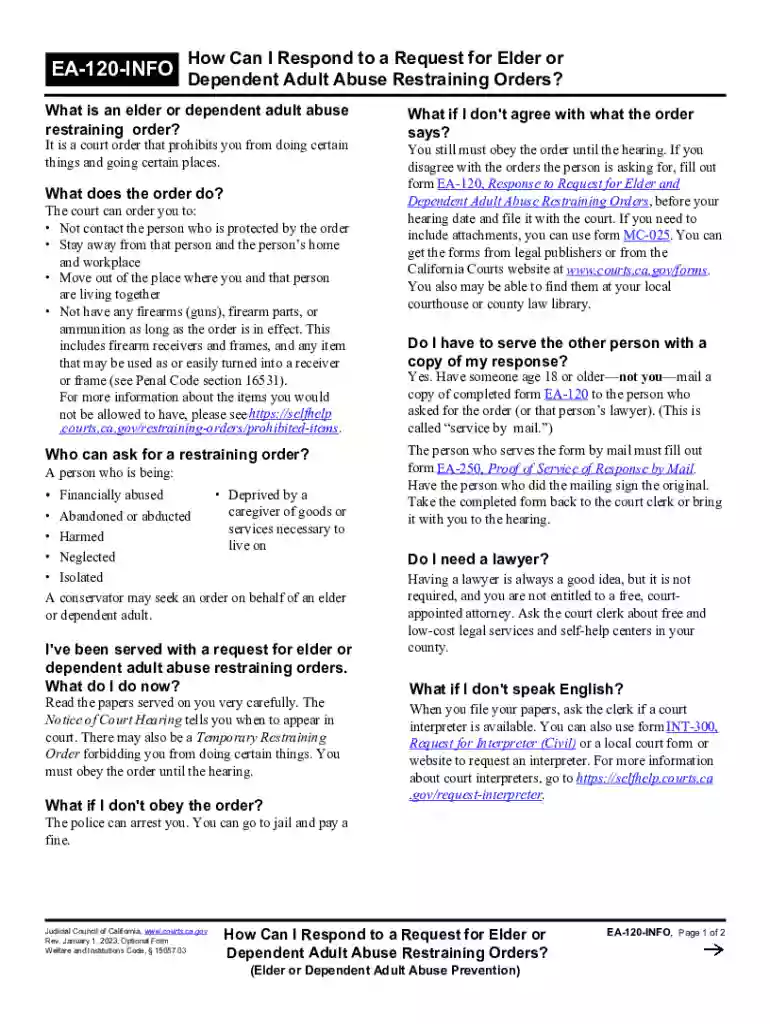
Type text, add images, blackout confidential details, add comments, highlights and more.

Draw your signature, type it, upload its image, or use your mobile device as a signature pad.

Send it via email, link, or fax. You can also download it, export it or print it out.
An elder or dependent adult abuse restraining order is a legal directive aimed at protecting a vulnerable adult from harm. These orders are issued to safeguard individuals who are 65 or older or those between 18 and 64 who have physical, mental, or developmental conditions that prevent them from protecting themselves. Abuse may include physical harm, financial exploitation, neglect, or emotional abuse. Such orders require the alleged abuser to stop harming and to maintain a certain distance from the victim, potentially also prohibiting any form of contact.
Read the Summons Carefully: Begin by thoroughly reviewing the court summons you have received. The summons will outline the date and time of the court hearing, as well as what is being claimed against you.
Prepare Your Response: Utilize the EA-120-INFO form to draft a detailed response. Address each claim mentioned in the restraining order, providing any evidence, documentation, or witness statements that support your case.
File Your Response: Submit your completed EA-120-INFO form with the court prior to the deadline specified in the summons. This ensures your side of the story is considered at the hearing.
Attend the Court Hearing: Be present at the court hearing on the scheduled date. Present your defense and the evidence backing your stance. The judge will hear both sides before making a ruling.
Completing the EA-120-INFO form requires gathering several key documents and details:
A restraining order is a serious legal document. Non-compliance can lead to significant legal consequences, including fines or jail time. If the order is upheld, the recipient must abide by its terms, which may include vacating shared premises or altering daily activities to comply with the specified distance from the petitioner.
During the hearing process, both parties will have the opportunity to present their side. The petitioner will provide evidence of abuse, while the respondent can counter these claims and introduce their evidence and arguments. A judge evaluates all information before deciding whether to grant, modify, or deny the restraining order.
Having a restraining order issued against you can have significant personal and professional implications. It may affect your employment, particularly in positions that require a clean record or the ability to carry firearms. Additionally, a restraining order can impact personal relationships and living situations.
While EA-120-INFO is specifically for elder and dependent adult abuse cases in California, other states may have equivalent forms or procedures under different names. Always check state-specific forms and legal processes when dealing with such legal matters.
Having a lawyer can greatly impact the outcome of your case. Legal representation ensures that your rights are protected throughout the restraining order process. Lawyers can provide guidance on gathering evidence, managing paperwork, and effectively presenting your case in court.
Ignoring a court summons for a restraining order can lead to a default judgment being made against you. Without your response or presence, the court is likely to side with the petitioner, resulting in an uncontested restraining order that may have more severe restrictions.
Utilizing platforms like DocHub can streamline the document management process. Through DocHub, you can edit, sign, and send necessary legal documents while ensuring secure encryption and easy access across digital devices. This can ease the burden of paperwork and allow for efficient communication with legal advisors.
We've got more versions of the ea 120 info form. Select the right ea 120 info version from the list and start editing it straight away!
At DocHub, your data security is our priority. We follow HIPAA, SOC2, GDPR, and other standards, so you can work on your documents with confidence.
If you want lo respond, fill out form EA-120, Response lo Requestfor Elder or Depe11de111 Adult Abuse Restratntng Orders, and file it with the court clerk.
Jan 1, 2026 Read the papers served on you very carefully. The Notice of Court Hearing tells you when to appear in court. You must obey the order until the


