




01. Edit your form online
Type text, add images, blackout confidential details, add comments, highlights and more.

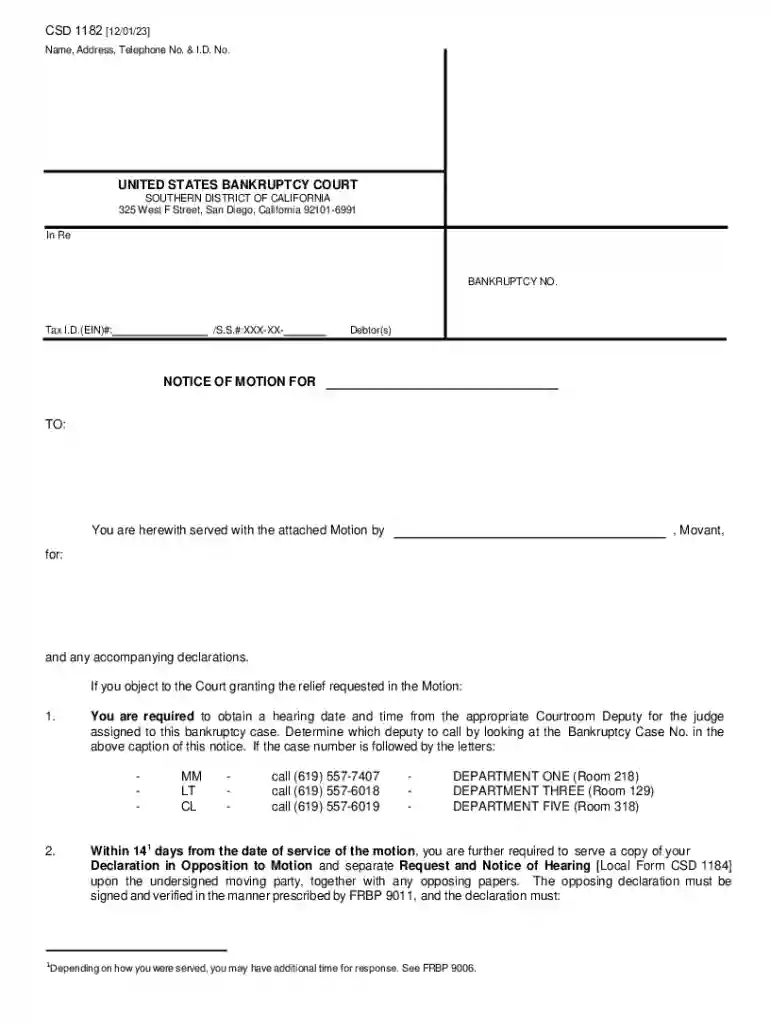
Type text, add images, blackout confidential details, add comments, highlights and more.

Draw your signature, type it, upload its image, or use your mobile device as a signature pad.

Send it via email, link, or fax. You can also download it, export it or print it out.
The "Local Bankruptcy Rules: California (S D Cal)" refer to the specific set of procedural guidelines that govern bankruptcy cases within the Southern District of California. These rules are developed to ensure consistency and clarity in handling bankruptcy matters, aiding both legal professionals and individuals involved in such cases. The rules outline the court's requirements for filings, motions, and other bankruptcy proceedings, playing a critical role in managing the administrative processes of bankruptcy cases in Southern California.
Understanding these local rules is crucial for parties involved in bankruptcy cases as it ensures compliance with the specific procedural requirements of the Southern District of California. Attorneys, debtors, creditors, and trustees need to be familiar with these rules to avoid procedural mistakes that could result in delays or adverse outcomes in a case. The rules serve as a guide for navigating the bankruptcy process within that jurisdiction, emphasizing the importance of precise compliance.
The "Local Bankruptcy Rules: California (S D Cal)" include various sections that address numerous aspects of bankruptcy proceedings. Key components often covered include:
Typically, these rules are utilized by bankruptcy attorneys, legal professionals, trustees, and business entities engaged in the bankruptcy process in the Southern District of California. Individual debtors and creditors involved in bankruptcy proceedings also rely on these rules to understand their rights and responsibilities. Legal practitioners often refer to these local rules to ensure that their filings are compliant with the court's procedures, aiding in effective case management.
Adhering to the "Local Bankruptcy Rules: California (S D Cal)" is essential for the legal proceedings within this jurisdiction. Non-compliance can lead to several negative consequences, including motions being denied, delays in proceedings, or even dismissal of a case. The court requires strict compliance to ensure fair treatment of all parties and maintain the efficiency of the legal process. Therefore, understanding and following these rules is critical to the successful management of bankruptcy cases.
To access the "Local Bankruptcy Rules: California (S D Cal)," interested parties can visit the official website of the United States Bankruptcy Court for the Southern District of California. These rules are typically available in electronic format, making them accessible for download and review. Legal professionals often have hardcopies as part of their legal libraries for easy reference during case preparation.
The local bankruptcy rules outline critical filing deadlines and important dates that practitioners and involved parties must adhere to. These include timelines for filing initial petitions, objections, and responses to motions. Compliance with these deadlines is essential to maintain the rights to participate in hearings or to object to certain proceedings. Missing these deadlines can result in waiving relevant legal rights or having motions struck from the record.
In practice, a bankruptcy attorney in San Diego may use the "Local Bankruptcy Rules: California (S D Cal)" to advise a client on filing a Chapter 7 bankruptcy petition. By following these rules, the attorney can ensure that the petition is complete and correctly formatted according to court requirements, thereby minimizing the risk of the filing being rejected due to procedural errors. Similarly, creditors can reference these rules when determining how to properly file claims against a debtor's bankruptcy estate.
We've got more versions of the Local Bankruptcy Rules: California (S D Cal ) form. Select the right Local Bankruptcy Rules: California (S D Cal ) version from the list and start editing it straight away!
At DocHub, your data security is our priority. We follow HIPAA, SOC2, GDPR, and other standards, so you can work on your documents with confidence.
by WN Heiser 1996 Cited by 25 The remainder of this Article discusses some preliminary findings with respect to the local rules of the Southern District of California as well as someRead more
The Local Bankruptcy Rules govern all cases and all adversary proceedings, contested matters, and other proceedings pending on or commenced after the Effective


