




Definition and Meaning
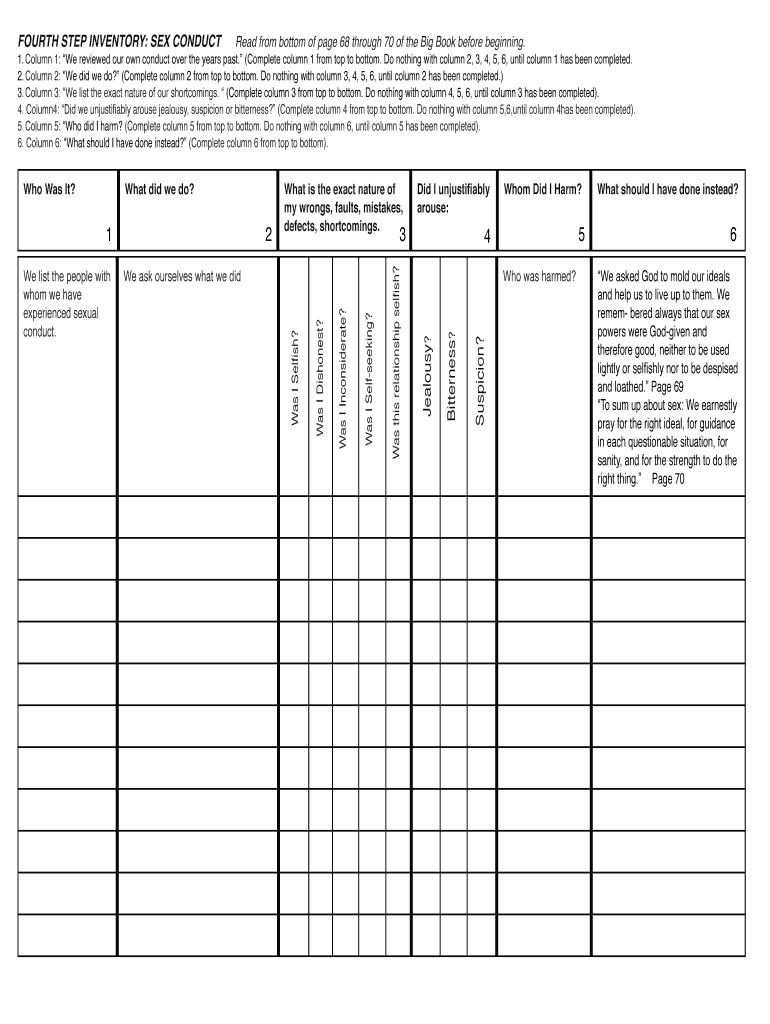
The "UA 4th Step Sex Conduct Inventory" is a reflective tool used predominantly within a recovery framework to help individuals assess and understand their past sexual conduct. It is a component of the fourth step in 12-step recovery programs, particularly aimed at unpacking behaviors that might have harmed oneself or others. By examining past actions, individuals can gain insight into patterns of behavior, identify shortcomings, and work towards personal growth and healthier relationships.
Purpose and Usage
- Personal Reflection: Participants use the inventory to reflect on past behaviors and their consequences.
- Identification: Helps identify patterns and triggers in sexual conduct.
- Growth and Improvement: Encourages setting goals for healthy future relationships.
- Spiritual Context: Often used alongside seeking divine guidance in recovery programs.
How to Use the UA 4th Step Sex Conduct Inventory
Using the inventory effectively involves a structured and thoughtful approach:
- Set Aside Time: Dedicate uninterrupted time for reflection.
- Environment: Choose a private and comfortable setting.
- Honesty: Be open and honest with oneself during the self-examination process.
- Documentation: Write down reflections and observations in the inventory.
- Guidance: Seek guidance from a mentor or spiritual advisor when necessary.
Key Steps
- Reflect on each column of the inventory systematically.
- Identify past sexual behaviors.
- Analyze the impact of these behaviors on oneself and others.
- Process emotions and thoughts that arise during reflection.
Steps to Complete the UA 4th Step Sex Conduct Inventory
Completing the inventory generally involves six columns, each serving a specific reflective purpose:
- Review Past Behavior: List significant instances of sexual conduct.
- Impact Analysis: Reflect on how these actions affected others emotionally and relationally.
- Personal Accountability: Acknowledge personal shortcomings and responsibilities.
- Relationship Dynamics: Explore how these behaviors impacted personal relationships.
- Emotional Consequences: Examine the emotional fallout and root causes of actions.
- Future Improvements: Consider changes and improvements for future conduct.
Common Practices
- Keep a journal for additional thoughts and reflections.
- Discuss findings with a sponsor or counselor for further insight.
- Set achievable goals for change and improvement.
Important Terms Related to UA 4th Step Sex Conduct Inventory
Understanding specific terms associated with the inventory can enhance comprehension:
- Sexual Conduct: Any behavior or action related to sexual interaction.
- 12-Step Program: A structured recovery process often involving spiritual guidance.
- Sponsor: A mentor guiding individuals through the recovery process.
- Inventory Columns: Sections of the inventory focusing on different aspects of behavior.
Additional Definitions
- Accountability: Taking responsibility for one's actions and their impacts.
- Reflection: Deep thinking about past actions to understand motives and effects.
Key Elements of the UA 4th Step Sex Conduct Inventory
The inventory comprises various critical components that facilitate comprehensive self-review:
- Structured Reflection: Systematic method for evaluating sexual behavior.
- Emotional Analysis: Delving into emotional consequences of past actions.
- Behavioral Patterns: Identification of recurring behaviors and triggers.
- Goal Setting: Formulating practical goals for behavioral change.
Core Components
- Columns for Analysis: Each column offers a distinct perspective on conduct.
- Guidelines: Instructions or questions that prompt deeper reflection.
- Spiritual Insights: Opportunities for spiritual growth during reflection.
Who Typically Uses the UA 4th Step Sex Conduct Inventory
This inventory is most commonly utilized by individuals involved in 12-step recovery programs. These may include:
- Addiction Recovery Participants: Individuals overcoming various forms of addiction.
- Counseling Clients: Participants in therapy for relationship issues.
- Personal Development Seekers: Those seeking self-improvement and relationship enhancement.

User Demographics
- Diverse Backgrounds: Open to anyone engaged in personal reflection and recovery.
- Various Stages of Recovery: Suitable for participants at different recovery progress points.
Examples of Using the UA 4th Step Sex Conduct Inventory
Practical examples highlight how the inventory is employed in real-life scenarios:
- Relationship Repair: An individual reflects on past behavior to mend a strained relationship.
- Pattern Recognition: Identifying repetitive harmful behaviors to prevent future occurrences.
- Therapeutic Setting: Used within therapy sessions to facilitate discussions and insights.
- Peer Support Group: Shared experiences in a group enhance collective understanding and growth.
Legal Use of the UA 4th Step Sex Conduct Inventory
While primarily used for personal growth, understanding legal considerations is crucial:
- Privacy: Ensure confidentiality of personal reflections and documented inventory responses.
- Voluntary Use: Utilization is generally non-compulsory and voluntary.
- Documentation Security: Safeguard written reflections to prevent unauthorized access.
Legal Considerations
- Protected Information: Treat personal inventory data as sensitive and confidential.
- Policy Awareness: Be aware of privacy policies within therapy or support group settings.