




Definition and Purpose of the Sacramento County Sheriff's Office, Instructions for Unlawful Detainer
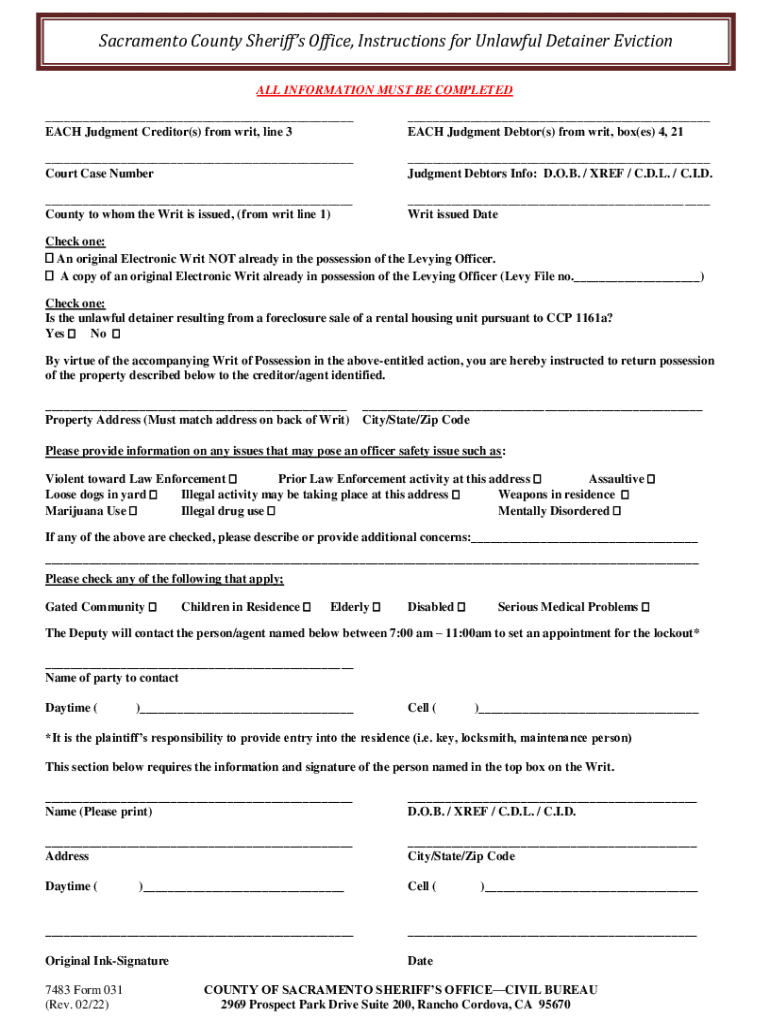
The Sacramento County Sheriff's Office provides an outline for handling unlawful detainer evictions, a legal process landlords use to regain possession of property from tenants who fail to comply with lease terms, primarily through non-payment of rent. This instruction guide is essential for conducting a lawful eviction, ensuring all steps adhere to legal standards. Essential components include the disclosure of involved parties, property details, and safety considerations, as well as a Release of Liability form to protect the county from potential claims during eviction.
How to Use the Sacramento County Sheriff's Office, Instructions for Unlawful Detainer
- Review the Instructions: Carefully read the document to understand the necessary procedural steps. Pay attention to each form and section.
- Gather Information: Collect details of judgment creditors, debtors, and the property involved. Fill out these sections with accurate information.
- Release of Liability Form: Complete this section to indemnify the county and its personnel from liability in relation to the eviction.
- Schedule a Lockout: Follow the procedures for contacting appropriate officials to arrange a lockout date if needed.
- Submit the Form: Ensure all sections are accurately completed before submitting to the Sheriff's office.
Obtaining the Sacramento County Sheriff's Office, Instructions for Unlawful Detainer
Legal documents, including the Sacramento County Sheriff’s Office's unlawful detainer instructions, can typically be obtained from:
- County Clerk's Office: Visit in person to request a copy.
- Sheriff’s Office Website: Download forms and instructions directly from their official online portals. Each method provides official copies ensuring compliance with the county’s requirements.
Steps to Complete the Sacramento County Sheriff's Office, Instructions for Unlawful Detainer
- Provide Party Information: Complete sections detailing landlord and tenant information to identify all involved parties.
- Describe Property: Detail the location and nature of the property subject to eviction.
- Outline Safety Concerns: List any safety issues that the sheriff should be aware of during the eviction process.
- Release of Liability: Execute this section to protect officials from claims of property damage or personal harm.
- Arrange Lockout: Coordinate with sheriff’s representatives to finalize a timeline for eviction execution.
Key Elements in the Sacramento County Sheriff's Office, Instructions for Unlawful Detainer
- Judgement Details: Information regarding court judgments permitting eviction.
- Debtor and Creditor Information: Must include comprehensive details to ensure all parties are properly notified.
- Property Description: Accurate property details aid the sheriff’s office in identifying the premises within legal constraints.
- Safety Assessment: Identifies risks which could impact eviction procedures.
- Liability Waiver: Protects the sheriff's office during execution of eviction.
Legal Application of the Sacramento County Sheriff's Office, Instructions for Unlawful Detainer
The legal framework surrounding the instructions ensures evictions are carried out lawfully and protects the rights of property owners. Following these guidelines establishes transparent, legal recourse for landlords to reclaim properties owed by tenants who default lease agreements. Failure to comply with these instructions could result in delays or legal penalties, underlining the importance of thorough document completion and submission.
Who Typically Uses the Sacramento County Sheriff's Office, Instructions for Unlawful Detainer
Individuals and entities such as:
- Property Owners: Landlords seeking to lawfully evict tenants.
- Property Management Companies: Facilitators of multiple rental properties requiring legal removals.
- Legal Representatives: Attorneys representing landlords or property managers. These parties rely on the detailed instructions to ensure the eviction process is legally sound.


State-Specific Rules Affecting the Sacramento County Sheriff's Office, Instructions for Unlawful Detainer
In California, eviction rules can vary by county, highlighting the importance of understanding and adhering to Sacramento-specific protocols. For example, time frames for responding to notices or scheduling lockouts may differ, underscoring the importance of using the current version of the instructions. Non-compliance could result in additional legal action or delays.
Examples of Using the Sacramento County Sheriff's Office, Instructions for Unlawful Detainer
Real-world scenarios include:
- Non-Payment of Rent: Landlords can initiate instructions following a tenant’s prolonged failure to pay rent.
- Lease Violations: Breaching lease terms, such as unauthorized subletting, may prompt use of these instructions.
- Removal After Sale: Buyers of foreclosed properties may employ this form to lawfully remove previous occupants.
By providing comprehensive guidance, the Sacramento County Sheriff’s Office instructions help landlords navigate the eviction process effectively and lawfully.