







Definition and Meaning
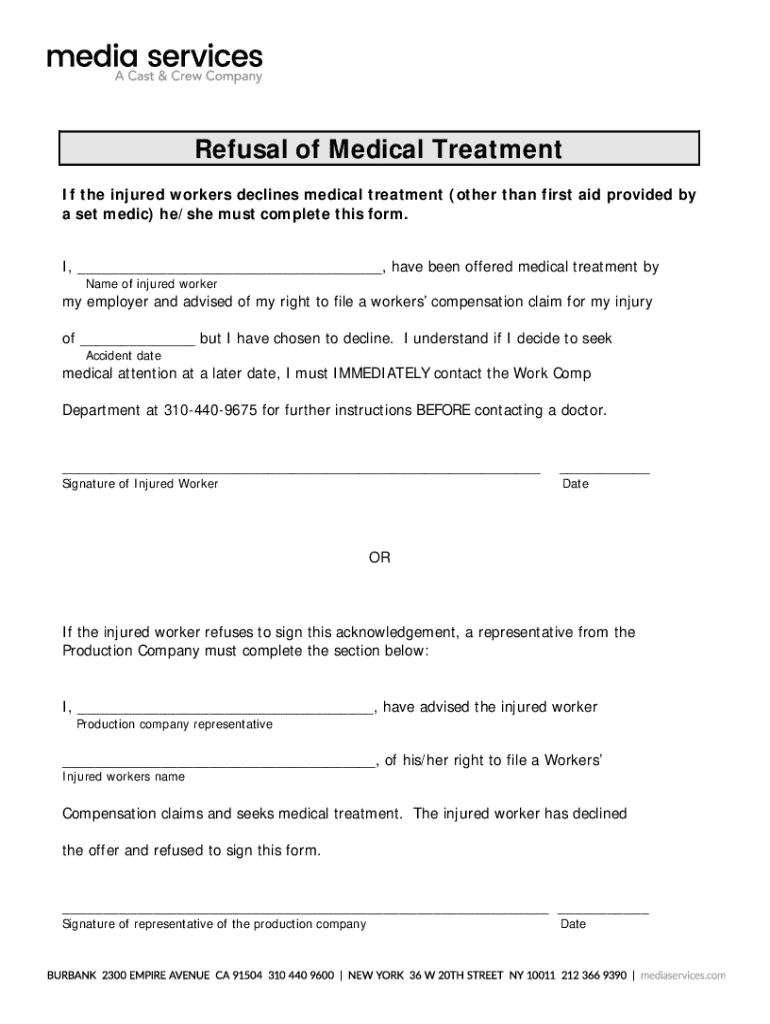
The "Refusal of Medical Treatment - Media Services" form is a legal document used by employees in the media industry who choose to decline medical treatment offered by their employer after sustaining an injury. This form serves both as a record of the employee's decision and as an acknowledgment of their understanding of the potential implications, such as the option to file a workers' compensation claim. The importance of this form lies in its legal standing, ensuring that employers have documented evidence of the employee's informed choice and understanding of their rights and obligations.
How to Use the Refusal of Medical Treatment - Media Services
Proper use of the "Refusal of Medical Treatment - Media Services" form requires a thorough understanding of its components and the context in which it is used. Employees should carefully review the document to ensure they fully understand their rights and the repercussions of declining treatment. The form should be filled out accurately and completely, with particular care to ensure that the sections pertaining to the acknowledgment of rights and the refusal of treatment are not overlooked. It's crucial for employees to engage in open discussions with their employer or HR department to address any questions before signing the form.
Steps to Complete the Form
- Review the Entire Document: Start by reading the full document to understand all sections and what is being acknowledged.
- Acknowledge Rights: Ensure that the section outlining the worker's right to file for workers' compensation is clearly understood and properly signed.
- Sign the Refusal Section: Document the decision to refuse treatment by signing the designated area on the form.
- Employer's Acknowledgment: In cases where the employee refuses to sign, a company representative must complete the acknowledgment on their behalf to ensure the refusal is still documented.
Important Terms Related to the Form
Understanding key terminology is essential for accurately completing this form:
- Workers' Compensation: A form of insurance providing wage replacement and medical benefits to employees injured in the course of employment.
- Acknowledgment: The act of recognizing rights and obligations, often requiring a signature.
- Informed Consent: The process of understanding the risks and benefits of treatment before making a decision.
Legal Use of the Refusal of Medical Treatment - Media Services
Legally, this form is pivotal in providing protection to both employees and employers. For employees, it safeguards their rights by documenting their decision and understanding of the implications. For employers, it minimizes legal risk by ensuring there is evidence that the employee was informed yet chose to refuse the treatment. Compliance with legal standards and accurate documentation is crucial, as it can affect any potential legal proceedings related to workplace injuries.
Examples of Legal Scenarios
- An employee refuses immediate treatment due to personal preferences but later seeks compensation for the injury.
- A misunderstanding of rights leads to an incomplete form, causing complications in the workers' compensation claim process.
Key Elements of the Form
The form is composed of several critical components that clarify the employee’s intention and affirm their understanding:
- Identification Information: Details about the employee, including full name and contact information.
- Employee's Statement: A section where the employee explicitly states their refusal of the offered medical treatment.
- Acknowledgment of Rights: Assurance that the employee is aware of their right to file a workers' compensation claim.
Subsections:
- Employee Signature: Confirms voluntary decision and understanding.
- Employer Representative Signature: Necessary if the employee refuses to sign.
State-Specific Rules for Refusal of Medical Treatment
While this form is generally applicable across the United States, specific states may alter or have additional requirements. It's essential to understand how state laws may influence the terms and application of the “Refusal of Medical Treatment - Media Services” form.
- California: Requires additional documentation for refusing continuation of care if it was initially accepted.
- New York: Mandates specific language to be included to protect both the employee’s rights and the employer.
Penalties for Non-Compliance
Failing to use or accurately complete this form can lead to several consequences. Employers may face legal challenges if they cannot prove that the employee was informed of their rights and chose to decline treatment. Conversely, employees might find themselves ineligible for certain benefits if the refusal is improperly documented.
Examples:
- An unsigned form could be deemed invalid, complicating legal proceedings.
- Employers might face penalties or increased insurance premiums for failing to maintain accurate records.
Versions or Alternatives to the Refusal of Medical Treatment Form
There may be alternate forms or different versions depending on the specifics of an industry or company policy. It's important to check with HR or legal counsel to ensure that the correct form is being used and complies with both industry standards and legal obligations.




