




01. Edit your cr 300 online
Type text, add images, blackout confidential details, add comments, highlights and more.

Type text, add images, blackout confidential details, add comments, highlights and more.

Draw your signature, type it, upload its image, or use your mobile device as a signature pad.

Send petition prcs via email, link, or fax. You can also download it, export it or print it out.
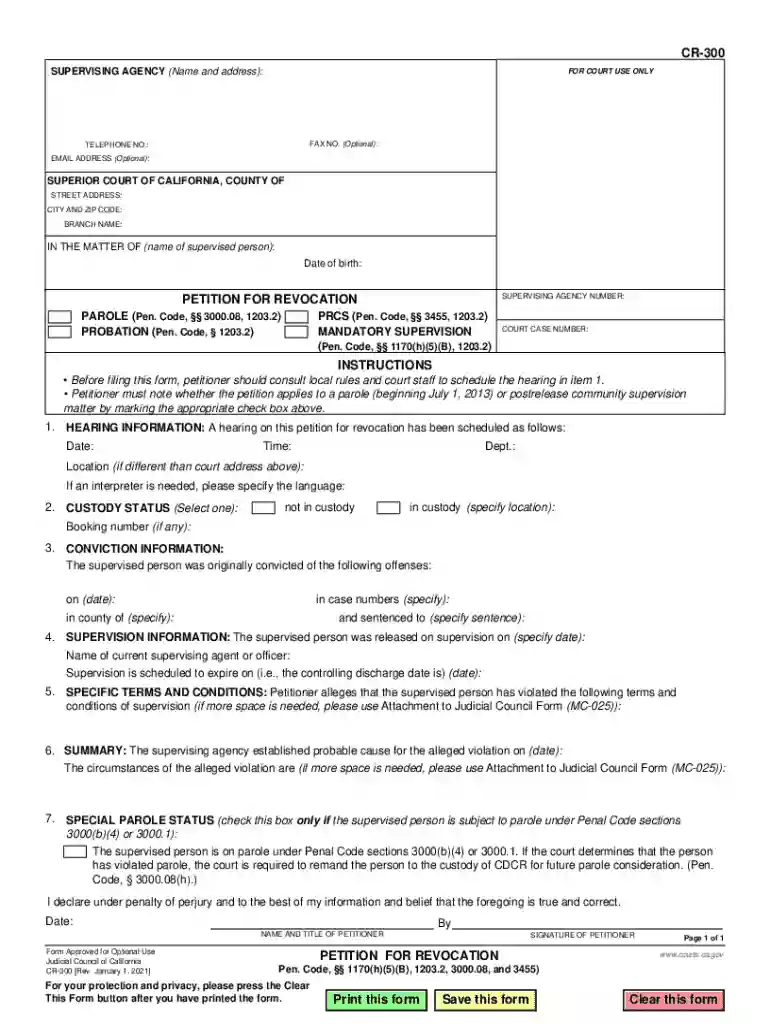
The CR-300 Petition for Revocation Parole is a formal document utilized in California to request the termination of parole, probation, or postrelease community supervision. It serves as a legal instrument whereby authorities can provide a detailed account of any violations that might necessitate the revocation of supervisory terms. This form is a critical component in maintaining the integrity of the judicial supervision system by ensuring that all parties adhere to the conditions set forth.
Using the CR-300 involves several steps to ensure it is completed correctly and serves its purpose effectively. Initially, individuals responsible for filing should gather all pertinent information, including specific terms of supervision and any alleged violations. Then, they must fill out the form with meticulous attention to detail, ensuring all sections concerning hearing details, custody status, and conviction information are complete. Once filled, the form should be submitted to the appropriate judicial authority for review.
The CR-300 comprises several critical elements that must be addressed to process the petition effectively. These elements form the backbone of the legal request and include:
The CR-300 is grounded in legal statutes, particularly within the California penal system. Its use is strictly regulated to ensure that parole revocation procedures adhere to state laws, offering a fair and just process. This form serves as a bridge between alleged violations and legal proceedings, ensuring that all actions taken are within the legal framework dictated by state laws.
Completing the CR-300 involves a structured step-by-step approach:
The primary users of the CR-300 form are parole officers, legal representatives, and judicial officials involved in the supervision of individuals on parole or probation. It is also relevant to legal advocates and administrative staff tasked with compiling evidence for parole revocation cases.



Understanding specific terminology is crucial for comprehending the CR-300's content and purpose:
Failure to comply with filing or information accuracy in the CR-300 can have significant legal consequences. Non-compliance may result in delayed legal processes, potential dismissal of the petition, or legal repercussions against the petitioner for providing false information.
By understanding and following these structured guidelines and detailed elements, stakeholders can effectively manage the CR-300 Petition for Revocation Parole, ensuring that their actions align with California's legal standards and procedural requirements.
We've got more versions of the cr 300 form. Select the right cr 300 version from the list and start editing it straight away!
At DocHub, your data security is our priority. We follow HIPAA, SOC2, GDPR, and other standards, so you can work on your documents with confidence.
Find Your Court Forms Rules. Californians looking for information on case types can find step-by-step instructions, court forms, and other resources on the
Jan 1, 2021 INSTRUCTIONS. Before filing this form, petitioner should consult local rules and court staff to schedule the hearing in item 1.Read more


