







Definition & Meaning
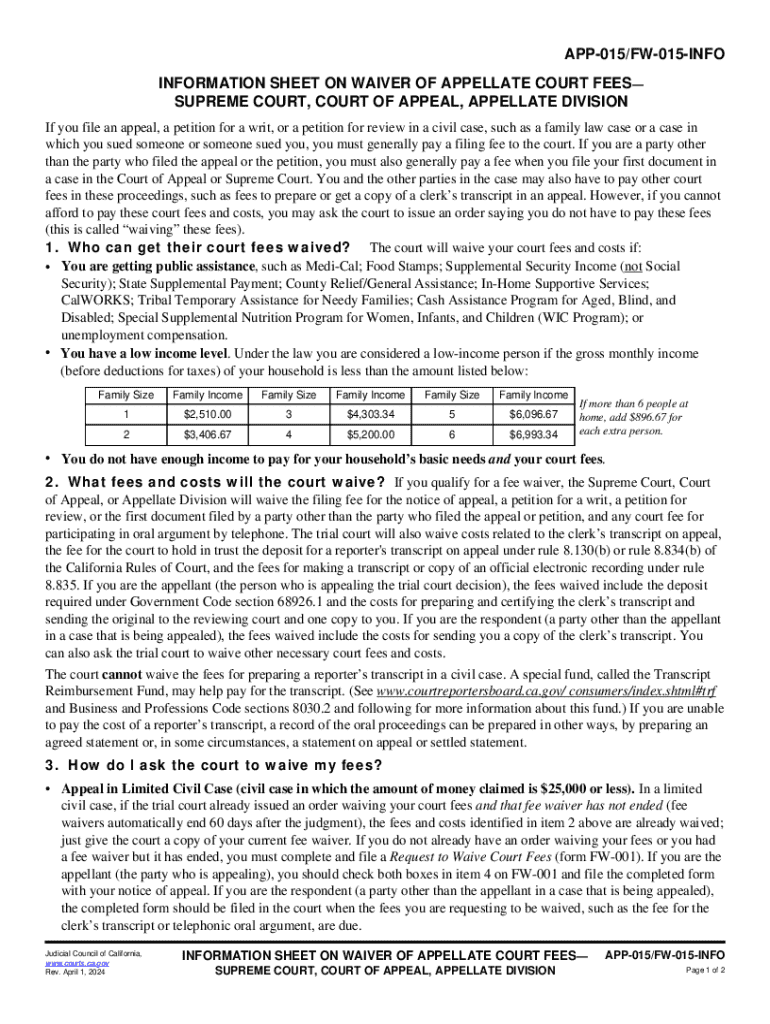
The FW-015-INFO Information Sheet on Waiver of Appellate Court Fees is a critical document for individuals involved in civil cases within the Supreme Court, Court of Appeal, and Appellate Division in the United States. It provides comprehensive guidance on waiving court fees, offering descriptions of the types of fees that can be waived, eligibility criteria, and the process for requesting such waivers. This form is essential for those facing financial hardships, ensuring they can access the appellate court system without the burden of prohibitive costs.
Eligibility Criteria
Understanding who qualifies for a fee waiver is fundamental. Applicants typically need to demonstrate low income or receipt of public assistance to be considered eligible. The specific criteria can include:
- Verification of being a recipient of aid programs like Supplemental Security Income or CalWORKs.
- Proof of income being below a certain threshold relative to the federal poverty line.
- Evaluating other dependents and financial obligations that impact the overall financial assessment.
These criteria aim to ensure that only those who genuinely need financial relief can obtain a waiver, maintaining fairness in the judicial process.

Steps to Complete the FW-015-INFO Information Sheet
Filling out the FW-015-INFO involves several clear steps to ensure accuracy and completeness. Here is a breakdown of the process:
- Gather necessary documentation: Collect financial statements, proof of assistance, or any other relevant financial records.
- Complete personal information section: Fill in your name, contact details, and case information accurately.
- Detail financial status: Provide accurate income information, list dependents, and outline monthly expenses.
- Submit supporting documents: Attach copies of all necessary financial documents to substantiate your claims.
- Review and sign: Double-check all information for accuracy before signing the document.
This structured approach helps prevent common errors and enhances the likelihood of a successful fee waiver application.
Key Elements of the FW-015-INFO Information Sheet
Accuracy and thoroughness are critical in filling out the FW-015-INFO. Key elements to attend to include:
- Applicant Information: Ensure your identity and contact information align with court records.
- Income and Financial Obligations: Provide a complete picture of your financial circumstances.
- Declaration of Truth: Your signature validates the truthfulness of the provided information, with legal implications for misrepresentation.
- Consent to Verification: Acknowledging that the court can verify the information aids in the transparency of your application.
Focusing on these elements ensures compliance with judicial standards and the integrity of the waiver process.
Legal Use of the FW-015-INFO Information Sheet
The form serves a vital legal purpose, facilitating access to the appellate courts for those unable to pay associated fees. It is:
- A mechanism to uphold justice by removing financial barriers.
- A means of promoting equitable access to appeal processes.
- Critical for maintaining fairness within the judicial system by offering relief based only on legitimate financial need.
Legal professionals often assist in ensuring that this form is filled correctly, safeguarding the rights of clients to appeal decisions without prohibitive costs.
Important Terms Related to the FW-015-INFO Information Sheet
Several terms frequently appear in the context of the FW-015-INFO that are important for applicants to understand:
- Fee waiver: Refers to the exemption from mandatory court-associated costs due to financial hardship.
- Public assistance: Government aid provided to eligible individuals in need, which can substantiate a waiver request.
- Financial disclosure: The process of providing a full account of one’s financial income and obligations.
Understanding these terms helps applicants navigate the form more effectively and ensures compliance with its requirements.
Who Typically Uses the FW-015-INFO Information Sheet
The form is predominantly utilized by:
- Low-income individuals: Those whose financial resources are insufficient to cover court fees.
- Recipients of public benefits: Individuals receiving aid who are often automatically eligible for fee waivers.
- Pro se litigants: Individuals representing themselves in court, who may not have the resources to afford comprehensive legal representation.
This demographic spans various backgrounds but shares a commonality of financial need impacting their legal proceedings.

Form Submission Methods (Online / Mail / In-Person)
Various submission methods accommodate applicants' different needs and technological accessibilities:
- Online submissions: Many courts offer electronic submission options for efficiency and convenience.
- Mail-in submissions: Applicants may send completed forms and supporting documents through postal mail.
- In-person submissions: Direct submission at court clerks’ offices can provide immediate assistance and confirmation of receipt.
Each method has advantages and allows access based on the applicant’s personal preference or need for immediate assistance.




