



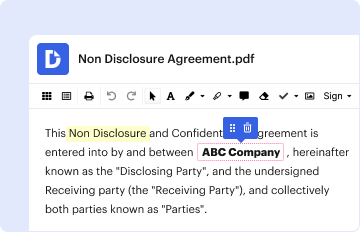
01. Edit your high school cell phone policy pdf online
Type text, add images, blackout confidential details, add comments, highlights and more.

Type text, add images, blackout confidential details, add comments, highlights and more.
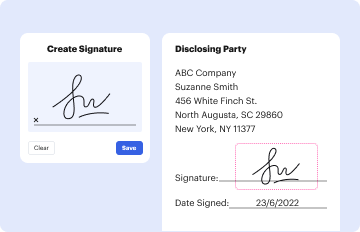
Draw your signature, type it, upload its image, or use your mobile device as a signature pad.
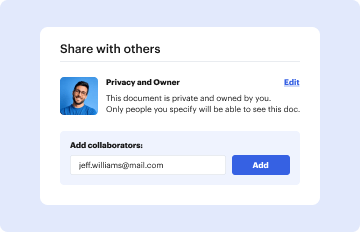
Send high school cell phone policy pdf via email, link, or fax. You can also download it, export it or print it out.
A "high school cell phone policy pdf" is a documented set of rules and guidelines pertaining to the use of cell phones within a high school setting. Typically aimed at both students and their guardians, the document outlines acceptable usage, restrictions during specific times such as classes, and consequences for policy violations. The policy often necessitates parental acknowledgment through signing, indicating their understanding and acceptance of the stipulated regulations. Importantly, this document also highlights the school's non-responsibility concerning lost or stolen cell phones when guidelines are not followed.
The primary objective of a high school cell phone policy is to ensure an environment conducive to learning by minimizing distractions often caused by cell phone misuse. The policy seeks to balance technology benefits, such as emergency communication, with academic focus. By clearly stating when and where phone usage is permissible, the policy helps set boundaries that encourage students to engage more fully with their in-class activities and learning processes.
The high school cell phone policy pdf serves multiple functions and is intended for various users. Students are expected to familiarize themselves with the policy's details and uphold the rules therein. Parents should review the document to understand their child's obligations and discuss the significance of these rules to enforce them at home. School administrators and teachers use the policy to enforce consistent expectations and handle breaches uniformly, fostering a fair environment across the student body.
Typically, the policy document can be accessed through multiple channels. Most schools distribute it at the start of the academic year during orientation or registration. It is often available on the school's official website under the student resources or parent information sections. Some schools might also email the document to parents and students or distribute physical copies for signature. This accessibility ensures that all stakeholders can readily refer to the policy whenever necessary.
Review the Document: Carefully read through each section, noting usage rules, acceptable times for phone use, and any outlined repercussions for breaking the policy.
Discuss with Guardians: Students should go over the policy with their parents or guardians to ensure mutual understanding and agreement on the rules.
Sign the Document: A student and parent signature is often required, indicating their acknowledgment and commitment to adhere to the policy.
Return to School: The signed document should typically be returned to the school's administration or designated staff member for record-keeping.
Accurate completion and submission of this document are critical as it often serves as a binding agreement between the student, their guardians, and the school. Ensuring all relevant areas are properly filled out and that signatures are obtained minimizes confusion and disputes regarding policy adherence.
Understanding these terms helps stakeholders better navigate and understand the policy's scope and implications.
Different states or educational districts may impose additional regulations or differing interpretations regarding school policies. In some areas, state mandates might require schools to permit emergency use of phones, overriding local policies. These variances necessitate school-specific policies that reflect both local needs and broader legal requirements.
By aligning the school policy with both state directives and specific community needs, students and parents are provided with a clear and fair protocol tailored to their context, ensuring consistent adherence to the educational goals.
A common scenario illustrating the application of this policy could be a student caught using their cell phone during a mathematics class. In this case, the teacher would reference the policy to implement an appropriate consequence, such as giving a warning or confiscating the phone for the remainder of the day.
Another example might involve a parent challenging a policy breach consequence. Here, both parties would refer back to the signed policy as a basis for discussion, ensuring mutual understanding and fair application of rules.
Navigating such examples in the policy context ensures both adherence to rules and adaptability for exceptional circumstances.
We've got more versions of the high school cell phone policy pdf form. Select the right high school cell phone policy pdf version from the list and start editing it straight away!
| Versions | Form popularity | Fillable & printable |
|---|---|---|
| 2018 | 4.4 Satisfied (53 Votes) |
At DocHub, your data security is our priority. We follow HIPAA, SOC2, GDPR, and other standards, so you can work on your documents with confidence.
As of July 1, 2026, high school students can no longer use phones, cellphone accessories and smart devices (airpods, earbuds, headsets, smart glasses, otherRead more
Aug 25, 2025 This policy applies to all DCPS students in grades Pre-K through 12 during the school day while on DCPS school grounds beginning in school year


