




01. Edit your form online
Type text, add images, blackout confidential details, add comments, highlights and more.

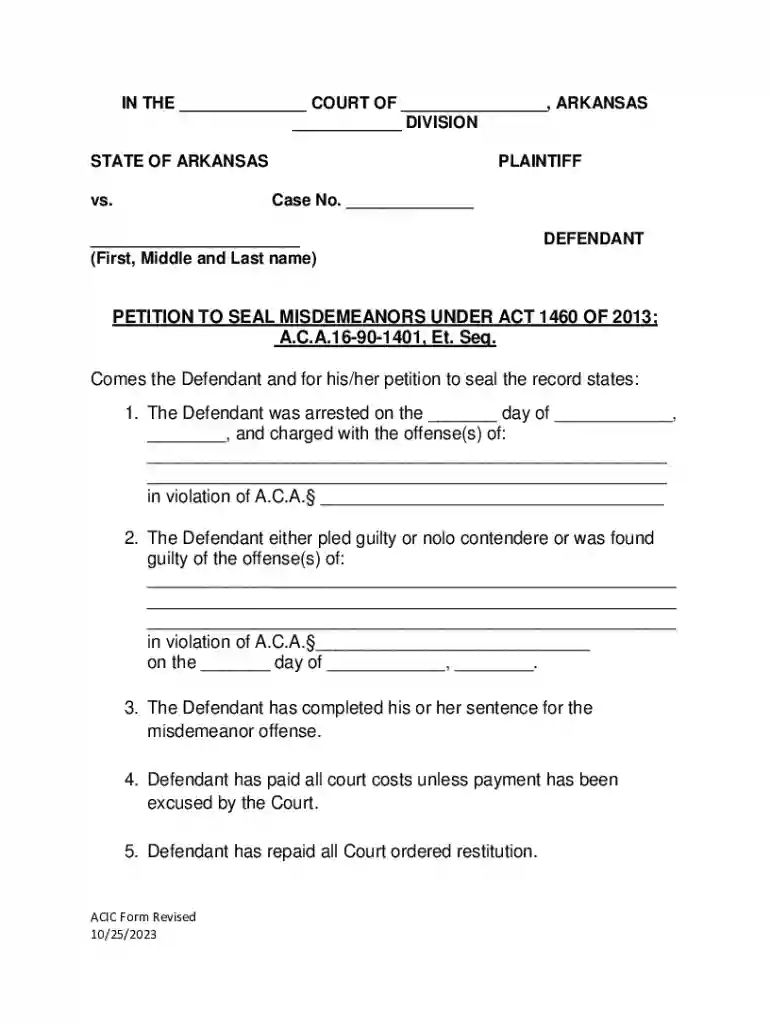
Type text, add images, blackout confidential details, add comments, highlights and more.

Draw your signature, type it, upload its image, or use your mobile device as a signature pad.

Send it via email, link, or fax. You can also download it, export it or print it out.
Criminal history records from the Arkansas Department of Public Safety offer a detailed overview of an individual's past criminal engagements within the state. These records are indispensable for various stakeholders, including employers, legal professionals, and individuals themselves, seeking background checks for employment, licensure, or legal purposes. The records provide transparency and accountability, enabling informed decisions based on an individual's criminal past.
Obtaining these records involves navigating through the Arkansas Department of Public Safety’s procedures, which ensure that requests are legitimate and privacy is maintained.
Completing a request for criminal history from the Arkansas Department of Public Safety requires attention to detail to avoid delays or denials.
Arkansas criminal history records play an essential role in various spheres, particularly in maintaining public safety and ensuring fair practices in employment and legal settings.
Various stakeholders leverage criminal history records for distinct purposes aligned with security, compliance, and personal verification.
Understanding the legal framework governing the use of these records is critical for compliance with state and federal laws.
Familiarity with key terminology associated with criminal history records helps users interpret these documents effectively.
Arkansas has its own set of rules governing the access and use of criminal history records, which align with preserving privacy and ensuring responsible usage.
Criminal history records can be used in various scenarios to achieve specific outcomes and ensure safety and compliance.
We've got more versions of the Criminal History - Arkansas Department of Public Safety form. Select the right Criminal History - Arkansas Department of Public Safety version from the list and start editing it straight away!
At DocHub, your data security is our priority. We follow HIPAA, SOC2, GDPR, and other standards, so you can work on your documents with confidence.
ACIC does not provide background checks. If you are needing a background check, please contact Arkansas State Police at 501-618-8000 or visit their webpage.
View the Clery Act daily crime log to see a record of all criminal incidents and alleged criminal incidents that are reported to the NWACC Police PublicRead more


