
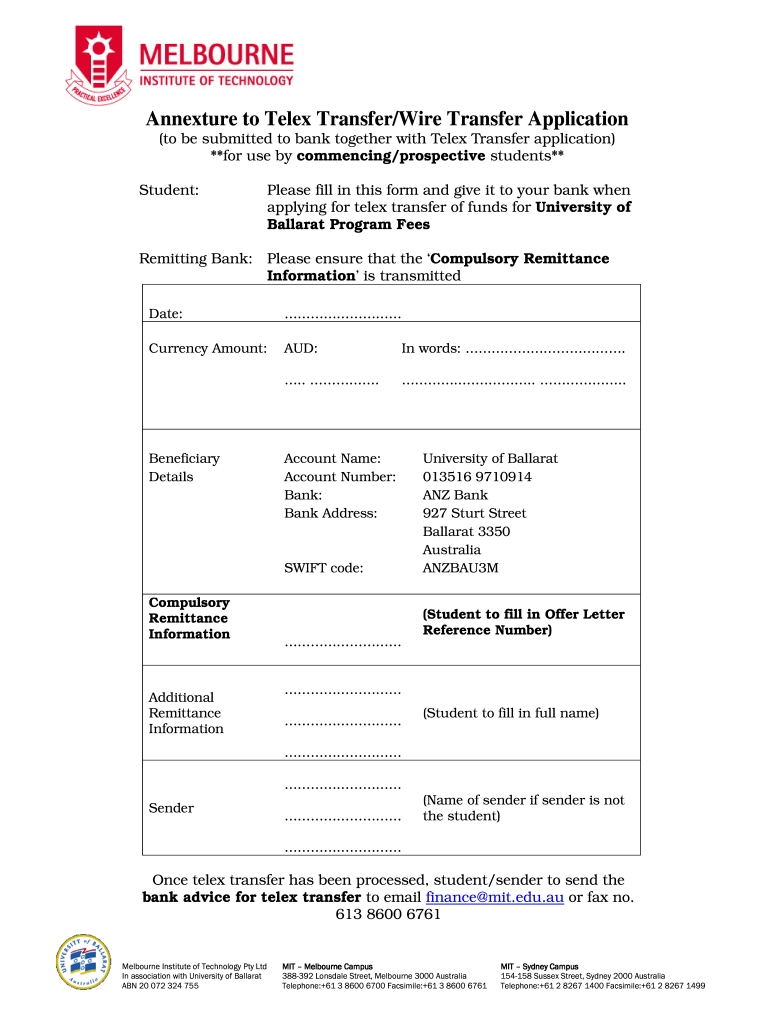







Definition and Meaning of Bank Telex Copy
A bank telex copy is an official document used primarily for facilitating wire or telex transfers between banks. This document serves as a confirmation that a specific transaction has been processed, allowing the remitting party and the beneficiary to have a formal record of the transfer. It typically includes key pieces of information necessary for tracking and validating the transaction, such as the remitting bank details, beneficiary information, and the amount transferred. Understanding the components and purpose of a bank telex copy can be crucial for students and businesses involved in international financial transactions.
How to Use the Bank Telex Copy
Using the bank telex copy involves a few critical steps to ensure that all required details are accurately filled out for the completion of a wire transfer. First, identify all necessary fields within the form, which often include the remitter's details, the amount to be transferred, and the beneficiary’s information. Once these are identified, ensure that you have corresponding information readily available. Enter this data precisely into the designated sections to avoid any discrepancies. After completing the form, submit it to the relevant bank department or financial institution. It is advisable to keep a personal copy of the completed telex for your records.
Practical Scenarios
- A student completing a bank telex copy to transfer tuition fees to an overseas university must ensure all bank details are correct to avoid delays.
- A business sending payment to an international supplier may need to submit a bank telex copy to their bank to facilitate the transaction.
Steps to Complete the Bank Telex Copy
Completing the bank telex copy thoroughly and accurately is vital to ensure your transaction is processed smoothly. Here are the essential steps:
- Gather Information: Obtain details of both the remitter and the beneficiary, such as names, bank account numbers, and swift codes.
- Input Data: Carefully enter all necessary information into the relevant fields of the form, verifying each entry for accuracy.
- Review: Double-check all entries to ensure there are no mistakes that could delay the process.
- Submit: Deliver the form to your bank using their preferred method of submission, whether electronically or through a physical submission.
- Retain Proof: Save a copy of the telex as proof of the transaction and for your records.
Key Elements of the Bank Telex Copy
The bank telex copy comprises several crucial elements that allow for a seamless transaction process. These elements typically include:
- Remitting Bank Details: Information about the bank initiating the wire transfer, including its name, branch, and swift code.
- Beneficiary Information: Identification of the receiving party, which requires accurate names, account numbers, and bank details.
- Transaction Amount: The exact amount to be transferred, specified in the selected currency.
- Compulsory Remittance Information: Any additional references or notes that clarify the purpose of the remittance.
Important Terms Related to Bank Telex Copy
Understanding key terms related to the bank telex copy can facilitate more effective use of the form:
- Swift Code: An international bank code that uniquely identifies a bank worldwide, used during transactions.
- Beneficiary: The individual or entity receiving the funds through the bank transfer.
- Remitter: The individual or entity initiating the transfer of funds.
Common Terminology
- Wire Transfer: The electronic transfer of funds across a network of banks or transfer agencies around the world.
- Telex Transfer: A method for transferring funds electronically, often used synonymously with wire transfers.
Legal Use of the Bank Telex Copy
A bank telex copy holds legal significance as proof of transaction within financial institutions and can be used to resolve disputes or verify payment in business transactions. In the context of legal compliance, it must adhere to the regulations governing international money transfers, including Anti-Money Laundering (AML) laws and the regulations set forth by financial authorities in the involved jurisdictions. Institutions and individuals must ensure that the details within the copy are accurate to prevent any legal complications that could arise from incorrect or fraudulent transfers.
Who Typically Uses the Bank Telex Copy
The bank telex copy is commonly used by various entities, including:
- Students: Particularly international students, for the purpose of transferring tuition or accommodation fees.
- Businesses: Companies engaged in international trade may utilize telex copies to manage payments to foreign suppliers or service providers.
- Financial Institutions: Banks and credit unions process these documents as part of their routine operations when facilitating international transactions.


Use Cases
- Universities may require students to provide a bank telex copy to confirm that the tuition fees have been sent from overseas.
- Exporters and importers often rely on bank telex copies to confirm payments for goods and services traded internationally.




