




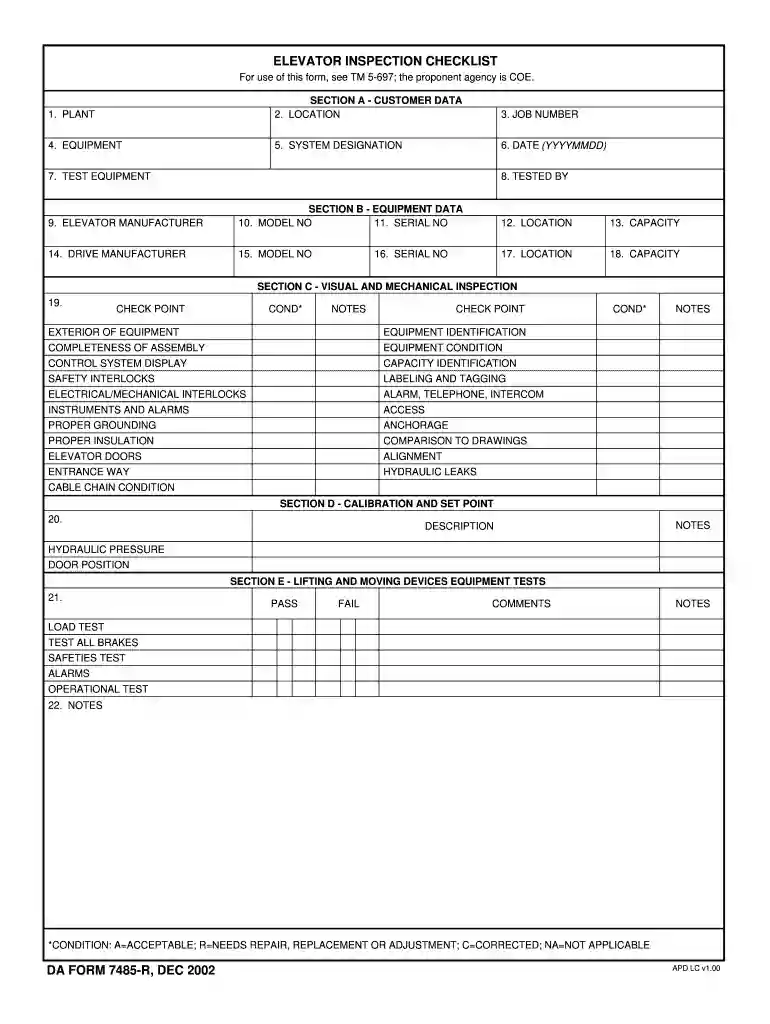
01. Edit your monthly elevator inspection form online
Type text, add images, blackout confidential details, add comments, highlights and more.

Type text, add images, blackout confidential details, add comments, highlights and more.

Draw your signature, type it, upload its image, or use your mobile device as a signature pad.

Send elevator service report format via email, link, or fax. You can also download it, export it or print it out.
The lift checklist format is essential for ensuring the safety and compliance of elevator systems. This systematic approach allows maintenance professionals and safety inspectors to evaluate the functionality and condition of lifts. A well-structured checklist typically includes sections dedicated to specific aspects of lift operation and safety, providing a comprehensive audit of the equipment.
A thorough lift checklist is divided into multiple sections to cover all critical areas. These may include:
Customer Data and Equipment Details
Visual Inspections
Mechanical Inspections
Electrical Inspections
Following a structured process during inspections will ensure no component is overlooked. Steps to effectively complete a lift checklist may include:
Preparation
Visual Inspection
Conduct Mechanical and Electrical Checks
Final Review
Adopting a standardized lift checklist format offers several advantages:
Consistency in Inspections
Regulatory Compliance
Risk Management
Examples of effective lift checklist formats include:
Monthly Elevator Inspection Form
Elevator Maintenance Checklist
Elevator Inspection Report Sample
Utilizing an effective lift checklist format fosters a culture of safety and reliability in the operation of elevator systems. By systematically evaluating both mechanical and electrical components, businesses can ensure compliance with safety regulations while minimizing the risk of accidents or malfunctions.
We've got more versions of the monthly elevator inspection form form. Select the right monthly elevator inspection form version from the list and start editing it straight away!
| Versions | Form popularity | Fillable & printable |
|---|---|---|
| 2002 | 4.8 Satisfied (212 Votes) |
At DocHub, your data security is our priority. We follow HIPAA, SOC2, GDPR, and other standards, so you can work on your documents with confidence.
Every box should have an X to indicate that it has been checked out and has no problems. This form must be completed and signed. POST TRIP INSPECTIONS BELOW.Read more
This form is to be completed during the pre-lift meefing prior to lifting. Anyfime there is an unsafe condifion during the lift, pause the job. DO NOT leaveRead more
Workplace Inspection - Survey work area for potential hazardous operating conditions prior to lift usage. Ensure hazards identified are addressed. Present. Not.Read more


