







Definition and Purpose of the Vesting Information Sheet
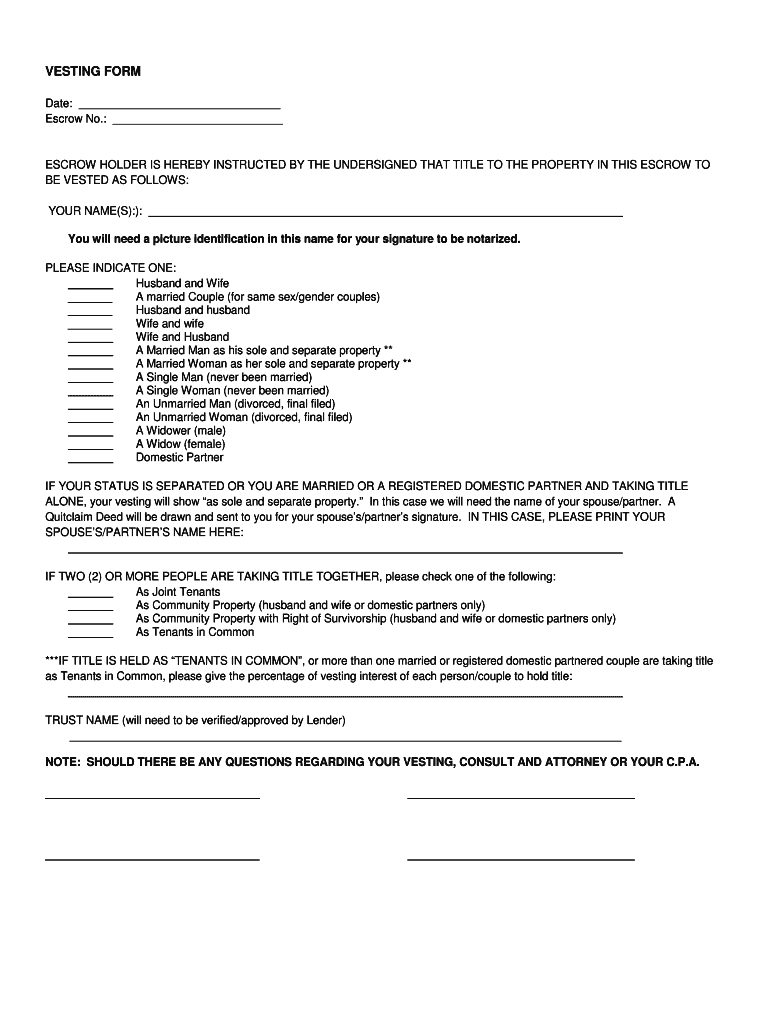
The vesting information sheet by North American Title serves as an instructional guide for escrow holders. It's designed to outline how a property's title should be vested. Vesting refers to the manner in which the new owner or owners take title to their property, impacting rights, management, and survivorship. This document details various ownership options, providing crucial guidance for individual buyers, married couples, and domestic partners.
Types of Ownership Explained
When completing the vesting information sheet, it's essential to understand the different forms of ownership, as each has its legal implications. Here are the primary options:
- Sole Ownership: The property is owned entirely by one individual.
- Joint Tenancy: Multiple parties own the property with equal shares, and a right of survivorship exists.
- Community Property: Common in some U.S. states, this refers to property acquired during marriage.
- Tenants in Common: Owners hold individual shares that can be unequal and independently sold or passed on to heirs.
Each type of ownership affects rights and responsibilities, including how taxes are handled and what occurs upon an owner's death.
Steps to Completing the Vesting Information Sheet
Completing the vesting information sheet requires careful attention to detail and knowledge of the necessary steps:
- Gather Personal Information: Include the names, addresses, and marital status of the parties involved.
- Select Ownership Type: Choose the correct vesting option that reflects the relationships and intentions of the buyers.
- Consult with Legal Experts: It can be beneficial to seek advice from real estate attorneys to understand the implications of each ownership type.
- Review State-Specific Laws: Some states have unique rules that impact property vesting, requiring additional forms or specific wording.
- Submit the Form: Once completed, the form is typically submitted to the escrow company handling the transaction.
Correct submission ensures there are no delays in processing the title change during the property purchase.
Key Elements of the Vesting Information Sheet
The vesting information sheet contains several critical elements that must be correctly understood and completed:
- Ownership Choice: Deciding between sole ownership, joint tenancy, community property, or tenants in common.
- Marital Status: This affects the available options for vesting and can influence tax and inheritance issues.
- Signatures: Required from all parties involved.
- Acknowledgment Section: Confirms understanding of the form's implications and that the information is complete and accurate.
Attention to these elements ensures the form accurately reflects the buyers’ intents and complies with state laws.
State-Specific Rules for Vesting
Vesting rules can vary significantly between states, and understanding these differences is critical. For example:
- Community Property States: States like California and Texas allow for community property arrangements, affecting how shared assets are treated.
- Tenancy Type Preferences: Some states may have preferences or legal stipulations on specific tenancy types.
It’s essential for buyers to consult state-specific regulations or legal counsel to ensure compliance and proper understanding of these variances.
Examples of Using the Vesting Information Sheet
Several case scenarios illustrate the application of the vesting information sheet:
- First-Time Homebuyers: Opting for joint tenancy to ensure survivorship between spouses.
- Investment Property: Using tenants in common for multiple investors to hold unique shares.
- Domestic Partners: Choosing ownership forms that reflect their legal agreements and intentions.
These examples highlight the document’s versatility and the importance of aligning vesting choices with personal and investment goals.
Legal Use of the Vesting Information Sheet
The vesting information sheet plays a crucial role in legal property transactions. It determines:
- Rights and Duties: Outlines the legal rights and duties of each party according to ownership type.
- Tax Liabilities: Different vesting methods can have various tax implications.
- Inheritance: Dictates how property is passed on in the event of an owner's death.
Understanding the legal implications ensures that property ownership is clear, uncontested, and aligned with the owner's intentions.
Who Typically Uses the Vesting Information Sheet?
The document is primarily used by:
- Homebuyers: To specify their preferred method of title vesting.
- Real Estate Agents: Assisting clients in understanding their options.
- Escrow Officers: Processing property transactions correctly.
- Legal Practitioners: Advising on the most suitable and legally sound vesting method.
Buyers should ensure they collaborate with knowledgeable professionals when completing this form to secure their property rights effectively.


Why the Vesting Information Sheet is Important
The vesting information sheet is vital because:
- Clarifies Ownership: It establishes legally binding ownership terms.
- Facilitates Smooth Transactions: Ensures that property transfers occur without disputes.
- Protects Rights: Safeguards the interests of all parties involved by clearly outlining ownership rights and responsibilities.
A thorough understanding and precise completion of this form can prevent potential legal complications and ensure a straightforward property transfer process.




