





Definition & Meaning
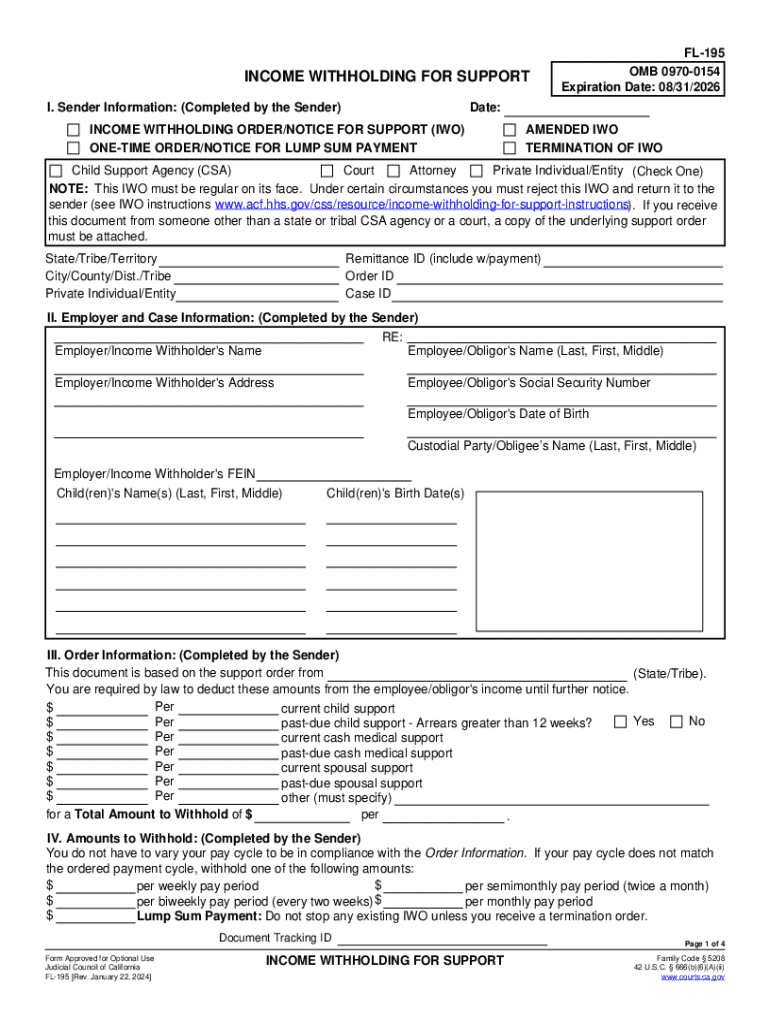
The FL-195 Income Withholding for Support, often abbreviated as IWO (Income Withholding Order), is a legal document used to direct the withholding of income for the purpose of fulfilling child, spousal, or medical support obligations. It plays a crucial role in ensuring that dependents receive the financial support allocated to them by court orders or other legal agreements. By mandating an employer to deduct specified amounts directly from an employee's wages, the FL-195 facilitates timely and consistent disbursement of support payments.
Key Components
- Sender Information: Details about the individual or agency issuing the withholding order.
- Employer and Case Details: Information on the employer responsible for deducting wages and the specifics of the support case.
- Order Specifics & Amounts: The precise financial obligations, including the types of support and the amounts to withhold.
- Remittance Instructions: Guidelines on how and where to send the withheld funds.
How to Use the FL-195 Income Withholding for Support
Understanding the process of implementing the FL-195 is crucial for both employers and individuals subject to the order. Employers must adhere to guidelines to ensure compliance.
Employer Guidelines
- Receipt of Order: Upon receiving the FL-195, employers must review the document to understand withholding requirements.
- Calculation: Determine the amount to withhold based on the employee's disposable income, ensuring compliance with federal and state limits.
- Implement Withholding: Begin deducting the specified amount from the employee’s wages based on the frequency defined in the order.
Employee Responsibilities
- Stay Informed: Employees should be aware of their obligations and any changes to the order.
- Communicate Changes: Notify the issuing agency of changes in employment status, income, or personal circumstances.
Steps to Complete the FL-195 Income Withholding for Support
Completing the FL-195 involves several critical steps to ensure accuracy and compliance.
- Gather Required Information: Collect all necessary details such as personal, employer, and case information.
- Fill Out Sections: Complete each section meticulously, including sender details, obligations, and employer instructions.
- Verify Information: Double-check all entered data for accuracy to prevent processing delays.
- Submission: Submit the form as directed, ensuring all accompanying documents are included.
Why Should You Use the FL-195 Income Withholding for Support?
The FL-195 serves a vital role in safeguarding the financial welfare of children and other dependents. It ensures a systematic approach to collecting support payments, reducing the risk of default. For employers, it provides clear directives, mitigating potential legal repercussions associated with non-compliance.
Benefits
- Consistency in Support Payments: Ensures regular financial support to beneficiaries.
- Legal Security for Employers: Compliance with the order protects employers from legal liabilities.
- Simplifies Payment Process: Automates deductions, reducing administrative burden for both payers and payees.
Who Typically Uses the FL-195 Income Withholding for Support?
The primary users of the FL-195 include courts, child support agencies, employers, and individuals obligated to provide support. Each plays a distinct role in the lifecycle of this form:
- Courts and Agencies: Issue the FL-195 to enforce support payments.
- Employers: Responsible for executing the order by withholding necessary amounts.
- Obligors (paying parents): Subject to income withholding to meet support obligations.

Legal Use of the FL-195 Income Withholding for Support
The FL-195 is governed by both federal and state laws, ensuring standardized procedures across jurisdictions. Employers must navigate these regulations to maintain compliance.
Federal Guidelines
- Consumer Credit Protection Act (CCPA): Limits on the percentage of income that can be withheld.
- Uniform Interstate Family Support Act (UIFSA): Facilitates interstate recognition and enforcement of support orders.
State Variations
- State-Specific Limits: Some states may impose additional restrictions or requirements for processing the FL-195.
- Priority of Withholding: Rules on prioritizing support orders relative to other garnishments.
Key Elements of the FL-195 Income Withholding for Support
Understanding the core elements of the FL-195 can aid in its accurate execution and compliance.
Core Sections
- Income Details: Specifies which earnings are subject to withholding.
- Payment Frequency: Instructions on how often deductions should be made.
- Employer Responsibilities: Requirements for employers, such as providing compliance notifications or changes in employment.
Penalties for Non-Compliance
Non-compliance with the FL-195 can result in significant legal consequences for both individuals and employers. Understanding the risks associated with non-adherence is crucial:
- Fines and Legal Action: Employers failing to withhold or remit payments may face fines or additional legal action.
- Impact on Credit Rating: Non-compliance can affect the obligor's credit status due to missed payments.
- Increased Debt: Unpaid obligations accrue interest, compounding financial liabilities.
With these blocks, the content provides a comprehensive overview of the "FL-195 Income Withholding for Support," covering its purpose, execution, legal framework, and implications of non-compliance. Each section offers detailed insights, ensuring clarity and utility for all stakeholders involved.