Type text, add images, blackout confidential details, add comments, highlights and more.
02. Sign it in a few clicks
Draw your signature, type it, upload its image, or use your mobile device as a signature pad.
03. Share your form with others
Send it via email, link, or fax. You can also download it, export it or print it out.
How to use or fill out Attn: Claims Services Legal Services - Risk Management
Ease of Setup
DocHub User Ratings on G2
Ease of Use
DocHub User Ratings on G2
Click ‘Get Form’ to open it in the editor.
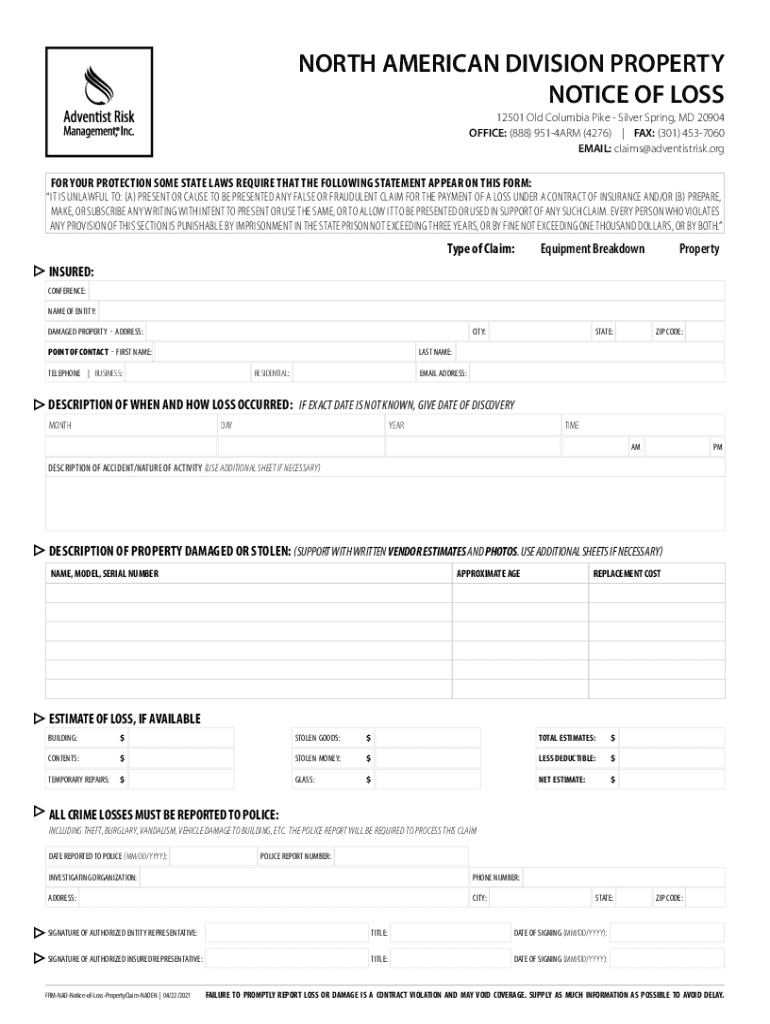
Begin by filling out the 'Type of Claim' section, selecting either Equipment Breakdown or Property.
In the 'INSURED' section, provide the name of the entity and contact details including first and last names, telephone numbers, and email addresses.
Describe the damaged property by entering its address, city, state, and zip code.
Detail when and how the loss occurred. If the exact date is unknown, provide the date of discovery along with a description of the accident or activity.
List all damaged or stolen property with relevant details such as name, model, serial number, approximate age, and replacement cost.
Complete the financial estimates for building damage, contents lost, and any other relevant costs while ensuring to include deductibles.
If applicable, report any crime losses to police and include their report number in the designated fields.
Finally, ensure that authorized representatives sign and date the form before submission.
Start using our platform today to streamline your claims process for free!
Fill out Attn: Claims Services Legal Services - Risk Management online It's free
See more Attn: Claims Services Legal Services - Risk Management versions
We've got more versions of the Attn: Claims Services Legal Services - Risk Management form. Select the right Attn: Claims Services Legal Services - Risk Management version from the list and start editing it straight away!
State Risk Management Trust Fund Claims phone numberDepartment of Risk ManagementTAC file a claimBureau of state liability and property claimsFl dfs div of risk managementTallahassee risk managementDFS claimsLiability claim
Security and compliance
At DocHub, your data security is our priority. We follow HIPAA, SOC2, GDPR, and other standards, so you can work on your documents with confidence.
Cloud Claims Insurance Claims Strengths Fit (2026)
Cloud Claims is an incident-based claims management and RMIS solution for self-insured organizations, administrators, and insurance providers.Read more
Jan 22, 2025 All of the attorneys in the Office of General Counsel work closely with the Universitys Risk Manager to minimize and avoid risk in a variety of matters.Read more
Cookie consent notice
This site uses cookies to enhance site navigation and personalize your experience.
By using this site you agree to our use of cookies as described in our Privacy Notice.
You can modify your selections by visiting our Cookie and Advertising Notice.