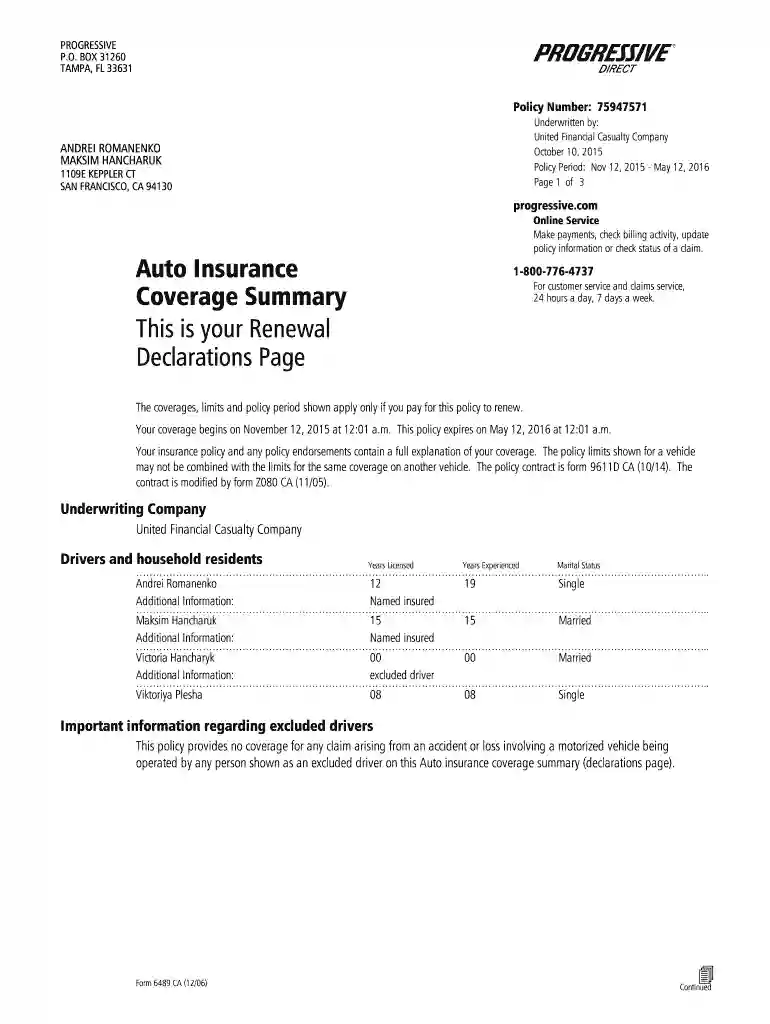
Definition & Meaning of the Progressive Declaration Page
The progressive declaration page is a vital document in the realm of auto insurance, providing a comprehensive overview of a policyholder's coverage with Progressive Insurance. This page summarizes the essential details of an insurance policy, including coverage limits, vehicle information, and the insured parties. It is a key tool for both the insurer and the insured, facilitating clear communication regarding the specifics of the insurance coverage.
Typically, the declaration page also includes the policy number, effective dates, and the total premium. This allows policyholders to verify their coverage and serve as a point of reference in case of claims or disputes. Moreover, the progressive declaration page serves as proof of insurance, which is often required when registering a vehicle or during encounters with law enforcement.
Key Information Included in the Progressive Declaration Page
- Policy Number: Unique identifier for tracking and managing the policy.
- Coverage Limits: Specifies the maximum amount the insurer will pay for covered claims.
- Vehicle Information: Details regarding the insured vehicles, including make, model, and VIN (Vehicle Identification Number).
- Named Insureds: Lists the individuals covered under the policy, including the primary policyholder.
- Policy Period: Indicates the start and end dates of the coverage.
How to Use the Progressive Declaration Page
The progressive declaration page is essential for managing your auto insurance. It serves multiple functions, including confirming your insurance status, understanding your coverage limits, and facilitating communication with your insurance provider.
To effectively use a progressive declaration page, consider the following steps:
- Review Coverage Details: Regularly check the declaration page to understand what is covered under your policy and any exclusions that may apply.
- Confirm Vehicle Information: Ensure all vehicle details are correct to avoid issues in case of a claim.
- Keep Accessible for Documentation: Carry a digital or printed copy when driving, as it may be required by law enforcement or during vehicle registration.
- Contact Progressive for Updates: Use the information on the declaration page to inquire about policy adjustments, renewals, or claims directly with Progressive.
Best Practices for Using the Declaration Page
- Keep a digital copy saved in your cloud storage for easy access.
- Use the document to compare coverage options when shopping for insurance.
- Update the declaration page as needed when changes in circumstances occur, such as purchasing a new vehicle or moving to a different state.
How to Obtain the Progressive Declaration Page
To obtain your progressive declaration page, several methods can be utilized depending on your preference for digital or physical copies. This flexibility ensures that policyholders can access their information when needed.
Methods to Obtain the Declaration Page
Online Account Access:
- Log into your Progressive Insurance account on their website.
- Navigate to the policy section and select the auto insurance policy for which you need the declaration page.
- Download the PDF version of the declaration page.
Mobile App:
- If you use the Progressive mobile app, log in using your credentials.
- Access your policy information and download the declaration page directly to your device.
Request by Phone:
- Contact Progressive's customer service at the number provided on their website.
- Request a copy of your declaration page, and specify if you would like it sent via email or traditional mail.
Email Request:
- Send an email request to Progressive's support team, including your policy number and the request for the declaration page.
Understanding Access Rights
- Policyholders typically have immediate access to their declaration page upon policy formation and renewal.
- Ensure that your account credentials are kept secure to prevent unauthorized access to sensitive information.
Steps to Complete the Progressive Declaration Page
Completing a progressive declaration page usually involves providing the necessary information and understanding the terms laid out in the document. Here are key steps involved in this process:
Gather Required Information:
- Prepare details about all vehicles to be covered, including VINs, makes, models, and year of manufacture.
- Collect driver information, including names, addresses, and driving history.
Fill Out the Form Accurately:
- Input all required information without omissions. Ensure vehicle information matches state registration records.
- Double-check all entries for accuracy, as errors can lead to coverage issues.
Review Coverage Options:
- Carefully consider and select additional coverages (e.g., comprehensive, collision, or liability), adjusting your premiums accordingly.
- Consult with a Progressive agent if needed to clarify any coverage details.
Submit for Review:
- Ensure the completed form is submitted electronically or via postal service as instructed by Progressive.
Keep Documentation:
- Retain a copy of the completed declaration page for your records, which may be needed for future reference.
Importance of Accuracy
- Accurately completing the declaration page is critical. Mistakes may result in denied claims or unexpected premium adjustments. Regularly revisiting this page ensures continued compliance with coverage and legal requirements.
Why Should You Use the Progressive Declaration Page
Utilizing the progressive declaration page is essential for any policyholder. It serves not only as a summary of coverage but also brings peace of mind and clarity regarding the insurance policy.
Advantages of Using the Declaration Page
- Clear Overview of Coverage: Provides a quick reference to understand what is covered and the limits associated with each coverage type.
- Legal Proof of Insurance: Many states require drivers to present proof of insurance during vehicle registration or in the case of traffic stops.
- Assists in Filing Claims: When initiating a claim, the declaration page ensures that you have all necessary details at hand, speeding up the process.
- Facilitates Changes and Updates: Easy reference for necessary adjustments to the policy, ensuring all information is current and accurate.
Long-Term Benefits
- Regular use and review of the declaration page can lead to a better understanding of your insurance needs, potentially reducing costs and improving risk management over time.
- Staying informed helps in making better decisions about future coverage and potential policy changes based on personal circumstances.
Important Terms Related to the Progressive Declaration Page
Understanding the terminology associated with the progressive declaration page is key to effectively navigating auto insurance matters. Below are several important terms that policyholders should be familiar with:
- Premium: The amount of money paid for coverage, usually billed monthly, semi-annually, or annually. This payment is crucial to maintain coverage.
- Deductible: The out-of-pocket amount the policyholder must pay before the insurance kicks in for a claim. Understanding your deductible is essential for effective financial planning.
- Liability Coverage: Protection against damages caused to other people or their property in an accident for which you are responsible. It is mandatory in most states.
- Comprehensive Coverage: Covers damage to your vehicle not involving a collision, such as theft, fire, or natural disasters. This coverage can be important depending on where you live.
- Collision Coverage: Covers damage to your vehicle due to a collision with another vehicle or object, regardless of fault. This can be vital for newer or more expensive vehicles.
Glossary for Expanded Understanding
- Having a glossary attached to the declaration page can help clarify terms and ensure proper understanding of the liability and potential expectations from the insurance policy.
- Always consult terms as they may vary significantly from one insurer to another, affecting interpretation and application.
Examples of Using the Progressive Declaration Page
Real-world examples illustrate how the progressive declaration page is applied in various situations, enhancing the comprehension of its utility.
Practical Scenarios
Vehicle Registration: A driver needs to present the declaration page to the DMV to prove they have insurance coverage when registering a new vehicle. The information on the declaration page corroborates their current coverage status.
During an Accident: After a minor accident, a policyholder refers to the declaration page to confirm their liability and collision coverage before contacting Progressive to file a claim.
Adjusting Coverage: A customer reviews their declaration page and realizes they need additional coverage due to a new vehicle. This prompts them to contact Progressive for an adjustment.
Loan or Lease Agreements: When financing or leasing a vehicle, lenders often require a declaration page to ensure that the borrower has adequate insurance protection, as specified in their loan agreements.
Effectiveness of the Declaration Page in Various Situations
- The declaration page acts as a central reference point for understanding obligations and insurance responsibilities across different scenarios, ensuring that policyholders are well-prepared for any situation.
Understanding how the progressive declaration page functions and its significance empowers policyholders to manage their auto insurance more effectively and confidently navigate the complexities of their coverage.